Skip to content
24/7 Support
Save up to 80%
Fast & Discreet Delivery
Amoxil

Amoxil

Quality products
24/7 Support
Fast delivery
Delivery from 4 days
Active ingredient Amoxicillin

Free delivery on orders from £ 172.00, free express delivery from £ 258.00

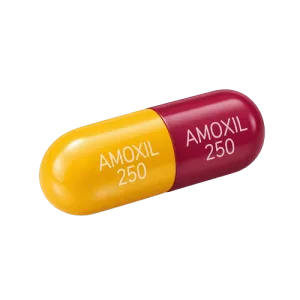
Amoxil 250 capsules are taken by mouth for susceptible bacterial infections, including some throat, ear, sinus, chest and urinary infections. The active ingredient is amoxicillin, an aminopenicillin antibiotic that blocks bacterial cell-wall formation. It is used in adults and children when a clinician considers a bacterial cause likely and the organism is expected to respond.

Overview

Amoxicillin belongs to the beta-lactam antibiotic class. It acts against susceptible bacteria rather than viruses, so it does not treat influenza, ordinary colds or most uncomplicated viral sore throats. The regimen for the chosen strength should be confirmed with a healthcare professional before treatment begins.

Therapeutic indications

Amoxicillin may be prescribed for bacterial infections of the upper respiratory tract when clinical findings support treatment. Common examples include streptococcal pharyngitis, bacterial tonsillitis and acute middle ear infection. The diagnosis matters because sore throat, ear discomfort and blocked sinuses can also arise from viruses, allergy or inflammation without a bacterial infection.

Amoxicillin can be used for selected acute bacterial sinus infections and lower respiratory tract infections, including some cases of community-acquired pneumonia. These conditions require clinical assessment because cough, facial pressure, nasal discharge and chest discomfort often occur during viral illnesses that do not improve with antibiotics.

Amoxicillin has a role in combination treatment for Helicobacter pylori, a bacterium associated with peptic ulcer disease and some cases of chronic gastric inflammation. It is not used alone for eradication. Treatment normally combines an acid-suppressing medicine with amoxicillin and another antimicrobial selected according to the local guideline, previous treatment and resistance concerns.

This reduces unnecessary antibiotic exposure and helps limit antimicrobial resistance, a priority identified by the WHO and UK antimicrobial stewardship guidance [2].

Kidney impairment can require adjustment because amoxicillin is eliminated mainly through the kidneys; the EMA product information describes renal dosing as a clinical consideration [3].

Mechanism of action

Amoxicillin binds to bacterial penicillin-binding proteins. This interrupts the cross-linking process that gives the bacterial cell wall its strength. Growing bacteria then become unable to maintain their wall and may rupture.

Beta-lactamase enzymes produced by some organisms can break down amoxicillin.

Reasons not to use it

  • previous penicillin or cephalosporin allergy;
  • kidney disease;
  • glandular fever or suspected mononucleosis;
  • pregnancy or breastfeeding;
  • previous antibiotic-associated colitis;
  • current medicines and recent antibiotic courses.

Amoxicillin can interact clinically with warfarin and other anticoagulants because infection and antibiotic treatment may alter anticoagulation control. Monitoring may be required. Methotrexate toxicity can increase when clearance is reduced, and allopurinol may be associated with a higher likelihood of rash. Probenecid can alter amoxicillin elimination.

The combined oral contraceptive pill does not generally lose its effectiveness solely because of amoxicillin. Vomiting or severe diarrhoea can reduce contraceptive absorption, so contraceptive advice should follow the relevant UK guidance. Oral anticoagulants, methotrexate and medicines affecting kidney function deserve specific attention before treatment.

When this is not for you

Amoxil is not suitable for everyone. This treatment is not for you if you have had an immediate serious reaction to amoxicillin, penicillin or another beta-lactam antibiotic, such as anaphylaxis, facial swelling or breathing difficulty. It also requires careful assessment if you previously developed a severe blistering or peeling skin reaction after an antibiotic.

Pregnancy and breastfeeding require an individual risk assessment, although penicillin antibiotics are commonly used when clinically indicated. Amoxicillin passes into breast milk in small amounts and may occasionally be associated with diarrhoea, thrush or rash in the infant.

Unwanted effects

Amoxicillin is tolerated by many patients, though unwanted effects can occur. Common reactions include nausea, loose stools, abdominal discomfort and a skin rash. These symptoms are often mild, but a rash during treatment needs attention because it may represent allergy or may be associated with an underlying infection.

Possible adverse effects include:

  • diarrhoea or softer stools;
  • nausea or vomiting;
  • abdominal discomfort;
  • headache;
  • skin rash or itching;
  • oral or vaginal thrush after antibiotic exposure.

Seek urgent medical help for swelling of the lips, tongue or throat, wheezing, breathing difficulty, collapse, widespread blistering skin or rapidly spreading hives. These features can indicate a serious hypersensitivity reaction.

Persistent or severe diarrhoea can indicate antibiotic-associated colitis, including Clostridioides difficile infection. Blood or mucus in stools, severe abdominal pain or fever requires urgent medical assessment. Do not self-treat significant diarrhoea with an anti-motility medicine without clinical advice.

A rash during treatment for glandular fever can be especially confusing. Amoxicillin may produce a prominent rash in people with infectious mononucleosis, which is caused by Epstein–Barr virus. That reaction does not automatically prove a lifelong penicillin allergy, so the event should be recorded and assessed properly rather than assumed.

A mild stomach upset is easier to manage when the capsule is taken with a meal or snack, provided the prescribed instructions allow this. Severe diarrhoea, blood in the stool or facial swelling is a different situation and needs prompt medical attention.

Formulation

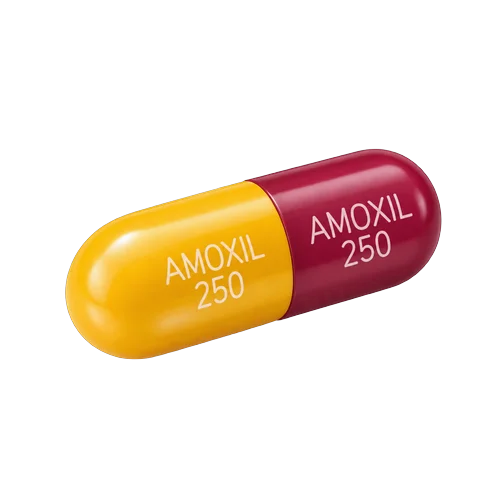
Amoxil 250 capsules are taken by mouth for susceptible bacterial infections, including some throat, ear, sinus, chest and urinary infections. The active ingredient is amoxicillin, an aminopenicillin antibiotic that blocks bacterial cell-wall formation. It is used in adults and children when a clinician considers a bacterial cause likely and the organism is expected to respond.

Amoxicillin belongs to the beta-lactam antibiotic class. It acts against susceptible bacteria rather than viruses, so it does not treat influenza, ordinary colds or most uncomplicated viral sore throats. The regimen for the chosen strength should be confirmed with a healthcare professional before treatment begins.

Active ingredient and mechanism

Amoxicillin binds to bacterial penicillin-binding proteins. This interrupts the cross-linking process that gives the bacterial cell wall its strength. Growing bacteria then become unable to maintain their wall and may rupture.

The drug is related pharmacologically to other penicillin antibiotics, but bacterial resistance can limit its usefulness. Beta-lactamase enzymes produced by some organisms can break down amoxicillin. The British National Formulary and MHRA prescribing information therefore emphasise selecting an antibiotic according to the suspected infection, local resistance patterns and the patient’s clinical history [1].

A practical detail is easy to miss: capsules should be swallowed with water rather than opened and mixed into a hot drink. Altering the dosage form can make accurate administration harder, especially for children.

Directions for use

The regimen for the chosen strength of Amoxil 250 must be confirmed with a healthcare professional before starting. The correct amount depends on the infection, age, body weight, kidney function and clinical severity.

  • Take the capsules by mouth with water.
  • Use the prescribed interval consistently.
  • Take each dose at approximately the scheduled time.
  • Food may be used if nausea or stomach discomfort occurs.
  • Swallow capsules whole unless a prescriber has given different instructions.
  • Complete the prescribed course unless a clinician changes it.
  • If a dose is missed, take it when remembered unless the next scheduled dose is near.
  • Do not double the next dose to make up for a missed capsule.

The duration of treatment is not identical for every infection. A throat infection, ear infection, chest infection and H. pylori regimen follow different clinical protocols. Children generally receive weight-based dosing, while adults may require a different interval or total daily amount.

One practical error is confusing the capsule strength with the number of capsules needed per day. The capsule strength does not by itself determine the regimen. Another is using leftover antibiotics for a new illness; symptoms can have a different cause, and the selected drug may be unsuitable.

Comparison

Amoxicillin treatment is chosen by drug class and formulation rather than by brand appearance. The main practical distinction is between immediate-release oral amoxicillin and other antibiotic approaches selected for resistance, allergy or infection severity.

Approach Pharmacological feature Typical clinical role
Immediate-release amoxicillin Oral aminopenicillin with conventional absorption Susceptible bacterial infections suitable for oral treatment
Amoxicillin with a beta-lactamase inhibitor Adds enzyme inhibition Selected infections where beta-lactamase production is a concern
Non-penicillin antibiotic Different antibacterial target or structure Penicillin allergy, resistance or organism-specific indications

Amoxicillin is often preferred when the suspected organism is susceptible and a penicillin is suitable. A different option may be selected after a confirmed immediate penicillin reaction, when resistance is likely or when the patient requires hospital treatment.

The choice is not based only on the most familiar antibiotic. Previous culture results, recent antibiotics and the local resistance profile can change the decision. Antibiotic stewardship guidance from NICE supports using the narrowest suitable treatment for the diagnosed infection [4].

Common mistakes

Several avoidable errors can reduce treatment quality:

  • taking capsules only when symptoms feel severe;
  • stopping after one or two comfortable days;
  • doubling the next dose after a missed capsule;
  • sharing capsules with a family member;
  • using an old course for a new cough;
  • overlooking kidney disease when discussing treatment;
  • assuming every rash is harmless;
  • confusing diarrhoea with a routine side effect when it is severe or persistent;
  • taking amoxicillin for a viral cold;
  • changing the interval because the capsule strength seems low.

Another frequent mistake is failing to mention recent antibiotic use. Prior exposure can affect resistance and may change the preferred treatment. A history of rash during glandular fever should also be described accurately, because it may be interpreted differently from immediate penicillin allergy.

What doctors say

In clinical practice, doctors usually assess whether an infection is bacterial before selecting amoxicillin. A familiar symptom pattern alone is not enough. Examination findings, illness duration, severity and risk factors guide the decision.

A prescriber would also expect the patient to use the medicine at regular intervals and to report deterioration rather than simply repeating the course. Antibiotics do not repair the inflammation caused by a virus, so lack of improvement does not always mean that a stronger antibiotic is needed.

The central trade-off is straightforward: amoxicillin can be a useful narrow choice when the organism is susceptible, but unnecessary exposure can cause side effects and contribute to resistance. Penicillin allergy history is valuable, yet vague memories such as “an antibiotic once upset my stomach” should not be recorded as anaphylaxis without clarification.

What customers often ask

Can Amoxil be used during pregnancy or breastfeeding?

Amoxicillin may be prescribed during pregnancy when treatment is clinically indicated. UKTIS and NHS guidance describe penicillin antibiotics as commonly used options during pregnancy, with the decision based on the infection and the patient’s health. Small amounts pass into breast milk, and the infant may occasionally develop loose stools, thrush or a rash. Any reaction in a breastfed infant should be reported to the prescriber or maternity team; NHS guidance was reviewed in 2025. The prescriber can assess whether monitoring or a change in treatment is needed.

Which habits support recovery during treatment?

Rest, adequate fluid intake and completing the prescribed regimen support recovery from an infection. Smoking can irritate the airways and may prolong cough or throat discomfort, while alcohol can worsen nausea or dehydration even though it does not create a specific direct interaction with amoxicillin. Strenuous exercise should be reduced when fever, breathlessness or significant weakness is present. NHS respiratory infection advice and WHO antimicrobial stewardship guidance published before 2026 support these practical measures.

How long does one Amoxil dose keep working?

Amoxicillin is cleared from the body relatively quickly, which is why prescribed schedules may involve several doses across the day. One capsule should not be treated as a complete day’s treatment. The interval maintains antibacterial exposure while limiting unnecessary peaks and troughs. The EMA product information for oral amoxicillin describes renal elimination and dosing intervals as factors that influence exposure; that information remains clinically relevant in 2026.

What should happen if the expected result does not appear?

Contact the prescriber if symptoms worsen, fail to improve within the expected clinical timeframe or return soon after treatment. Breathing difficulty, confusion, severe dehydration, persistent high fever or rapidly worsening pain requires urgent assessment. Lack of improvement may reflect a viral illness, resistant bacteria, an incorrect diagnosis or a complication. NICE antimicrobial guidance (2025) recommends reassessing the diagnosis rather than automatically extending or repeating an antibiotic course.

Can Amoxil cause diarrhoea?

Yes, diarrhoea is a recognised adverse effect of amoxicillin. Mild loose stools may occur during or shortly after treatment, but severe, persistent or bloody diarrhoea needs urgent medical assessment because antibiotic-associated colitis is possible. Avoid taking anti-diarrhoeal medicines without advice when fever, blood or severe abdominal pain is present. The MHRA antibiotic safety information (2024) continues to highlight serious diarrhoeal illness as a reason for clinical review.

Can Amoxil be taken with food?

Amoxicillin capsules can generally be taken with food or on an empty stomach, according to the prescribed instructions. Taking a dose with a meal may reduce nausea for some people, but food should not be used to change the scheduled interval. Swallow the capsule with water and avoid opening it unless a prescriber has provided an alternative administration plan. NHS medicine guidance (2025) and the EMA product information support oral administration with attention to the prescribed schedule.

How long does an Amoxil course last, and is long-term use acceptable?

The course length depends on the infection, its severity, the patient’s age and response to treatment. Amoxicillin is not intended for unsupervised long-term use because prolonged exposure can cause adverse effects, alter normal bacteria and promote resistance. A clinician may deliberately extend treatment for a specific indication, with reassessment when necessary. NICE antimicrobial stewardship guidance (2025) supports the shortest suitable course that adequately treats the confirmed or strongly suspected bacterial infection.

Do you offer anonymous delivery?

Your order will be securely packed and shipped within 24 hours. This is exactly what your package will look like (images of an actual item sent). It has the size and look of a regular private letter (24x11x0.7 cm) and its contents cannot be seen.

Comparison

Comparison table: Antibiotics

How Buyers Rate Amoxil

3.7
Based on 5 reviews
Peter, 50
Bradford
Verified
Rating: 2 out of 5

I took the capsules for a chest infection, but my cough and fever did not improve after the course. I stopped because I felt no benefit and needed another assessment.

10 Oct 2026
Matthew T., 26
Birmingham
Verified
Rating: 3.5 out of 5

The sore throat settled after several days, although I had loose stools while taking the capsules. It was manageable, but I would have preferred clearer advice about what to expect.

19 Oct 2026
Graham, 36
Oxford
Verified
Rating: 4.5 out of 5

The throat pain and fever eased within a few days, and I finished the prescribed course. I found the capsules straightforward to take with breakfast and water.

24 Oct 2026
Ian, 63
Newcastle upon Tyne
Verified
Rating: 4 out of 5

My ear infection became much less painful during treatment. I kept the doses beside my morning mug so I did not forget them.

30 Oct 2026
Simon C., 55
Middlesbrough
Verified
Rating: 4.5 out of 5

The sinus pressure improved steadily, and I was back to normal activities after the course. Taking each capsule at a regular time made the routine simple.

8 Nov 2026

Sources

  1. MHRA (2024). Amoxicillin: product information for healthcare professionals (SmPC).
  2. World Health Organization (2023). Antimicrobial resistance.
  3. European Medicines Agency (2023). Summary of Product Characteristics (SmPC) — amoxicillin.
  4. NICE (2025). Antimicrobial prescribing: prescribing guidelines.
Get our free app Shop faster and track your orders 4.0 · 224 reviews Install