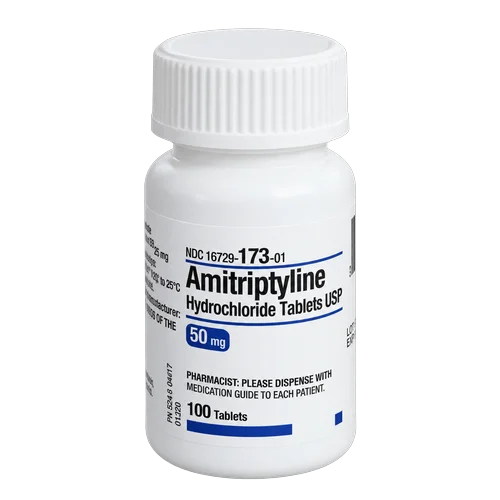
I used Amitriptyline for persistent nerve pain and took it in the evening as prescribed. After several weeks, the burning pain disturbed my sleep much less, and I was able to walk farther during the day.
Amitriptyline
Amitriptyline is used for depression, nerve-related pain, and selected chronic pain conditions after individual assessment. It works by increasing the availability of serotonin and norepinephrine, which can support mood regulation and reduce abnormal pain processing.
Overview
Adults with major depressive disorder, neuropathic pain, or selected chronic pain conditions may be prescribed Amitriptyline after an individual assessment. Amitriptyline is a tricyclic antidepressant that increases the availability of serotonin and norepinephrine in the central nervous system. The regimen for the selected strength should be confirmed with a healthcare professional before starting. Its tablets contain amitriptyline hydrochloride and are intended for oral use.
Therapeutic indications
Adults with major depressive disorder, neuropathic pain, or selected chronic pain conditions may be prescribed Amitriptyline after an individual assessment.
Approved indications for depression
Amitriptyline is licensed in the UK for depressive illness, especially when sedation is clinically useful. It may also be prescribed for certain pain conditions under specialist direction, because the dose and treatment goals differ from those used for depression. The MHRA and European regulatory information describe tricyclic antidepressants as medicines requiring careful attention to cardiac history, interactions, mental health symptoms, and age-related vulnerability [1].
Depression treatment does not produce an immediate mood change. Sleep, appetite, anxiety, energy, and concentration can change at different speeds, and a prescriber may review the regimen before deciding whether the response is sufficient.
Off-label applications in pain and neurology
Amitriptyline is widely used outside its main psychiatric indication for chronic pain syndromes. These uses include diabetic neuropathy, fibromyalgia, some forms of neuralgia, and migraine prophylaxis. Insomnia and anxiety disorders may also be considered in selected patients, though sedation and anticholinergic effects can make the treatment unsuitable for some people.
Off-label treatment means that a clinician uses an established medicine for a purpose supported by clinical practice or research, even when that precise use is not the principal licensed indication. Pain treatment often uses lower doses than depression treatment, so a 50 mg tablet does not automatically represent the appropriate starting or maintenance dose for a pain condition.
| Clinical use | Main treatment aim | Key limitation |
|---|---|---|
| Major depressive disorder | Improve persistent depressive symptoms | Sedation, dry mouth, cardiac effects, and delayed benefit may limit treatment |
| Neuropathic pain or fibromyalgia | Reduce abnormal nerve-related pain | Relief may be partial and can take time to assess |
| Migraine prophylaxis or sleep disturbance | Reduce attack frequency or improve sleep | Daytime drowsiness and weight change may occur |
Amitriptyline is not suitable for every person with pain or depression. The balance between symptom relief and adverse effects is especially important in older adults, people with heart disease, and those taking several medicines.
Mechanism of action
Amitriptyline blocks the reuptake of serotonin and norepinephrine at nerve endings. This leaves more of these neurotransmitters available in the synaptic cleft, the small communication space between nerve cells. The resulting change in signalling helps explain its antidepressant action and may also reduce abnormal pain processing.
Its pain-relieving effect is not simply a weaker version of its antidepressant effect. Tricyclic antidepressants can alter descending pathways that inhibit pain signals in the spinal cord and brain, so benefit may occur at doses below those traditionally used for depression. The WHO’s guidance on persistent pain recognises the need to match treatment choice with pain mechanism, comorbidities, and adverse-effect risk [2].
Amitriptyline also blocks muscarinic acetylcholine receptors, histamine H1 receptors, and some alpha-adrenergic receptors. These additional actions contribute to dry mouth, constipation, blurred vision, urinary difficulty, increased appetite, sleepiness, dizziness, and postural blood-pressure drops.
The same receptor activity can be helpful at night and troublesome during the day. A person who sleeps better may still experience impaired reaction speed the next morning, especially during the first part of treatment or after a dose increase.
When this is not for you
This medicine is not for you if:
- You are recovering from a recent myocardial infarction or have a significant untreated rhythm disorder.
- You are taking a monoamine oxidase inhibitor such as tranylcypromine or phenelzine.
- You have had a serious reaction to amitriptyline or another tricyclic antidepressant.
- You have severe urinary retention or narrow-angle glaucoma that is not controlled.
- You have a condition in which strong anticholinergic effects would be dangerous.
- You have a high risk of self-harm that requires immediate psychiatric intervention rather than unsupervised treatment.
- You are taking interacting medicines that can substantially prolong the QT interval or increase amitriptyline concentrations.
The US Food and Drug Administration includes a boxed warning in antidepressant labelling about increased suicidal thoughts and behaviours in children, adolescents, and young adults during early treatment or dose changes. The warning is not a reason to stop treatment abruptly; it means that new agitation, severe restlessness, impulsivity, or suicidal thinking needs immediate clinical attention.
Unwanted effects
Amitriptyline’s most common effects arise from anticholinergic, antihistamine, and alpha-adrenergic activity. Dry mouth, constipation, blurred vision, sweating, sleepiness, dizziness, nausea, appetite change, and weight gain may occur. Some people report vivid dreams or a heavy feeling on waking.
Orthostatic hypotension means a fall in blood pressure after standing. It can cause light-headedness or fainting and is more likely in older adults, people taking blood-pressure medicines, and anyone who is dehydrated.
Cardiac effects require attention. Amitriptyline can slow cardiac conduction and contribute to QTc prolongation, a change that can increase the risk of serious rhythm disturbances in susceptible people. Risk rises with excessive doses, electrolyte abnormalities, structural heart disease, congenital long-QT syndromes, and combinations with other QT-prolonging medicines.
| Body system | Possible reaction | Action |
|---|---|---|
| Nervous system | Sleepiness, confusion, tremor, seizures | Avoid safety-critical tasks; urgent help is needed for a seizure or severe confusion |
| Cardiovascular system | Palpitations, fainting, conduction abnormality, QTc prolongation | Urgent assessment for fainting, chest symptoms, or sustained irregular heartbeat |
| Autonomic and metabolic system | Dry mouth, constipation, urinary retention, sweating, low sodium | Seek assessment for severe urinary difficulty, profound weakness, or confusion |
Syndrome of inappropriate antidiuretic hormone secretion, known as SIADH, can lower blood sodium. Warning symptoms include headache, nausea, confusion, unsteadiness, or seizures. The American Geriatrics Society Beers Criteria lists amitriptyline among medicines generally best avoided in many older adults because of strong anticholinergic and sedating properties [3].
Blurred vision from pupil dilation can be more than a nuisance in someone with narrow-angle glaucoma. Severe eye pain, halos around lights, redness, and sudden visual change need urgent assessment.

Formulation
The product is identified on the marking as Amitriptyline Hydrochloride Tablets USP. Further composition details are not provided in the available product information.
Directions for use
The regimen for the selected strength should be confirmed with a healthcare professional before starting. The product is supplied as tablets for oral administration, but the appropriate regimen depends on the diagnosis, age, kidney and liver function, concurrent medicines, and sensitivity to sedation.
Practical administration points include:
- Take the prescribed dose at the prescribed time, often in the evening when sedation is expected.
- Swallow the tablet with water.
- Do not take an extra tablet to compensate for a missed dose.
- If a dose is missed and the next scheduled dose is near, omit the missed dose rather than doubling.
- Do not stop long-term treatment suddenly without a planned reduction.
- Avoid driving or machinery work until the individual effect is known.
- Keep a record of dizziness, fainting, palpitations, worsening mood, constipation, and urinary difficulty.
Amitriptyline may be taken with or without food. Alcohol can intensify sedation and impair coordination. Combining it with sleeping tablets, opioid analgesics, sedating antihistamines, or other central nervous system depressants can increase this effect.
Never crush or alter a tablet unless the prescriber or dispensing instructions specifically permit it. Altering a solid oral dosage form can make administration inaccurate and may be unsafe if a modified-release formulation is supplied.
Comparison
Amitriptyline belongs to the tricyclic antidepressant class. Its receptor profile differs from newer antidepressants and from medicines used primarily for pain, so selection depends on the target symptom and the person’s risk factors.
| Treatment approach | Main pharmacological focus | Common practical trade-off |
|---|---|---|
| Amitriptyline | Serotonin and norepinephrine reuptake inhibition with additional receptor blockade | Sedation, anticholinergic effects, postural dizziness, and cardiac conduction concerns |
| SSRI approach | Predominantly serotonin reuptake inhibition | Nausea, sleep change, sexual dysfunction, and possible activation |
| Non-antidepressant neuropathic-pain approach | Modulation of calcium-channel or other pain-signalling pathways | Drowsiness, dizziness, swelling, or weight change depending on the medicine |
An SSRI may be favoured when anticholinergic effects would be difficult to tolerate. Amitriptyline may be selected when depression coexists with neuropathic pain or poor sleep. A non-antidepressant pain treatment may suit a person whose mood symptoms are absent or whose cardiac and anticholinergic risks make a tricyclic less appropriate.
Common mistakes
Several patterns make Amitriptyline harder to assess:
- Taking the tablet only on difficult nights when it was prescribed as a regular regimen.
- Increasing the dose independently because pain or mood has not improved after a few days.
- Stopping suddenly after feeling better, causing withdrawal symptoms such as nausea, sweating, vivid dreams, anxiety, headache, or sleep disturbance.
- Combining it with alcohol or sedating medicines and then driving the next morning.
- Ignoring constipation, urinary difficulty, palpitations, or fainting.
- Forgetting to mention over-the-counter antihistamines, opioid painkillers, or medicines for heart rhythm.
- Assuming that a lower pain dose carries no cardiac or interaction risk.
- Taking a missed dose together with the next scheduled dose.
What doctors say
In clinical practice, prescribers often start cautiously when Amitriptyline is used for pain, sleep disturbance, or depression in a person who has never taken a tricyclic. Sedation can appear after the first dose, while the intended antidepressant or pain benefit may take longer.
A doctor will usually review the treatment goal rather than judging the medicine by one symptom alone. For depression, mood, motivation, sleep, anxiety, and suicidal thinking matter. For neuropathic pain, the useful outcome may be improved walking, fewer night awakenings, or less reliance on rescue analgesia rather than complete elimination of pain.
Older adults need extra care because falls, confusion, constipation, urinary retention, and low sodium can develop without a dramatic change in the prescribed dose. A baseline cardiovascular review may be appropriate when there is heart disease, a family history of sudden death, unexplained fainting, or use of interacting medicines.
One practical point is frequently missed: morning drowsiness can be a dose-timing problem, but it can also indicate excessive exposure or an interaction. Moving the dose without reviewing the full medicine list may conceal the cause.
What customers often ask
Can Amitriptyline affect driving, concentration, or machinery work?
Amitriptyline can cause sleepiness, blurred vision, dizziness, slowed reaction time, and impaired concentration, especially after starting or increasing treatment. NHS medicine-safety guidance reviewed in 2024 advises avoiding driving until the individual response is clear and the person can control the vehicle safely. Alcohol and other sedatives can intensify impairment. A person who feels drowsy, confused, dizzy, or visually impaired should not drive or operate machinery. The risk is greatest when treatment begins or the dose changes.
How soon can the effect of Amitriptyline become noticeable?
Sedation and dry mouth may appear after the first dose, while improvement in depression, neuropathic pain, or migraine frequency usually takes longer to judge. NICE guidance updated in 2022 describes the need for planned review because antidepressant response and tolerability develop over time. Pain and sleep may improve before mood symptoms. Lack of early change does not justify taking extra tablets.
What happens after stopping Amitriptyline, and does it need tapering?
Abrupt discontinuation after regular use can cause nausea, sweating, headache, irritability, sleep disturbance, vivid dreams, and a return of the treated symptoms. The Royal College of Psychiatrists described withdrawal risk in its 2023 guidance on stopping antidepressants. A gradual reduction is commonly used, with the pace adjusted to treatment duration, dose, and symptoms. Severe mood deterioration or suicidal thinking requires urgent help rather than self-directed dose changes.
What should happen if the expected result does not come?
A poor response may reflect an unsuitable diagnosis, insufficient treatment duration, adherence problems, an interaction, excessive sedation limiting the regimen, or a pain mechanism that responds poorly to tricyclic treatment. NICE depression guidance from 2022 supports structured review of benefit, adverse effects, suicide risk, and treatment alternatives. Do not increase the dose independently. The prescriber may reassess the diagnosis, check interacting medicines, review physical health, or use another treatment strategy.
Which diet, exercise, or habits can help or hinder treatment?
Regular sleep, moderate physical activity, hydration, and adequate dietary fibre can support functioning and reduce constipation or daytime sluggishness. NHS advice published in 2024 also supports avoiding alcohol when a medicine causes sedation. Dehydration can worsen dizziness and postural hypotension, while a sedentary routine can compound constipation and fatigue. These measures cannot replace treatment review when symptoms remain severe.
Which symptoms mean stopping and seeking urgent medical help?
Fainting, sustained palpitations, chest pain, severe breathing difficulty, a seizure, severe confusion, high fever with rigidity, or sudden severe eye pain require urgent medical attention. MHRA safety information current in 2025 continues to treat serious cardiac symptoms, severe allergic reactions, and marked mental-state changes as urgent concerns with medicines of this class. Suicidal thoughts, severe agitation, or rapidly worsening depression also need immediate assessment. Do not take another dose until emergency clinicians have provided instructions when a serious reaction is suspected.
Which condition can rule Amitriptyline out?
A recent myocardial infarction or a significant untreated cardiac rhythm disorder can rule out Amitriptyline because tricyclic medicines may affect cardiac conduction. The British National Formulary guidance accessed in 2025 also highlights caution with glaucoma, urinary retention, epilepsy, and severe liver impairment. A person taking an MAOI must not combine it with Amitriptyline. A complete medicine and medical-history review is required before the regimen is confirmed.
Do you offer anonymous delivery?
Your order will be securely packed and shipped within 24 hours. This is exactly what your package will look like (images of an actual item sent). It has the size and look of a regular private letter (24x11x0.7 cm) and its contents cannot be seen.
Comparison
Long-term effects
Amitriptyline may be used for chronic pain syndromes and long-term treatment requires regular review of symptom relief, adverse effects, and treatment goals.
Lifestyle and daily habits
Regular sleep, moderate physical activity, hydration, and adequate dietary fibre can support functioning and reduce constipation or daytime sluggishness. Dehydration can worsen dizziness and postural hypotension, while a sedentary routine can compound constipation and fatigue.
How Buyers Rate Amitriptyline
It reduced my headaches and helped me sleep, but the first weeks left me dry-mouthed and sluggish in the morning. The benefit was real, although it took time to decide whether the trade-off suited me.
Amitriptyline made the nighttime pain much easier to manage. I noticed the improvement gradually rather than after the first tablet, and I was pleased that I woke less often.
My pain improved only partly, and constipation became uncomfortable. I stopped after discussing it with my doctor rather than changing the dose myself.
I used it for migraine prevention and had fewer disrupted weeks after the treatment had settled. It did not remove every attack, but the reduction made normal routines easier.
Sources
- MHRA (2023). Summary of Product Characteristics (SmPC) — amitriptyline.
- WHO (2023). WHO guideline for the management of chronic primary low back pain in adults.
- American Geriatrics Society (2023). American Geriatrics Society Beers Criteria® for Potentially Inappropriate Medication Use in Older Adults.