Skip to content
24/7 Support
Save up to 80%
Fast & Discreet Delivery
Proscar

Proscar

Quality products
24/7 Support
Fast delivery
Delivery from 4 days
Active ingredient Finasteride

Free delivery on orders from £ 172.00, free express delivery from £ 258.00

Men with symptomatic benign prostatic hyperplasia (BPH) may be prescribed Proscar to reduce prostate enlargement and improve obstructive urinary symptoms. Proscar contains finasteride and lowers dihydrotestosterone (DHT), which gradually reduces prostate tissue and may improve urinary flow.

Overview

Proscar contains finasteride and belongs to the 5-alpha-reductase inhibitor category. It is intended for adult men with an enlarged prostate and symptoms associated with benign prostatic hyperplasia (BPH). Lower-strength finasteride products have a different licensed use for male pattern hair loss, so the indication and dose should not be treated as interchangeable.

Therapeutic indications

Men with symptomatic benign prostatic hyperplasia (BPH) may be prescribed Proscar to reduce prostate enlargement and improve obstructive urinary symptoms. BPH commonly causes a weak urinary stream, delayed starting, straining, incomplete bladder emptying, increased daytime frequency and nocturia. Proscar is intended for adult men with an enlarged prostate, especially when symptoms are linked to prostate growth rather than infection or another urinary condition. The clinical aim is gradual improvement, fewer episodes of acute urinary retention and a lower likelihood of BPH-related surgery.

Target patient profile

Proscar is most relevant when a clinician has assessed:

  • Persistent lower urinary tract symptoms associated with BPH
  • Prostate enlargement on examination or imaging
  • Weak or interrupted urine flow
  • Hesitancy before urination
  • Nocturia that affects sleep
  • A risk of progression, urinary retention or BPH-related surgery

Symptoms alone do not prove BPH. Prostatitis, urinary infection, bladder problems, urethral narrowing and prostate cancer can produce similar complaints. A clinical assessment may include a symptom history, abdominal and rectal examination, urine testing, prostate-specific antigen (PSA) testing and measurement of urinary flow.

Proscar does not provide instant relief from a blocked or very weak stream. Sudden inability to pass urine is acute urinary retention and requires urgent medical assessment.

Mechanism of action

Finasteride is a 5-alpha-reductase inhibitor. The enzyme 5-alpha-reductase converts testosterone into dihydrotestosterone, or DHT, inside prostate tissue. DHT is a strong androgenic signal that supports the growth and maintenance of the prostate.

By inhibiting this conversion, finasteride reduces DHT stimulation. The prostate then gradually loses volume, which can lessen pressure around the urethra. Improved urine flow follows the reduction in tissue bulk rather than a direct relaxation of the prostate muscle.

The pathway can be summarised as:

  • Testosterone
  • 5-alpha-reductase
  • Dihydrotestosterone (DHT)
  • Prostate tissue growth

Finasteride interrupts the conversion between testosterone and DHT. It does not remove testosterone from the body and does not work as a general hormone-blocking treatment.

Role of 5-alpha-reductase inhibition

The prostate changes slowly. DHT suppression begins after treatment starts, but the anatomical reduction in prostate volume develops over months. Some men notice urinary improvement before the full reduction in prostate size, while others require a longer period of continuous treatment.

This mechanism distinguishes Proscar from alpha-blockers. Alpha-blockers relax smooth muscle around the bladder neck and prostate, so symptom relief can appear sooner. Finasteride addresses the hormonal driver of prostate enlargement and may offer a longer-term reduction in progression risk for suitable men.

The FDA prescribing information describes finasteride’s effects on prostate volume, urinary flow and BPH symptoms, while clinical guidance from NICE places 5-alpha-reductase inhibitors within treatment plans for men with enlarged prostates and a higher risk of progression [1].

Reasons not to use it

Proscar is not intended for women or children. It must not be used by pregnant women, and women who are pregnant or may become pregnant must not handle crushed or broken tablets. Finasteride can interfere with the development of male external genitalia during pregnancy.

  • You are a child or adolescent.
  • You are a woman who is pregnant or may become pregnant.
  • You have had a serious allergic reaction to finasteride or any tablet ingredient.
  • You have sudden inability to urinate and need urgent treatment rather than routine BPH therapy.

The EMA product information describes contraindications, pregnancy handling precautions and PSA interpretation for finasteride-containing treatments [4].

When this is not for you

This medication is not suitable for you if:

  • You are a child or adolescent.
  • You are a woman who is pregnant or may become pregnant.
  • You have had a serious allergic reaction to finasteride or any tablet ingredient.
  • Your urinary symptoms have not been medically assessed.
  • You have sudden inability to urinate and need urgent treatment rather than routine BPH therapy.

Men with significant liver disease should discuss treatment before starting because finasteride is extensively metabolised in the liver. A history of urinary retention, urethral narrowing, recurrent urinary infection or suspected prostate cancer also changes the assessment.

Unwanted effects

Proscar is tolerated by many men, yet finasteride can affect sexual function and hormone-sensitive tissues. In clinical trials, reported adverse effects included reduced libido, erectile difficulty and reduced ejaculate volume. The reported rates were generally low, though individual experience varies.

Common or recognised reactions include:

  • Reduced sexual desire
  • Difficulty achieving or maintaining an erection
  • Reduced amount of semen released during ejaculation
  • Ejaculatory difficulty
  • Breast tenderness or enlargement
  • Skin rash or itching
  • Mood changes, including depressed mood in some patients

Sexual adverse effects may appear during treatment and, in some men, may continue after stopping. Persistent symptoms deserve clinical review rather than silent discontinuation. Breast enlargement, a lump, nipple discharge or significant breast pain also requires assessment because these symptoms have causes beyond finasteride.

Finasteride can also alter fertility-related measures in some men. Men planning fertility treatment should mention Proscar to the clinician managing that process. A reduction in semen volume does not necessarily mean complete infertility, but it may be relevant when conception is being investigated. Semen analysis may help clarify the clinical picture. The clinician can discuss whether continued treatment fits the person's fertility goals.

The product’s clinical safety information records sexual adverse effects and breast-related reactions among recognised risks of finasteride treatment [3].

A sexual side effect can be gradual rather than dramatic. Recording the approximate start date and whether the symptom changes over several weeks gives a clinician more useful information than stopping abruptly and trying to recall the timeline later.

Mood changes need prompt attention. New depression, suicidal thoughts or a marked loss of interest in normal activities should be reported urgently. Men taking Proscar should also report testicular pain, severe allergic swelling or breathing difficulty without delay.

Formulation

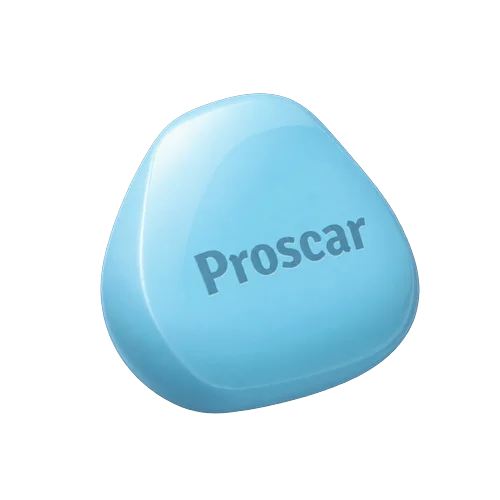
Proscar is supplied as an oral film-coated tablet containing finasteride. The amount taken at each intake is determined individually for each person rather than being one fixed amount.

Directions for use

The standard regimen for BPH is one tablet once daily, taken by mouth. The prescribing clinician may individualise the amount per intake for the person’s clinical circumstances, but Proscar treatment for BPH is ordinarily based on the standard daily tablet.

  • Take the tablet at approximately the same time each day.
  • Swallow it with water.
  • Do not crush, chew or split the tablet.
  • Continue treatment for the duration prescribed.
  • A missed dose should not be replaced with two tablets at the next scheduled time.

Food does not materially alter finasteride exposure, so the tablet can be taken with meals or on an empty stomach. Consistent daily use matters because the treatment works through sustained hormonal suppression rather than a short-lived urinary effect.

The NHS explains that finasteride is generally taken once daily for prostate enlargement, while the product information sets out the specific administration and handling precautions [2].

If a tablet is missed, take the next dose at the usual time. Do not take an extra tablet to compensate, because doubling the dose does not restore the intended treatment schedule.

Comparison

BPH treatment depends on prostate size, symptom severity, urinary flow, residual urine, sexual health, other conditions and personal treatment priorities. Proscar is most useful when prostate enlargement is a significant part of the problem.

Treatment approach Main action and timing
Proscar, a 5-alpha-reductase inhibitor Reduces DHT and prostate volume; symptom improvement develops gradually over months
Alpha-blocker Relaxes smooth muscle around the prostate and bladder outlet; urinary symptoms may improve sooner
BPH surgery Removes or reshapes obstructing tissue; can provide rapid relief when medicines fail or complications develop

Alpha-blockers may suit men who need faster symptom relief, although dizziness, postural blood-pressure drops and ejaculation changes can occur. They do not shrink the prostate. Proscar may suit men with a larger prostate and a longer-term risk of progression, but it requires patience and may cause sexual adverse effects.

Some men receive combination treatment with a 5-alpha-reductase inhibitor and an alpha-blocker. This can pair gradual prostate reduction with earlier symptom relief, though the combined adverse-effect burden may be greater. A clinician weighs the potential benefit against blood-pressure effects, sexual function and other medical factors.

Surgery becomes more relevant when there is recurrent urinary retention, repeated infection, bladder damage, stones, kidney effects or persistent symptoms despite drug treatment. Procedures can relieve obstruction more quickly, but they involve anaesthesia, recovery and procedure-specific risks.

The European Association of Urology guideline framework supports choosing treatment according to symptom burden, prostate features and progression risk rather than using one approach for every man [5].

Common mistakes

  • Expecting immediate urinary relief after the first tablet.
  • Taking two tablets after a missed dose.
  • Crushing or chewing the film-coated tablet.
  • Failing to mention finasteride before a PSA test.
  • Stopping treatment without discussing persistent symptoms or adverse effects.
  • Assuming that a weaker urinary stream always represents uncomplicated BPH.
  • Ignoring blood in the urine, recurrent infection or acute retention.
  • Treating a new breast lump as an ordinary tablet reaction.

A man with painful urination, fever, visible blood in the urine, severe lower abdominal pain or an inability to pass urine needs assessment for causes that may require different treatment. Proscar should not delay evaluation of those symptoms.

Keep a simple symptom record for the first few months: night-time trips, urgency, weak-stream days and leakage episodes. This gives the prescriber a clearer picture than a general statement that urination is “better” or “worse”.

What doctors say

In clinical practice, doctors usually set expectations before prescribing Proscar: urinary improvement is gradual, and the treatment is assessed over months rather than days. A man who stops after a week because the stream has not changed has not given the mechanism enough time to show its full effect.

Clinicians also separate symptom relief from disease modification. A tablet may reduce the chance of progression without producing a dramatic early sensation. Doctors monitor symptoms, urinary function, adverse effects and PSA trends together.

One frequently missed point concerns PSA. A lower PSA after finasteride may reflect the drug’s hormonal action, not necessarily a lower underlying cancer risk. The baseline value, treatment duration and later changes all matter.

Doctors also ask about sexual function directly, because patients may otherwise avoid mentioning changes in libido, erection or ejaculation. This conversation helps distinguish a treatment effect from diabetes, vascular disease, depression, relationship stress or another medicine.

What customers often ask

What is the best time of day to take Proscar?

Proscar can be taken at any consistent time, with or without food. The NHS states that finasteride is taken once daily, and taking it alongside an established routine can improve adherence. Guidance reviewed by the MHRA in 2024 also supports regular daily use rather than timing the dose around urinary symptoms.

What should I do after a missed Proscar dose?

Take the next tablet at the usual time and do not double the amount. The FDA (2014) prescribing information advises against taking extra tablets to compensate for a missed dose. A single missed dose is unlikely to reverse the gradual hormonal effect, while repeated missed doses can reduce treatment consistency.

How long does one Proscar dose keep working?

Finasteride has a short plasma half-life, but its effect on prostate DHT persists beyond the time the tablet remains in the bloodstream. The EMA (2018) explains that continued daily treatment is needed to maintain suppression and support reduction in prostate volume. Symptom improvement may take several months, so one tablet should not be viewed as a rapid, one-day treatment.

What should I do if the expected result does not come?

Arrange a clinical review if symptoms remain unchanged, worsen or interfere with sleep and daily activities. NICE (2010) guidance recommends reassessing men whose lower urinary tract symptoms do not respond adequately, since infection, bladder dysfunction, urethral narrowing or another prostate condition may be present. Do not increase the amount independently.

Can Proscar be taken with food or on an empty stomach?

Yes, Proscar may be taken with food or without food. The NHS (2024) describes once-daily administration without requiring a specific meal relationship. Taking it after breakfast or another regular meal may help memory, but the tablet should still be swallowed intact.

What should be discussed with a doctor before starting Proscar?

Tell the doctor about liver disease, urinary retention, urethral problems, fertility plans, breast symptoms, depression and every medicine or supplement being used. The MHRA (2024) safety information has highlighted the need to discuss persistent sexual or mood-related symptoms. PSA testing should also be planned with finasteride use in mind because the drug lowers measured PSA.

Do you offer anonymous delivery?

Your order will be securely packed and shipped within 24 hours. This is exactly what your package will look like (images of an actual item sent). It has the size and look of a regular private letter (24x11x0.7 cm) and its contents cannot be seen.

Comparison

Comparison table: Benign Prostatic Hyperplasia

How Buyers Rate Proscar

4.3
Based on 5 reviews
Colin, 34
Cambridge
Several months
Verified
Rating: 5 out of 5

I took one 5 mg tablet daily for several months. I used Proscar for prostate symptoms and noticed that night-time trips to the toilet became less disruptive after several months. The improvement was gradual, but I was satisfied that sleep became easier.

11 Oct 2026
Christopher, 41
Edinburgh
Several months
Verified
Rating: 3.5 out of 5

I took one 5 mg tablet daily for several months. The urinary hesitation improved after I had been taking it for a while, although the change was slower than I expected. I also noticed a mild reduction in ejaculate volume, which was a reservation for me.

19 Oct 2026
Richard S., 61
Brighton
Several months
Verified
Rating: 5 out of 5

I took one 5 mg tablet daily for several months. My stream became steadier and I was waking less often during the night. I continued taking the tablet each day because the benefit built up rather than appearing straight away.

28 Oct 2026
Darren, 54
Plymouth
Several months
Verified
Rating: 3 out of 5

I took one 5 mg tablet daily for several months. Proscar helped with urgency but did not completely resolve the weak stream. I developed a reduced interest in sex and stopped after discussing the problem with my doctor.

31 Oct 2026
Ryan T., 33
Ipswich
Several months
Verified
Rating: 5 out of 5

I took one 5 mg tablet daily for several months. After a few months, starting urination felt easier and I had fewer interrupted nights. Taking the tablet with my morning routine made it easier to remember.

7 Nov 2026

Sources

  1. National Institute for Health and Care Excellence (NICE) (2010). Lower urinary tract symptoms in men: management, guideline CG97
  2. NHS (2024). Finasteride: how and when to take it
  3. U.S. Food and Drug Administration (FDA) (2014). PROSCAR (finasteride) tablets, prescribing information
  4. European Medicines Agency (EMA) (2018). Finasteride-containing medicinal products: product information
  5. European Association of Urology (EAU) (2025). EAU Guidelines on the Management of Non-neurogenic Male Lower Urinary Tract Symptoms
Get our free app Shop faster and track your orders 4.0 · 224 reviews Install