I took Nolvadex 20 mg once daily after treatment for hormone-sensitive breast cancer and have continued it for several months. The tablets fitted easily into my morning routine, and I felt well enough to return to regular walks within a few weeks. The hot flushes were annoying at night, so my sleep was not perfect, but the treatment still felt worthwhile.
Nolvadex
Adults with hormone receptor-positive breast cancer may be prescribed Nolvadex as part of endocrine treatment after surgery or for advanced disease. Nolvadex contains tamoxifen, a selective oestrogen receptor modulator that blocks oestrogen signalling in breast tissue. The tablets are also used in selected patients to reduce breast cancer risk when an oncology team considers this appropriate.
Overview
Nolvadex contains tamoxifen, a selective oestrogen receptor modulator that blocks oestrogen signalling in breast tissue. Tamoxifen belongs to the selective oestrogen receptor modulator, or SERM, class.
Therapeutic indications
Nolvadex is used mainly in hormone receptor-positive breast cancer. Adults with hormone receptor-positive breast cancer may be prescribed Nolvadex as part of endocrine treatment after surgery or for advanced disease. The tablets are also used in selected patients to reduce breast cancer risk when an oncology team considers this appropriate.
Mechanism of action
Oestrogen can stimulate the growth of hormone receptor-positive breast cancer cells. Tamoxifen enters cells and binds to oestrogen receptors, reducing oestrogen-driven signalling in breast tissue. Its effects vary by tissue: it blocks oestrogen activity in breast tissue but can show oestrogen-like activity in other organs. This tissue-selective behaviour explains both its therapeutic role and its range of possible adverse effects. The distinction helps clinicians weigh expected benefit against tissue-specific risks. [1]
Reasons not to use it
- Previous deep-vein thrombosis or pulmonary embolism
- A known clotting disorder
- Unexplained vaginal bleeding
- A history of endometrial disease
- Significant liver disease
- Allergy to tamoxifen or an excipient
- Pregnancy or suspected pregnancy
- Breastfeeding
- Current treatment with certain anticoagulants or interacting medicines
Tamoxifen should not be used during pregnancy because hormonal treatment can harm the developing pregnancy. People who could become pregnant need reliable contraception during treatment and for the period specified by their oncology team after stopping.
Strong CYP2D6 inhibitors, including paroxetine and fluoxetine, may reduce formation of active tamoxifen metabolites. Other medicines, including some antipsychotics, anti-arrhythmics, and anticoagulants, require a medication review. Warfarin can require closer monitoring because tamoxifen may alter anticoagulant effects.
The MHRA has highlighted the need for vigilance around thromboembolic symptoms and medicine interactions in tamoxifen users. [4]
When this is not for you
Tamoxifen may not be suitable if you have had a deep-vein thrombosis or pulmonary embolism, have unexplained vaginal bleeding, significant liver disease, or an allergy to tamoxifen. Tell the oncology team if you are pregnant, breastfeeding, have a clotting disorder, or take anticoagulants or antidepressants such as paroxetine or fluoxetine. Seek urgent help for one-sided leg swelling, sudden chest pain, unexplained breathlessness, coughing blood, sudden weakness, or thoughts of self-harm.
Unwanted effects
Tamoxifen changes oestrogen signalling, so symptoms resembling reduced oestrogen activity can occur. Hot flushes and night sweats are among the most familiar effects. Other reported reactions include tiredness, nausea, headache, dizziness, vaginal dryness, vaginal discharge, irregular menstrual bleeding, and fluid retention. [2]
The intensity varies. Some people notice mild warmth for a few minutes, while others experience repeated episodes that disturb sleep or concentration.
Vasomotor symptom management
Practical measures can reduce disruption from hot flushes:
- Wear light, breathable layers that can be removed easily.
- Keep the bedroom cool and use lighter bedding.
- Record when flushes occur, especially after alcohol, spicy food, caffeine, or emotional stress.
- Use relaxation breathing when a flush begins.
- Discuss persistent night sweats or sleep disruption with the oncology team.
A symptom diary can reveal patterns that are easy to miss during a short appointment. It can also help distinguish hot flushes from fever, infection, or another medical problem.
Tamoxifen can also affect the menstrual cycle. Vaginal bleeding after menopause requires prompt medical assessment, even when it appears light or occurs only once. Pelvic symptoms should not be automatically attributed to endocrine treatment.
Mood changes can occur during breast cancer treatment, though the cause may involve several factors. These include the cancer diagnosis, surgery, sleep loss, pain, menopausal symptoms, social stress, and other medicines as well as tamoxifen itself.
Some patients report low mood, anxiety, irritability, reduced motivation, or feeling depressed. A persistent change deserves attention, especially when it affects sleep, appetite, work, relationships, or the ability to continue treatment.
Clinical observations on mood alterations
Depressive symptoms should be described clearly rather than dismissed as an unavoidable part of treatment. An oncology team may review other medicines, symptom timing, thyroid function, sleep, pain, and the need for psychological support. Antidepressant selection also matters because several medicines affect CYP2D6.
Urgent help is needed for thoughts of self-harm, inability to stay safe, severe agitation, or rapidly worsening depression. A patient should not stop tamoxifen abruptly without discussing the treatment plan with the prescribing team, because interruption can reduce the intended protection against hormone-sensitive disease.
Most adverse effects are manageable, but some require urgent assessment.
Common or clinically recognised reactions include:
- Hot flushes and night sweats
- Tiredness and sleep disturbance
- Nausea or indigestion
- Headache or dizziness
- Vaginal dryness or discharge
- Menstrual changes
- Muscle cramps or joint discomfort
- Mood changes
- Skin rash or itching
Tamoxifen can increase the risk of venous thromboembolism. One-sided leg swelling, sudden chest pain, unexplained breathlessness, coughing blood, or sudden weakness requires emergency medical assessment. Visual changes also need prompt review because retinal or other eye problems have been reported.
A rare but serious concern is endometrial cancer. Any postmenopausal vaginal bleeding, pink discharge, or unexplained pelvic pain should be assessed. The risk is not a reason to stop treatment independently; the oncology team can investigate symptoms while weighing the cancer-treatment benefit.
A practical detail is that hot flushes and anxiety can feel similar at first. A racing heart with sweating may reflect a flush, but chest pain, faintness, or breathlessness should not be assumed to be a routine side effect.
Formulation
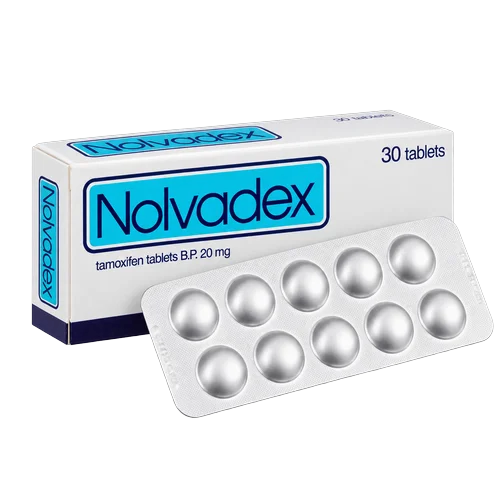
Nolvadex contains tamoxifen as its active ingredient. The product is supplied as tablets, with 30 tablets in the pack. Tamoxifen belongs to the selective oestrogen receptor modulator, or SERM, class.
Pharmacological classification
Tamoxifen is a non-steroidal SERM. Its active metabolite endoxifen contributes substantially to the anti-oestrogen effect. The body forms endoxifen through liver enzymes, including CYP2D6, so medicines that strongly inhibit CYP2D6 can reduce tamoxifen activation.
Nolvadex is used mainly in hormone receptor-positive breast cancer. The treatment decision depends on tumour biology, menopausal status, previous surgery, chemotherapy or radiotherapy, recurrence risk, and the treatment plan made by the oncology team.
Directions for use
Nolvadex tablets are taken by mouth. Dosing differs between strengths and between users, so there is no single amount that suits everyone. The prescribing oncologist determines the dose, schedule, and treatment duration for the individual clinical situation.
- Swallow the tablet with water.
- Take it at the same time each day when possible.
- It may be taken with or without food.
- Do not double the next dose after a missed dose.
- If the next dose is due soon, skip the missed dose and resume the regular schedule.
- Do not crush or chew the tablet unless a prescriber has given a specific reason and instruction.
- Keep a written record if several medicines are taken at different times.
Tamoxifen is not an immediate symptom-relief treatment. Its role is long-term endocrine control, so benefits are assessed through follow-up examinations, imaging where appropriate, and the oncology plan rather than by how a person feels after one tablet.
Long-term treatment course
Treatment commonly continues for several years. Five years has been a traditional course for many patients, while some people receive longer treatment based on recurrence risk, menopausal status, tolerability, and the balance between benefit and harm. The duration should be reviewed periodically rather than chosen independently.
Clinical monitoring may include breast examination, imaging, gynaecological assessment when symptoms occur, and review of medicines that could interact with tamoxifen. The Royal College of Radiologists and UK oncology services use tumour and patient factors to guide follow-up rather than applying one identical schedule to every patient. [3]
Comparison
The choice of endocrine treatment depends on menopausal status, recurrence risk, bone health, clotting history, tumour features, and previous treatment.
| Treatment approach | Main action | Common clinical trade-off |
|---|---|---|
| Tamoxifen | Blocks oestrogen receptors in breast tissue | Hot flushes, clot risk, and uterine effects |
| Aromatase inhibition | Reduces oestrogen production after menopause | Joint symptoms and bone-density loss |
| Ovarian suppression with endocrine treatment | Reduces ovarian oestrogen production before menopause | Menopausal symptoms and effects on bone health |
Tamoxifen may be selected for premenopausal patients because it blocks the receptor rather than relying on postmenopausal hormone production. It can also be used after menopause in situations where the oncology team considers its benefits suitable.
Aromatase inhibitors may be preferred for some postmenopausal patients, but they can worsen joint stiffness and accelerate bone loss. Ovarian suppression may be combined with another endocrine approach in selected premenopausal patients. These options are not interchangeable without a clinician-led treatment decision.
Common mistakes
Several avoidable mistakes can reduce treatment reliability:
- Stopping tamoxifen after hot flushes without contacting the oncology team.
- Taking two tablets after forgetting one.
- Starting an antidepressant without checking for CYP2D6 inhibition.
- Assuming vaginal bleeding after menopause is a harmless hormonal effect.
- Ignoring calf swelling or sudden breathlessness.
- Crushing tablets because they are difficult to swallow without seeking a suitable formulation.
- Treating every episode of sweating as a hot flush when fever or infection may be present.
- Forgetting to mention tamoxifen before surgery or prolonged immobilisation.
One small detail matters before planned surgery: the oncology and surgical teams need to know about tamoxifen because clot risk and temporary interruption may require individual assessment.
What doctors say
In clinical practice, oncologists usually explain that tamoxifen is preventive as well as therapeutic. It may reduce the chance of hormone-sensitive breast cancer returning, but it does not remove every recurrence risk and cannot treat cancers that do not depend on oestrogen signalling.
Doctors also focus on persistence. Missing occasional doses happens, but repeated interruptions can reduce the protective exposure intended by endocrine therapy. A practical review may uncover hot flushes, vaginal symptoms, sleep disruption, depression, or medicine interactions that can be addressed without abandoning treatment.
The balance changes over time. A person who tolerated the first year well may later develop abnormal bleeding, clotting risk, or another medicine that alters the treatment choice. Regular review keeps the regimen aligned with current health.
What customers often ask
Is Nolvadex suitable for older adults?
Older adults may be more vulnerable to falls from dizziness, complications from immobility, and medicine interactions. The British Geriatrics Society supports medication reviews when several treatments are taken together. New breathlessness, leg swelling, confusion, or unexplained bleeding needs prompt clinical assessment.
What should I do after missing a Nolvadex dose?
Take the missed tablet when remembered unless the next scheduled dose is close. When the next dose is due soon, skip the missed tablet and continue with the normal schedule. NHS medicines guidance advises against taking two doses together to compensate.
Does Nolvadex cause hot flushes?
Yes, hot flushes and night sweats are recognised effects of tamoxifen. The NHS describes them as common endocrine-treatment symptoms that can range from mild warmth to repeated episodes affecting sleep. They may improve as the body adapts, though some people continue to experience them.
Cool clothing, a cooler bedroom, and reducing personal triggers may help. Breast Cancer Now (2025) advises discussing persistent symptoms because non-hormonal treatment options may be appropriate for some patients. Hormone replacement therapy should not be started independently during hormone-sensitive breast cancer treatment.
How long does a Nolvadex course last, and is long-term use acceptable?
Many breast cancer treatment plans use tamoxifen for five years, while selected patients may continue for longer. The National Institute for Health and Care Excellence (2024) bases endocrine-treatment decisions on recurrence risk, menopausal status, tumour features, and treatment tolerance. The best duration is set through oncology follow-up.
Long-term use can be appropriate when the expected reduction in recurrence risk outweighs adverse effects. Persistent abnormal bleeding, clot symptoms, or severe mood changes can alter the risk-benefit assessment. A planned review is preferable to stopping suddenly.
Can Nolvadex be combined with antidepressants or supplements?
Some antidepressants can reduce tamoxifen activation through CYP2D6 inhibition, with paroxetine and fluoxetine among the medicines that require special attention. The British National Formulary (2025) advises a medicine review before combining tamoxifen with interacting treatments. Do not start, stop, or switch an antidepressant without a prescriber-led plan.
Herbal products and supplements also deserve review because their ingredients and effects can vary. St John’s wort may alter drug metabolism and is unsuitable to start casually during tamoxifen therapy. Give the oncology team a complete list, including non-prescription products and occasional medicines.
How long does one Nolvadex dose keep working?
Tamoxifen and its active metabolites remain in the body for a prolonged period, so the treatment is designed for regular daily dosing rather than repeated doses for immediate symptom relief. The EMA (2024) describes tamoxifen as undergoing extensive metabolism, with active metabolites contributing to its clinical effect. Missing a dose should not be corrected by taking extra tablets.
The protective purpose of treatment develops through continued exposure over weeks, months, and years. A person should not judge the treatment by an immediate sensation after one tablet. Oncology follow-up determines whether the treatment remains appropriate.
How should Nolvadex be stored at home and while travelling?
Keep the tablets in a dry place at room temperature, away from excessive heat, moisture, and direct sunlight. The NHS recommends storing medicines securely and out of children’s reach. A bathroom cabinet may be unsuitable because repeated humidity can affect medicines.
Do you offer anonymous delivery?
Your order will be securely packed and shipped within 24 hours. This is exactly what your package will look like (images of an actual item sent). It has the size and look of a regular private letter (24x11x0.7 cm) and its contents cannot be seen.
Comparison
How Buyers Rate Nolvadex
I took tamoxifen 20 mg once daily for six months as prescribed and found the daily tablet straightforward. After the initial adjustment, I noticed fewer worries about the treatment and managed normal workdays again. I was satisfied with how simple the routine became.
I took Nolvadex 20 mg once daily for one year as part of my long-term follow-up plan. I did not notice dramatic day-to-day changes, yet I appreciated having a clear routine and continuing with ordinary activities. The tablet was easy to swallow with water and caused little disruption for me.
Sources
- Electronic Medicines Compendium (eMC) (2025). Nolvadex 20 mg Film-coated Tablets: Summary of Product Characteristics
- NHS (2024). Side effects of tamoxifen
- National Institute for Health and Care Excellence (NICE) (2024). Early and locally advanced breast cancer: diagnosis and management
- Medicines and Healthcare products Regulatory Agency (MHRA) (2024). Tamoxifen: drug safety information