
Deborah B., 31
Derby
About eight weeks
Verified
The hair on my upper lip came through more slowly, and I was pleased that I did not need to remove it as often.
8 Nov 2026
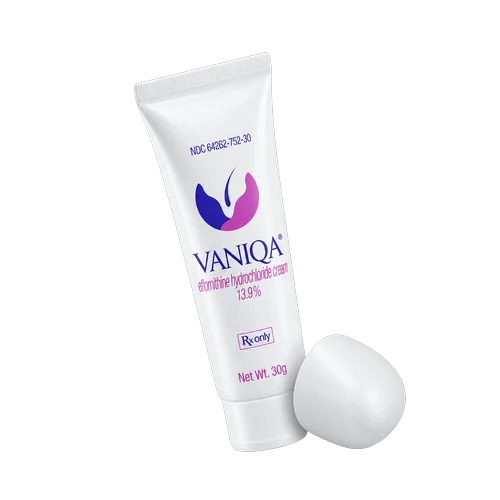
Vaniqa is a prescription cream applied to unwanted facial hair in adult women. Its active ingredient, eflornithine hydrochloride 13.9%, slows hair growth within the follicle rather than removing hair at the skin surface. It is used alongside shaving, waxing, laser treatment or other hair-removal methods.
Vaniqa is a prescription cream applied to unwanted facial hair in adult women. Its active ingredient, eflornithine hydrochloride 13.9%, slows hair growth within the follicle rather than removing hair at the skin surface. It is used alongside shaving, waxing, laser treatment or other hair-removal methods.
Vaniqa Cream is a medicated topical prescription treatment for unwanted or excessive facial hair in adult women. It may be prescribed for unwanted hair affecting:
Vaniqa can reduce the speed of new facial hair growth when used consistently. Some women find that they need to shave, tweeze or wax less often once the treatment has had time to work.
Eflornithine hydrochloride inhibits ornithine decarboxylase, an enzyme involved in the production of polyamines within hair follicles. Polyamines support cellular activity and are involved in the growth of hair. By reducing ornithine decarboxylase activity, eflornithine slows the rate at which new facial hair develops.
The cream acts locally after application to the skin. It does not permanently destroy the follicle and does not remove hair that has already emerged. Existing hair still requires a physical or chemical removal method.
The effect is gradual because the product influences new growth rather than immediately changing the visible hair shaft.
Hair grows in cycles. Each follicle moves through active growth, transition and resting phases. Eflornithine affects biochemical activity linked with the active growth phase, so newly emerging hair may appear more slowly and may become easier to manage over time.
The result is not permanent facial hair removal.
The European Medicines Agency describes eflornithine cream as a treatment for reducing unwanted facial hair in women, with benefits developing during continued use [1].
Vaniqa is not suitable for you if:
Pregnancy and breastfeeding require individual assessment. Eflornithine cream should only be used during these periods when the prescriber considers the expected benefit appropriate.
Do not use this treatment if you are allergic to its active ingredient or if the skin you want to treat has open wounds, infection or severe inflammation. It is intended for adult women, and a severe reaction after application means you should stop and seek medical help. Pregnancy and breastfeeding should be discussed with the prescriber before use.
The most common adverse effects are local skin reactions at the application site. These may include temporary stinging, burning, redness, dryness, itching or an acne-like flare. Such reactions are often mild and may settle as the skin adapts.
Other possible reactions include:
Stop applying Vaniqa and seek urgent medical help if swelling of the face, lips or tongue, breathing difficulty, widespread hives, blistering or rapidly worsening skin inflammation develops. These symptoms may indicate a serious allergic or skin reaction.
A mild burning sensation immediately after application can occur, especially on recently waxed or shaved skin. Persistent pain, marked swelling or peeling needs clinical assessment rather than repeated application.
The MHRA provides UK safety information for medicines and expects suspected serious adverse reactions to be reported through the Yellow Card Scheme. Local reactions remain the main practical issue with topical eflornithine.
The active ingredient is eflornithine hydrochloride cream 13.9%. Vaniqa is intended for adult women and is not designed for use by men or people under 18.
The usual application pattern for Vaniqa is a thin layer to clean, dry affected skin twice daily, with applications spaced by at least eight hours. The cream should remain on the skin for at least four hours before washing the treated area.
Use depends on the purpose of treatment and is agreed with a doctor or pharmacist. A typical application routine is:
Do not apply extra cream to compensate for a missed application. Apply the next scheduled amount when appropriate. Excess cream does not produce faster results and may increase skin irritation.
Cosmetics or moisturiser can usually be applied after the cream has absorbed. Avoid getting Vaniqa into the eyes or onto the lips. If contact occurs, rinse the area with clean water.
Shaving may be continued during treatment. Waxing and threading can also be used, though freshly treated skin may be more sensitive after hair removal. Leave enough time for the skin barrier to recover before applying the cream.
Vaniqa can be combined with physical hair removal. Each option works differently and has different practical limitations.
Shaving is quick and does not make hair grow back thicker, although stubble can feel more noticeable as it emerges. Waxing and threading remove hair from the root, so the skin may remain hair-free for longer, but both methods can cause redness, ingrown hairs or follicle irritation.
Depilatory creams dissolve hair at the skin surface. They can act quickly, but facial formulations must be used carefully because the chemicals may cause burning or dermatitis. A product intended for the legs or body should not be used on the face unless specifically authorised for facial skin.
Laser treatment targets pigment within the hair and may reduce growth after a course of sessions. Results vary with hair colour, skin tone, hormonal factors and the treatment device. Electrolysis uses an electrical current to treat individual follicles and can be useful for small areas, though it requires repeated appointments and may be uncomfortable.
Vaniqa differs from these methods because it slows follicular enzyme activity rather than cutting, dissolving or physically targeting the hair. It may be selected when reducing the pace of regrowth is more useful than relying on removal alone.
Several usage errors can reduce comfort or make the treatment seem ineffective:
One overlooked mistake is changing hair-removal methods repeatedly during the first weeks. Frequent switching can irritate the skin and makes it difficult to judge whether slower regrowth is occurring.
Another is applying cream only when hair becomes visible. Vaniqa is intended for regular use, because its action concerns new follicular growth rather than the appearance of individual hairs on a given day.
In clinical practice, prescribers usually set a realistic expectation: Vaniqa is a growth-slowing treatment, not an instant depilatory. The visible benefit is easier to judge when the same hair-removal method is used consistently during the first months.
Doctors also examine the pattern of hair growth. Facial hair that develops slowly over many years may have a different cause from hair that becomes prominent within a few months. Associated acne, irregular periods, fertility concerns or scalp hair thinning can support assessment for PCOS or another endocrine disorder.
The WHO has identified PCOS as a common hormonal disorder associated with reproductive and metabolic effects, although facial hair alone does not establish the diagnosis [2]. NICE guidance on hirsutism also supports clinical assessment when symptoms suggest an endocrine cause. Vaniqa can address the facial symptom while separate care addresses the underlying condition.
A practical prescribing point is adherence. Missing applications occasionally is unlikely to cause an immediate visible change, but irregular use makes the treatment harder to evaluate. Applying more cream cannot compensate for missed doses.
One application does not provide an all-day removal effect in the way a depilatory product might. Eflornithine works gradually within the follicle, so the benefit depends on repeated use rather than a single application. The EMA’s 2009 product information describes regular twice-daily use as part of treatment, with improvement developing over time. Maintain the prescribed routine and avoid applying extra cream after a missed dose.
Vaniqa does not require tapering when treatment is stopped. Its effect is maintained only while the cream is being used, so new facial hair may gradually return towards the previous growth pattern after discontinuation. The European Medicines Agency’s 2009 product information describes this as a management effect rather than permanent follicle removal. Stopping because of severe irritation should be followed by prompt medical advice, especially if swelling or blistering occurs.
Older adult women may be prescribed Vaniqa when facial hair reduction is clinically appropriate. Age alone does not automatically rule out treatment, but the clinician may review skin fragility, current medicines, allergies and conditions affecting the face. MHRA medicine-safety principles from 2024 support individual assessment when topical treatment is used on sensitive or damaged skin. A new increase in facial hair later in life should also be medically assessed rather than treated only as a cosmetic concern.
Vaniqa is intended for adult women and should not be used by people under 18 unless a specialist has made a specific clinical decision. The EMA’s 2009 product information limits its established use to adult women with unwanted facial hair. Puberty-related hair growth may have different causes and treatment considerations. A young person with distressing or rapidly increasing facial hair needs assessment of hormonal and dermatological factors before treatment is considered.
A known allergy to eflornithine hydrochloride or another ingredient rules out treatment. Vaniqa should also not be applied to open wounds, infected skin or severe active dermatitis. The MHRA’s 2024 general medicine-safety guidance supports stopping a topical product when a severe allergic reaction develops. Facial swelling, breathing difficulty, widespread hives or blistering requires urgent medical attention rather than another application.
Stop applying Vaniqa and seek urgent help for facial or tongue swelling, breathing difficulty, widespread hives, blistering or rapidly spreading inflammation. Severe pain, marked skin peeling or eye involvement also needs prompt assessment. The MHRA’s 2024 Yellow Card framework recognises serious allergic and skin reactions as events requiring safety reporting and clinical review. Mild short-lived stinging is different from a rapidly worsening reaction, but persistent irritation should still be discussed with the prescriber.
Vaniqa contains eflornithine hydrochloride and slows enzyme activity inside hair follicles. Depilatory creams use chemicals that break down the hair shaft at the skin surface, producing a faster but temporary removal effect. The EMA’s 2009 product information places eflornithine in a follicular growth-management role rather than a conventional depilatory role. Vaniqa may therefore be used alongside hair removal, while a depilatory cream replaces the visible hair for a short period.
Your order will be securely packed and shipped within 24 hours. This is exactly what your package will look like (images of an actual item sent). It has the size and look of a regular private letter (24x11x0.7 cm) and its contents cannot be seen.
The hair on my upper lip came through more slowly, and I was pleased that I did not need to remove it as often.
I noticed a clear improvement, and using it with my usual hair-removal method made the result more noticeable.
Vaniqa did not make enough difference for me, and repeated redness and stinging around the chin led me to stop using it and discuss other options with my doctor.