Skip to content
24/7 Support
Save up to 80%
Fast & Discreet Delivery
Symbicort

Symbicort

Quality products
24/7 Support
Fast delivery
Delivery from 4 days
Active ingredient Budesonide

Free delivery on orders from £ 172.00, free express delivery from £ 258.00

Symbicort is prescribed for asthma and chronic obstructive pulmonary disease (COPD) when both anti-inflammatory control and long-lasting bronchodilation are needed. Budesonide reduces airway inflammation, while formoterol relaxes tightened bronchial muscles.

Overview

Symbicort combines budesonide, which reduces airway inflammation, with formoterol, which relaxes tightened bronchial muscles. The Turbuhaler delivers a measured dry-powder dose through the mouth. The dose reaches the lungs only when the user inhales with sufficient force. Correct inhaler technique therefore affects how much medicine reaches the airways.

Therapeutic indications

Symbicort is used in asthma and COPD when an inhaled corticosteroid plus a long-acting bronchodilator is clinically appropriate. The exact regimen depends on the diagnosis, symptom pattern, previous treatment, age, and other medicines.

In asthma, the combination may be prescribed for:

  • Regular maintenance treatment in persistent asthma.
  • Moderate-to-severe asthma that remains symptomatic despite inhaled corticosteroid treatment.
  • Maintenance-and-reliever therapy, also called MART, when the prescribed plan permits the same inhaler to be used for daily control and worsening symptoms.
  • Reducing the risk of asthma attacks by treating airway inflammation and bronchial constriction together.

Mild asthma is assessed individually. Some patients need an anti-inflammatory reliever approach, while others require regular maintenance treatment. Symbicort is not automatically suitable for every person with mild asthma.

COPD involves persistent airflow limitation and may include chronic cough, sputum production, wheeze, and exertional breathlessness. A combination containing budesonide and formoterol can be selected when inhaled corticosteroid treatment and long-acting bronchodilation are both indicated. The Global Initiative for Chronic Obstructive Lung Disease describes treatment selection according to symptoms, exacerbation history, eosinophil counts, and pneumonia risk.[2]

A sudden severe attack with marked difficulty speaking, blue or grey lips, confusion, collapse, or rapidly worsening breathlessness requires urgent medical attention rather than repeated self-treatment with an inhaler.

Mechanism of action

Budesonide reduces inflammatory activity in the airways by treating the underlying airway inflammation and sensitivity. Formoterol stimulates beta2 receptors in bronchial smooth muscle, causing the muscle to relax and increasing the airway diameter. Together, the active substances address inflammation and muscle tightening, two processes that narrow the airways.[1]

Reasons not to use it

Tell the prescriber about heart rhythm problems, uncontrolled high blood pressure, diabetes, hyperthyroidism, low potassium, glaucoma, cataracts, osteoporosis, tuberculosis, recurrent chest infections, or previous oral thrush.

Medicines that may require specific review include:

  • Beta-blockers, which can reduce bronchodilator effects and may worsen bronchospasm.
  • Diuretics, corticosteroids, or other medicines that lower potassium.
  • Digoxin, because low potassium may increase rhythm-related risk.
  • Monoamine oxidase inhibitors and tricyclic antidepressants, which can increase cardiovascular effects.
  • Strong CYP3A4 inhibitors, such as some azole antifungals and macrolide antibiotics, which can raise budesonide exposure.
  • Other long-acting beta2-agonists or inhaled corticosteroid combinations, which may duplicate treatment.

Pregnancy and breastfeeding require an individual treatment decision.

When this is not for you

Symbicort is not suitable for everyone. This treatment is not for you if:

  • You have had a serious allergic reaction to budesonide, formoterol, or an inhaler ingredient.
  • You have severe acute breathlessness that is worsening rapidly and requires emergency treatment.
  • You have been told to avoid beta2-agonists because of a serious rhythm disorder without specialist review.
  • The prescribed regimen does not match your age, diagnosis, or respiratory treatment plan.
  • You cannot use a dry-powder inhaler correctly and no suitable alternative has been arranged.

Unwanted effects

Common or clinically recognised effects may include:

  • Headache.
  • Tremor or shakiness.
  • Palpitations or a faster heartbeat.
  • Muscle cramps.
  • Hoarse voice.
  • Throat irritation.
  • Cough after inhalation.
  • Oral thrush.
  • Mild nausea.

Formoterol can cause beta2-agonist effects such as tremor, palpitations, or muscle cramps. Budesonide can contribute to oral candidiasis, hoarseness, and throat irritation. Rinsing the mouth and spitting out the water after maintenance doses reduces local steroid exposure.

A spacer is not used with the Turbuhaler, so mouth rinsing and correct inhalation technique are the practical measures most relevant to this device.

Rare but serious reactions include paradoxical bronchospasm, severe allergic reaction, clinically significant heart rhythm disturbance, and marked worsening of breathing immediately after inhalation. Long-term or high-dose inhaled corticosteroid exposure can contribute to adrenal suppression, reduced bone density, cataracts, glaucoma, and growth effects in children. The MHRA has highlighted adrenal insufficiency as a recognised risk with prolonged or high-dose inhaled corticosteroid treatment.[3]

A sore mouth with white patches or persistent hoarseness can indicate local steroid effects or oral thrush. Rinsing after inhalation helps, but persistent symptoms need assessment and may require antifungal treatment.

One detail patients often miss is that a faster heartbeat after formoterol can feel alarming even when the medicine is working as intended. New, severe, irregular, or persistent palpitations need medical assessment rather than automatic continuation.

Formulation

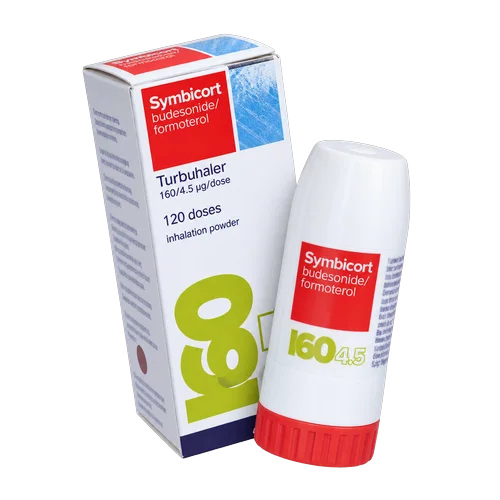
Symbicort Turbuhaler contains budesonide and formoterol in a 160/4.5 strength, with 120 doses. Budesonide is an inhaled corticosteroid, while formoterol is a long-acting beta2-agonist. Together, they address two processes that narrow the airways: inflammation and muscle tightening.[1]

The powder is inhaled into the lungs rather than swallowed. This allows the active substances to act close to the bronchial tubes, although a small amount can still reach the mouth and throat.

Role of Budesonide in Inflammation Control

Budesonide reduces inflammatory activity in the airways. In asthma, inflammation can make the bronchial lining swollen and overly sensitive to triggers such as allergens, cold air, exercise, or respiratory infections. Regular inhaled corticosteroid treatment reduces this underlying sensitivity over time.

Budesonide does not provide instant relief from every episode of breathlessness. Its value comes from consistent anti-inflammatory treatment, which can reduce symptoms and the likelihood of exacerbations.

Role of Formoterol in Airway Relaxation

Formoterol stimulates beta2 receptors in bronchial smooth muscle. The muscle relaxes, allowing the airway diameter to increase and making airflow easier.

Formoterol has a relatively rapid onset compared with many other long-acting bronchodilators, while its effect lasts for an extended period. This combination of quicker onset and longer action is why some prescribed Symbicort regimens use the inhaler for both maintenance and symptom relief.

A dry-powder inhaler depends on a strong, deep breath through the device. A slow, shallow breath may deliver less medicine to the lungs, even when the inhaler has been prepared correctly.

Directions for use

The dose is decided individually, taking age, other medicines, and health conditions into account. The prescribed strength here is 160/4.5, delivered through a Turbuhaler containing 120 doses.

Use Symbicort as follows:

  • Inhale the prescribed number of doses through the mouth.
  • Prepare the Turbuhaler exactly as instructed for its dose-loading mechanism.
  • Breathe out away from the mouthpiece before inhaling the powder.
  • Seal your lips around the mouthpiece and breathe in deeply and forcefully.
  • Hold your breath briefly after inhaling, then breathe out slowly.
  • Rinse your mouth with water and spit it out after regular maintenance doses.
  • Keep the inhaler upright and close it after use.

The inhaler should not be used with a spacer because a Turbuhaler is a breath-actuated dry-powder device. Do not exhale into the mouthpiece, since moisture can affect the powder.

If a dose is missed, take it when remembered unless the next scheduled dose is close. Do not take two doses together to compensate. If several doses have been missed, return to the prescribed schedule rather than trying to catch up.

A useful technique check is to ask a respiratory nurse, asthma clinician, or pharmacist to watch one inhalation. Small errors, such as exhaling into the device or failing to inhale forcefully, are common reasons for poor control.

Comparison

The Symbicort Turbuhaler is a dry-powder inhaler. A pressurised metered-dose inhaler releases medicine from a canister, usually with a slower inhalation coordinated with canister activation. The two devices require different breathing techniques.

Device Main technique Practical feature
Symbicort Turbuhaler Deep, forceful inhalation through the mouthpiece Breath-actuated dry powder with a dose counter
Pressurised metered-dose inhaler Slow inhalation coordinated with canister release May be used with a spacer when prescribed

A Turbuhaler may suit someone who can generate sufficient inspiratory flow and prefers not to coordinate pressing a canister with breathing in. A pressurised device may be preferable for people who struggle to inhale forcefully, although a spacer can alter the technique and may improve delivery.

Children and adults with severe airflow limitation may need an observed technique assessment. Device choice should reflect dexterity, breathing capacity, cognition, and the ability to follow the inhalation steps.

The dose counter should be monitored during use. Feeling powder on the tongue is not a reliable sign that the full dose reached the lungs.

Formoterol is a long-acting beta2-agonist. Albuterol, known as salbutamol in the UK, is a short-acting beta2-agonist commonly used for rapid relief of acute bronchospasm.

Salbutamol generally acts for a shorter period and is used as a separate reliever in many treatment plans. Formoterol has a longer duration, and its relatively rapid onset allows some Symbicort regimens to combine maintenance and reliever treatment. This is only appropriate when the prescriber has selected a MART plan.

Do not assume that every Symbicort prescription permits extra doses during symptoms. Some patients use Symbicort only on a regular schedule and use salbutamol separately for relief. The written regimen determines which approach applies.

Frequent need for a reliever suggests poor control, incorrect technique, an untreated trigger, or a change in the respiratory condition. Needing reliever treatment more often than prescribed requires prompt clinical review.

Common mistakes

Several habits reduce the benefit of Symbicort:

  • Using the inhaler only when breathlessness becomes severe, despite a maintenance prescription.
  • Taking extra doses without knowing whether the prescription is maintenance-only or MART.
  • Exhaling into the Turbuhaler before the next inhalation.
  • Inhaling too gently for a dry-powder device.
  • Failing to rinse the mouth after regular doses.
  • Continuing to use a nearly empty inhaler without monitoring the dose counter.
  • Treating sudden severe breathlessness with repeated doses instead of seeking urgent help.
  • Stopping treatment immediately after symptoms improve.
  • Sharing the inhaler with another person.
  • Storing the device where it can become damp.
Keep the Turbuhaler away from bathroom steam and humid kitchen air. Moisture can interfere with dry powder, while the mouthpiece should remain clean and dry.

Another easy mistake is confusing relief from bronchial tightening with complete control of airway inflammation. Feeling better after formoterol does not necessarily mean the underlying asthma is controlled.

What doctors say

Respiratory clinicians usually focus on three practical questions: whether the diagnosis is correct, whether the inhaler technique works, and whether the selected regimen matches the patient’s risk.

A clinician may say, “The inhaler cannot compensate for an inhalation that never reaches the lungs.” This is why technique review often comes before adding another medicine.

Doctors also look beyond daily symptoms. Night waking, reduced exercise tolerance, repeated courses of oral steroids, emergency visits, and frequent reliever use indicate that asthma control may be inadequate. In COPD, exacerbations, smoking status, lung function, vaccination history, and pneumonia risk also influence treatment decisions.

The British guideline approach supports regular review of inhaler technique and treatment response. A person who feels better should still follow the prescribed schedule, because airway inflammation can return before obvious wheezing appears.

What customers often ask

Is Symbicort suitable for people under 18?

Age eligibility depends on the indication, strength, and prescribed regimen. The EMA product information and MHRA guidance distinguish paediatric use from adult treatment, so a child should receive Symbicort only within an age-appropriate respiratory plan. In 2026, children and teenagers with asthma are commonly assessed by symptom pattern, lung function where possible, growth, and inhaler technique. An adult should supervise younger users until they can consistently prepare and inhale the device correctly.

What should I do after missing a Symbicort dose?

Take the missed dose when remembered unless the next scheduled dose is close. Do not double the amount to replace it, because this can increase tremor, palpitations, and other beta2-agonist effects. The NHS advises returning to the regular schedule rather than taking extra medicine after a missed inhalation. In 2026, the correct response also depends on whether the prescription is maintenance-only or a MART regimen, so follow the individual plan provided by the respiratory team.

How should Symbicort be stored at home and while travelling?

Keep the Turbuhaler dry, at ordinary room temperature, and protected from excessive heat and humidity. Store it with the mouthpiece closed and avoid leaving it in a steamy bathroom, hot car, or damp bag. The MHRA advises patients using inhaled medicines to protect the device from conditions that could affect dose delivery. During travel in 2026, carry the inhaler in hand luggage where possible and keep it accessible rather than placing it in a checked suitcase.

Which symptoms mean I should stop using Symbicort and seek urgent medical help?

Seek urgent help for sudden severe breathlessness, rapidly worsening wheeze, blue or grey lips, confusion, collapse, facial swelling, or difficulty speaking in full sentences. Immediate worsening directly after inhalation may indicate paradoxical bronchospasm, which requires urgent assessment. The 2024 British Thoracic Society asthma guidance treats severe respiratory distress and poor response to reliever treatment as emergencies. Do not keep taking repeated doses while waiting for help unless emergency clinicians specifically instruct you to do so.

Can Symbicort cause oral thrush?

Yes. Budesonide can increase the risk of oral candidiasis, which may cause white patches, soreness, altered taste, or discomfort when swallowing. EMA product information recommends mouth rinsing after inhaled corticosteroid doses, with the water spat out rather than swallowed. In 2026, persistent symptoms should be assessed because thrush may need antifungal treatment and can also indicate that inhaler technique needs correction.

Do you offer anonymous delivery?

Your order will be securely packed and shipped within 24 hours. This is exactly what your package will look like (images of an actual item sent). It has the size and look of a regular private letter (24x11x0.7 cm) and its contents cannot be seen.

How Buyers Rate Symbicort

3.5
Based on 3 reviews
Ben, 63
Birmingham
Several weeks
Verified
Rating: 2 out of 5

Ben, 63 - Birmingham, used Symbicort for several weeks but did not feel that his breathlessness improved enough for everyday walking. He stopped after discussing the lack of benefit with his doctor and needed a different treatment plan.

10 Oct 2026
Charlotte, 27
Hull
First few weeks
Verified
Rating: 4 out of 5

Charlotte, 27 - Hull, used the Turbuhaler regularly and noticed fewer night-time asthma symptoms after the first few weeks. She found the inhalation straightforward once she learned to breathe in firmly rather than gently.

24 Oct 2026
Nicola S., 57
Glasgow
Verified
Rating: 4.5 out of 5

Nicola S., 57 - Glasgow, reported better control during ordinary activities after starting Symbicort. She kept the inhaler in a dry place and found mouth rinsing after each regular dose helped avoid throat irritation.

8 Nov 2026

Sources

  1. European Medicines Agency (2025). Symbicort: EPAR — Product Information
  2. Global Initiative for Chronic Obstructive Lung Disease (2025). Global Strategy for the Prevention, Diagnosis and Management of COPD
  3. MHRA (2014). Inhaled corticosteroids: reminder of risk of adrenal insufficiency
Get our free app Shop faster and track your orders 4.0 · 224 reviews Install