Skip to content
24/7 Support
Save up to 80%
Fast & Discreet Delivery
Strattera

Strattera

Quality products
24/7 Support
Fast delivery
Delivery from 4 days
Active ingredient Atomoxetine

Free delivery on orders from £ 172.00, free express delivery from £ 258.00

Strattera contains atomoxetine, a non-stimulant treatment for Attention Deficit/Hyperactivity Disorder (ADHD) in children, adolescents and adults. It supports attention, impulse control and sustained mental focus through selective noradrenaline reuptake inhibition.

Overview

Strattera is the brand name for atomoxetine, a selective noradrenaline reuptake inhibitor used in the treatment of Attention Deficit/Hyperactivity Disorder. ADHD can involve persistent inattention, impulsivity and hyperactivity that interfere with education, employment, relationships or daily organisation.

Therapeutic indications

Atomoxetine is approved for ADHD treatment in children aged six years and above, adolescents and adults. Diagnosis should be based on a full clinical assessment, with symptoms present across relevant settings and causing meaningful functional difficulty. A medicine may reduce core symptoms, but treatment plans often also include behavioural strategies, educational support or psychological interventions.

Atomoxetine and methylphenidate are both used for ADHD, but they differ in mechanism, timing and monitoring needs.

Mechanism of action

Atomoxetine blocks the noradrenaline transporter, reducing the reuptake of noradrenaline in parts of the brain involved in attention, planning and impulse regulation. The resulting increase in noradrenergic signalling can improve sustained attention and reduce impulsive behaviour.

It does not work through the same primary pathway as methylphenidate or amphetamine-based stimulants. Atomoxetine is not a central nervous system stimulant, and its therapeutic effect builds gradually rather than appearing as a short, noticeable boost soon after each capsule.

Noradrenaline transporter inhibition

Noradrenaline is a chemical messenger involved in alertness, working memory and the selection of relevant information. By slowing its removal from the space between nerve cells, atomoxetine increases noradrenergic activity in a controlled way.

The medicine does not create concentration by sedation. Its intended effect is improved regulation of attention and behaviour. Some patients notice better task completion first, while changes in impulsivity or emotional regulation may take longer.

Atomoxetine’s pharmacology also explains why it can affect pulse, blood pressure, appetite, sleep and urinary function. These effects result from noradrenergic activity outside the brain as well as inside it.

Metabolic pathways and active metabolites

The liver metabolises atomoxetine mainly through CYP2D6. This enzyme varies naturally between individuals, so some people process atomoxetine quickly while others maintain higher blood concentrations for longer.

4-Hydroxyatomoxetine is the main active metabolite. N-desmethylatomoxetine is another metabolite, although it contributes less to the clinical effect. Medicines that inhibit CYP2D6 can increase atomoxetine exposure and may raise the likelihood of adverse effects.

The regulatory product information describes CYP2D6 variation, dose adjustment and interaction management in detail [1].

Reasons not to use it

Atomoxetine should not be used in people with narrow-angle glaucoma because noradrenergic effects may increase pressure inside the eye.

This medication is not for you if you have narrow-angle glaucoma, a serious allergy to atomoxetine, pheochromocytoma or severe cardiovascular disease that makes increased heart rate or blood pressure unsafe.

Atomoxetine must not be combined with monoamine oxidase inhibitors. A washout period is required between an MAOI and atomoxetine. Fluoxetine, paroxetine, quinidine and other CYP2D6 inhibitors can increase atomoxetine exposure. Salbutamol and other medicines affecting heart rate or blood pressure may also require a more careful review.

When this is not for you

Strattera is not suitable for everyone. The prescribing clinician needs a complete history of cardiovascular, eye, neurological, psychiatric, liver and urinary problems before treatment begins.

Urinary hesitancy, difficulty starting urination or worsening urinary retention should be reported. Urinary outflow obstruction is not a universal absolute contraindication in every patient, but it requires careful assessment because atomoxetine can aggravate urinary symptoms. Men with prostate-related urinary difficulty need specific review before treatment.

A history of seizures does not automatically exclude atomoxetine, yet seizure risk and the reason for previous seizures must be considered. Tourette’s syndrome is not, by itself, a blanket contraindication; treatment may be considered when ADHD symptoms require it, with monitoring of tics.

Extra caution is needed with bipolar disorder, psychosis, suicidal thoughts, liver disease, seizure history and significant urinary obstruction.

Unwanted effects

Atomoxetine can cause unwanted effects, especially during the first weeks or after a dose increase. Common problems include nausea, reduced appetite, dry mouth, constipation, dizziness, headache, tiredness and difficulty sleeping. Some adults also report sexual effects, including reduced libido or erectile dysfunction.

The experience differs considerably between patients. A symptom may settle as the body adapts, while persistent or troublesome reactions need clinical review.

Gastrointestinal and autonomic reactions

Nausea and stomach discomfort are among the effects most likely to appear early. Possible effects include:

  • nausea or abdominal discomfort;
  • reduced appetite;
  • dry mouth;
  • constipation;
  • dizziness;
  • tiredness or sleepiness;
  • insomnia or difficulty falling asleep;
  • increased sweating;
  • headache.

Food may reduce queasiness, but it does not remove the need for the prescribed schedule. Drinking enough water and maintaining regular meals can help when dry mouth or constipation occurs.

Sleep effects can go in either direction. Some people feel tired, while others become more alert at bedtime.

Systemic and sexual adverse effects

Adults may experience erectile dysfunction, delayed orgasm or reduced sexual interest. These effects can be embarrassing to mention, yet they are clinically relevant because they may affect adherence.

Dizziness is more likely to matter when standing quickly, driving or using machinery. A person who feels faint should sit or lie down until the sensation passes. Recurrent faintness, chest discomfort or marked palpitations requires prompt medical assessment.

Rare but serious reactions can include liver injury, severe allergic reactions, suicidal thoughts, psychotic symptoms or manic symptoms. Yellowing of the skin, dark urine, persistent itching, severe abdominal pain, facial swelling, breathing difficulty or new suicidal thinking requires urgent medical attention.

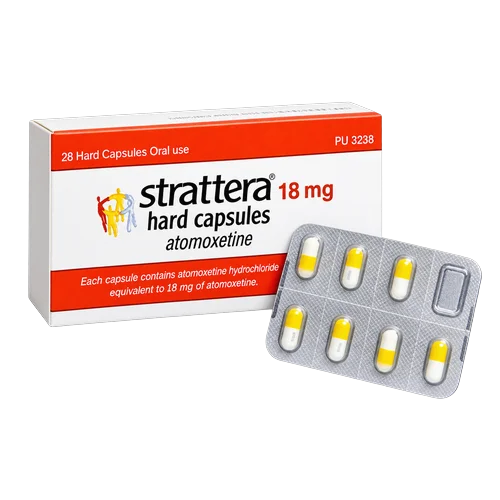
Formulation

Strattera contains atomoxetine as its active ingredient. It is supplied as a hard capsule intended for oral use.

Directions for use

  • Dose: Strattera hard capsules are available here as 18 mg atomoxetine capsules; the prescribed dose differs between strengths and between users, so there is no single amount that suits everyone.
  • Frequency: Take atomoxetine at the frequency prescribed by a clinician; the available information does not specify a fixed number of doses per day.
  • Timing: Take the capsule at the time directed by the prescriber; the available information does not specify whether it should be taken before or after meals or at a particular time of day.
  • Duration: Use it for the duration set by the clinician as part of ADHD treatment; the available information does not specify a standard treatment length.
  • Route: Take the hard capsule by mouth with oral use.

Comparison

Atomoxetine and methylphenidate are both used for ADHD, but they differ in mechanism, timing and monitoring needs.

Treatment approach Main mechanism and timing Clinical considerations
Atomoxetine Selective noradrenaline reuptake inhibition; benefit develops gradually with daily dosing Non-stimulant option; monitor pulse, blood pressure, appetite, sleep and mood
Methylphenidate Increases central dopamine and noradrenaline signalling; many formulations act within the same day Stimulant treatment; duration varies by formulation and misuse risk requires assessment

Mechanism and abuse-potential differentiation

Methylphenidate is a controlled stimulant in the UK and can produce noticeable effects soon after a dose. Atomoxetine is not a controlled stimulant and does not have the same known misuse profile or reinforcement pattern.

That difference does not make atomoxetine risk-free. It can still produce cardiovascular, psychiatric, liver and urinary adverse effects. The choice depends on diagnosis, age, coexisting conditions, previous response, sleep, appetite, substance-use history and practical treatment goals.

Onset of action and clinical selection

Methylphenidate may improve attention on the day it is taken, although finding the right preparation and dose can take time. Atomoxetine often requires several weeks before the full benefit becomes clear, and some patients need a longer period of consistent treatment.

NICE ADHD guidance supports selecting medication according to age, symptom pattern, comorbidities, adverse effects and patient preference [2]. A non-stimulant may suit someone who cannot tolerate stimulant effects, needs continuous symptom control or has concerns about misuse.

Common mistakes

Several avoidable errors make atomoxetine harder to assess:

  • taking it only on school or work days;
  • stopping after a few days because the effect is not immediate;
  • doubling the next dose after a missed capsule;
  • opening or chewing the capsule;
  • ignoring rising pulse, faintness or new chest symptoms;
  • failing to mention antidepressants that inhibit CYP2D6;
  • treating reduced appetite as harmless when weight is falling;
  • overlooking new suicidal thoughts or severe mood changes.
Keep a brief weekly record of concentration, sleep, appetite, pulse and troublesome symptoms. A short pattern is more useful at review than trying to remember one difficult day.

Another frequent mistake is judging atomoxetine by a stimulant standard. The absence of an immediate sensation does not prove that treatment is ineffective, while a noticeable sensation is not the same as better functioning.

What doctors say

Clinicians generally set expectations before the first capsule: atomoxetine is assessed over time, not judged by the feeling produced after one dose. Attention may improve before organisation, emotional regulation or impulsivity becomes easier.

A doctor will usually review school, work or home functioning rather than relying only on a subjective sense of concentration. Useful measures include missed deadlines, unfinished tasks, careless errors, interruptions, driving incidents and sleep patterns.

Five practical points guide follow-up:

  • blood pressure and pulse are checked before and during treatment;
  • appetite, weight and sleep are reviewed;
  • mood changes, irritability and suicidal thoughts are discussed;
  • liver symptoms and urinary problems are taken seriously;
  • the response is judged against agreed functional goals.

One detail patients often miss is that a medicine can improve focus while leaving poor sleep unchanged. If bedtime remains difficult, caffeine, dose timing, anxiety and the underlying ADHD pattern all need review rather than simply increasing the dose.

What customers often ask

How does Strattera differ from methylphenidate?

Strattera contains atomoxetine, which selectively inhibits the noradrenaline transporter, while methylphenidate is a stimulant that increases dopamine and noradrenaline signalling. Atomoxetine is taken consistently and usually builds its effect over weeks. Methylphenidate often has a more immediate daily action. NICE guidance published in 2018 supports choosing ADHD treatment according to clinical features, adverse effects and individual circumstances. Neither option is suitable for every patient.

Can Strattera be used by people under 18?

Yes. Atomoxetine is licensed for ADHD in children aged six years and older, adolescents and adults when treatment is clinically appropriate. The EMA product information and paediatric guidance available in 2025 emphasise monitoring growth, appetite, sleep, cardiovascular signs and mood during treatment. Children and teenagers should also receive age-appropriate support at school and at home, because medication forms one part of ADHD management.

Can Strattera be combined with antidepressants or supplements?

Atomoxetine must not be taken with monoamine oxidase inhibitors, and medicines such as fluoxetine or paroxetine can increase atomoxetine exposure through CYP2D6 inhibition. The MHRA safety information reviewed in 2025 also supports careful assessment of cardiovascular and psychiatric effects when medicines are combined. Supplements that affect blood pressure, heart rate or mood should be disclosed before treatment, including products marketed for energy, weight loss or concentration. Combining treatments without a structured review can make side effects harder to identify.

How long does one dose of Strattera keep working?

Atomoxetine is designed for regular daily treatment rather than short-term use for a single event. Its pharmacological effect extends across the day, although the perceived duration can vary with metabolism, dosing time, sleep and symptom demands. The FDA prescribing information current in 2024 describes once-daily and divided-dose approaches, with the schedule selected for the individual patient. A late dose should not be replaced by an extra capsule.

How soon does the effect of Strattera become noticeable?

Some people notice early changes in attention, task completion or impulsivity within the first few weeks, while others need longer before the benefit is clear. The full response can require several weeks of consistent treatment and review. NICE guidance updated in 2025 recommends assessing symptom control, impairment and adverse effects rather than relying on one early impression. If there is no meaningful improvement after an appropriate clinical trial, the prescriber may reassess the diagnosis, dose, adherence, interactions or treatment choice.

Do you offer anonymous delivery?

Your order will be securely packed and shipped within 24 hours. This is exactly what your package will look like (images of an actual item sent). It has the size and look of a regular private letter (24x11x0.7 cm) and its contents cannot be seen.

How Buyers Rate Strattera

4.1
Based on 5 reviews
Andrew, 61
York
Several weeks
Verified
Rating: 3.5 out of 5

I used 18 mg of atomoxetine daily for several weeks and found that organising paperwork became easier, especially in the mornings. The improvement was gradual rather than dramatic, and dry mouth was irritating at first. I kept using it because the benefit was useful, although it took patience to judge.

10 Oct 2026
Ryan T., 38
Portsmouth
A few weeks
Verified
Rating: 5 out of 5

I took 18 mg of Strattera daily, and it helped me stay with longer tasks instead of jumping between them. After a few weeks I was finishing routine work more reliably and felt satisfied with the change. Taking the capsule with breakfast fitted easily into my morning.

22 Oct 2026
David, 40
Bath
The first month
Verified
Rating: 5 out of 5

I took 18 mg of atomoxetine daily and noticed fewer impulsive interruptions and better follow-through on household jobs. The effect built slowly, but by the end of the first month the difference was clear in my daily routine. It gave me steadier concentration without a sudden rise and fall during the day.

30 Oct 2026
Craig, 44
Brighton
Verified
Rating: 2 out of 5

I took 18 mg of atomoxetine daily, but it did not improve my attention enough to justify continuing. I also found sleep more difficult and felt uncomfortable with the change in my appetite. I stopped after discussing the problems with my doctor.

5 Nov 2026
Stuart, 67
Milton Keynes
After treatment had settled in
Verified
Rating: 5 out of 5

After taking 18 mg of atomoxetine daily, I became more consistent with appointments, bills and small administrative tasks after treatment had settled in. The benefit was practical rather than dramatic, which suited what I needed from ADHD treatment. Taking it at the same time each day helped me maintain the routine.

8 Nov 2026

Sources

  1. U.S. Food and Drug Administration (2022). Strattera (atomoxetine hydrochloride) Capsules — Prescribing Information.
  2. National Institute for Health and Care Excellence (2018). Attention deficit hyperactivity disorder: diagnosis and management, NICE guideline NG87.
Get our free app Shop faster and track your orders 4.0 · 224 reviews Install