Skip to content
24/7 Support
Save up to 80%
Fast & Discreet Delivery
Nizoral

Nizoral

Quality products
24/7 Support
Fast delivery
Delivery from 4 days
Active ingredient Ketoconazole

Free delivery on orders from £ 172.00, free express delivery from £ 258.00

By blocking fungal sterol production, ketoconazole in Nizoral disrupts the structure of susceptible fungal cells. Nizoral tablets are an oral formulation intended for carefully selected systemic antifungal treatment, rather than routine scalp care. Their use requires attention to liver safety, interactions, and the reason for treatment.

Overview

Nizoral contains ketoconazole, an imidazole antifungal agent. Ketoconazole inhibits fungal lanosterol 14α-demethylase, an enzyme involved in producing ergosterol. Ergosterol supports the fungal cell membrane; reducing it weakens membrane integrity and interferes with fungal growth.

The oral tablet formulation should not be treated as interchangeable with topical ketoconazole products. Oral exposure affects the whole body, while topical formulations act mainly at the application site. The European Medicines Agency restricted oral ketoconazole use after reviewing the risk of serious liver injury [1].

Role of ketoconazole in antifungal treatment

Ketoconazole has activity against several fungi and yeasts. Its pharmacological action is different from that of antibacterial medicines, which target bacteria rather than fungi. The choice of treatment depends on the organism, infection site, severity, previous treatment, and the person’s liver health.

Nizoral tablets are not a routine choice for ordinary dandruff or uncomplicated seborrhoeic dermatitis. Those conditions are generally managed with topical approaches. Oral ketoconazole has a much narrower place in treatment because the potential liver risk is greater than with local application.

Tell the prescriber about every medicine, herbal product, and supplement being used. Ketoconazole can affect the handling of several medicines in the liver, and some combinations are unsuitable.

Targeting fungal growth

Malassezia is a yeast associated with dandruff and seborrhoeic dermatitis, but the presence of Malassezia alone does not establish a need for oral treatment. Scalp symptoms can also arise from psoriasis, eczema, contact dermatitis, bacterial infection, or another condition.

A tablet taken by mouth cannot be selected solely because a scalp problem is itchy or flaky. The diagnosis must support systemic antifungal treatment. A persistent rash, painful scalp, pus, hair loss, or widespread redness needs a clinical assessment.

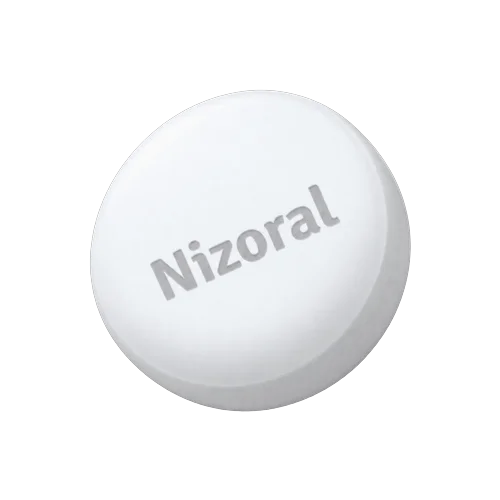
Therapeutic indications

Systemic treatment may be considered only when the clinical situation justifies exposure to an oral antifungal. The prescriber weighs the likely benefit against liver toxicity, interactions, and the availability of a more suitable treatment.

The UK Medicines and Healthcare products Regulatory Agency has advised against using oral ketoconazole for fungal infections when alternative treatment is available because of the risk of serious hepatic reactions [2]. This makes careful selection central to Nizoral treatment.

Topical ketoconazole products are used more commonly for local scalp and skin conditions. Nizoral tablets should not be assumed to provide a safer or more suitable solution for dandruff, seborrhoeic dermatitis, or local skin scaling.

Nizoral tablets may offer targeted systemic treatment for selected fungal infections and a non-topical option when local therapy is unsuitable. The drawbacks include liver toxicity, interactions, and restricted routine use.

Mechanism of action

By blocking fungal sterol production, ketoconazole in Nizoral disrupts the structure of susceptible fungal cells. Ketoconazole inhibits fungal lanosterol 14α-demethylase, an enzyme involved in producing ergosterol. Ergosterol supports the fungal cell membrane; reducing it weakens membrane integrity and interferes with fungal growth.

Reasons not to use it

  • active liver disease or previous serious medicine-related liver injury;
  • allergy to ketoconazole or another ingredient;
  • use of medicines with serious interaction potential;
  • medicines that prolong the QT interval or increase the risk of dangerous heart rhythms;
  • pregnancy or breastfeeding unless a specialist has assessed the situation;
  • a condition for which a suitable local or alternative systemic treatment is available;
  • unexplained abnormal liver blood tests.

The MHRA states that oral ketoconazole should not be used for fungal infections when alternative treatments are available [3].

When this is not for you

Nizoral tablets are NOT for you if a suitable topical or safer systemic treatment is available, or if you have contraindications such as liver disease or serious interaction risks.

A dry or sensitive scalp may become more irritated if an unsuitable antifungal product is used. The treatment should match the location and diagnosis rather than the symptom alone.

Unwanted effects

The main safety concern with oral Nizoral is liver injury. Reported hepatic reactions range from abnormal liver blood tests to severe hepatitis and liver failure. The risk can occur in people without a known history of liver disease.

Possible adverse effects include nausea, abdominal discomfort, vomiting, headache, dizziness, itching, and changes in liver blood tests. Hormonal effects can also occur because ketoconazole interferes with steroid synthesis at clinically relevant exposure.

Urgent medical assessment is needed for:

  • yellow skin or eyes;
  • dark urine or pale stools;
  • severe or persistent nausea;
  • marked loss of appetite;
  • unusual tiredness;
  • upper abdominal pain;
  • fainting, severe weakness, or confusion;
  • a widespread blistering or peeling rash;
  • swelling of the face, lips, tongue, or throat.

Some medicines can raise ketoconazole concentrations, while ketoconazole can raise concentrations of other medicines. Strong enzyme inhibitors, certain medicines affecting heart rhythm, some sedatives, and several cholesterol-lowering medicines may create serious interaction risks.

Avoid alcohol while taking oral ketoconazole. Alcohol adds liver stress and can make nausea, dizziness, and poor judgement harder to recognise early.

Formulation

Nizoral contains ketoconazole, an imidazole antifungal agent. Ketoconazole inhibits fungal lanosterol 14α-demethylase, reducing ergosterol production and weakening susceptible fungal cell membranes.

Directions for use

  • Dose: The exact dose in mg is not established in the available information and differs between strengths and users.
  • Frequency: The number of doses per day is not established and must be determined by the prescriber.
  • Timing: The available information does not specify whether the tablet should be taken before or after meals or at a particular time of day.
  • Duration: The treatment duration is not established and depends on the reason for systemic antifungal treatment and the prescriber’s assessment.
  • Route: Take Nizoral tablets by the oral route only; do not use them as a topical scalp or skin treatment.

Comparison

Different ketoconazole products are designed for different routes of administration. The concentration and formulation cannot be compared by number alone because an oral tablet and a topical product produce different exposure patterns.

Formulation Main route Clinical role
Nizoral tablets Oral Restricted systemic antifungal use when specifically selected
Topical ketoconazole Skin or scalp Local treatment for susceptible superficial fungal conditions
Non-antifungal scalp care Topical Cleansing, moisturising, or symptom support without systemic exposure

The tablet formulation carries systemic risks that do not apply in the same way to a product used only on the skin. A higher local concentration does not mean that an oral tablet should be used for a local scalp complaint.

There is no general rule that a stronger product is better. Treatment selection follows diagnosis, site, severity, susceptibility, interactions, and medical history.

Alternative antifungal approaches differ by mechanism and route. Their suitability depends on the infection rather than on a simple strength comparison.

Approach Main feature Main limitation
Oral ketoconazole Systemic imidazole antifungal action Significant liver and interaction risks
Topical azole treatment Local antifungal action at the affected site May be unsuitable for deep, extensive, or resistant infection
Other systemic antifungal classes Different fungal targets and interaction profiles Each has its own contraindications and monitoring needs

Selenium sulfide, zinc-based preparations, and other scalp treatments may be used for selected dandruff or seborrhoeic dermatitis patterns. They are not equivalent to oral ketoconazole and should not be compared by brand name alone.

Specialist treatment may favour another systemic antifungal when it offers a better safety profile for the organism and infection site. The correct choice can depend on culture results, susceptibility testing, liver function, pregnancy status, and concurrent medicines.

Common mistakes

Several practical errors can reduce benefit or increase harm:

  • using Nizoral tablets for dandruff without a confirmed reason for systemic treatment;
  • taking an old prescription for a new rash;
  • combining the tablets with another antifungal without checking interactions;
  • continuing treatment after jaundice, dark urine, or severe nausea appears;
  • assuming that a missed tablet should be replaced with two tablets;
  • crushing the tablet for skin or scalp application;
  • failing to mention recreational substances, supplements, or regular alcohol use;
  • stopping a prescribed course early without reporting lack of improvement or adverse effects.

A missed dose should not be doubled unless a prescriber has given that specific instruction. The appropriate next step depends on the prescribed schedule and how close the next dose is.

What doctors say

In clinical practice, doctors treat oral ketoconazole as a restricted option rather than a routine first-line tablet. The central question is whether the expected antifungal benefit justifies systemic exposure when a different treatment could work with less risk.

A doctor would also review previous liver problems, alcohol intake, heart rhythm history, and every current medicine. Over-the-counter products matter too. Herbal products and supplements can alter liver function or interact with prescribed treatment.

The WHO recognises that fungal infections require diagnosis-led treatment, because different fungi respond to different medicines and resistance patterns vary [4]. A persistent rash should not be treated repeatedly without confirming its cause.

What customers often ask

How does Nizoral differ from other antifungal treatments?

Nizoral tablets contain ketoconazole, an imidazole antifungal that interferes with fungal sterol production. The EMA reviewed this distinction in 2013. Other antifungals act on different fungal enzymes or membrane processes, and their interaction and liver-risk profiles differ. EMA safety reviews in 2013 led to restrictions on oral ketoconazole because safer alternatives may be available for many fungal infections. The best option depends on diagnosis, susceptibility, infection site, and medical history.

Which symptoms mean that Nizoral should be stopped and reviewed urgently?

Yellowing of the skin or eyes, dark urine, pale stools, severe nausea, marked tiredness, poor appetite, or upper abdominal pain can signal liver injury. A severe rash, facial swelling, breathing difficulty, fainting, or an irregular heartbeat also requires urgent help. The MHRA identified liver toxicity as a central safety concern with oral ketoconazole in 2013. Do not take another dose until urgent medical advice has addressed a serious warning symptom.

Can alcohol be used while taking Nizoral?

Alcohol should be avoided during treatment with oral ketoconazole because both alcohol and ketoconazole can place strain on the liver. Alcohol may also worsen nausea, dizziness, and impaired concentration. NHS medicine-safety advice in 2024 commonly treats heavy alcohol intake as an important factor when assessing medicines with hepatic risks. A person who drinks regularly should disclose this before treatment begins.

Can Nizoral cause sexual or hormonal side effects?

Ketoconazole can interfere with steroid hormone production, so hormonal effects are recognised pharmacological risks. Possible effects may include reduced libido, erectile difficulty, breast tenderness, or changes related to adrenal or testosterone production. The 2013 FDA prescribing information for Nizoral tablets describes endocrine effects among the potential adverse reactions. Report persistent sexual, breast, or hormonal symptoms rather than assuming they are unrelated.

How soon does Nizoral begin to work?

The timing varies with the fungal infection, its location, the organism involved, and the person’s response. Some symptoms may begin to ease within days, while deeper or more extensive infections can take longer to show clear improvement. Clinical guidance from the EMA and MHRA in 2013 emphasised diagnosis and treatment review rather than a fixed promise of response time. Worsening symptoms or no meaningful improvement requires reassessment of the diagnosis and treatment plan.

Do you offer anonymous delivery?

Your order will be securely packed and shipped within 24 hours. This is exactly what your package will look like (images of an actual item sent). It has the size and look of a regular private letter (24x11x0.7 cm) and its contents cannot be seen.

How Buyers Rate Nizoral

4
Based on 5 reviews
John, 53
Ipswich
Verified
Rating: 3 out of 5

I took Nizoral tablets for a diagnosed fungal infection. The symptoms improved, but the treatment felt more demanding than I expected because I had to pay close attention to nausea and tiredness. It was useful for the infection, though I would not treat a simple scalp flare with tablets.

4 Nov 2026
Wendy, 39
Edinburgh
Verified
Rating: 5 out of 5

The tablets helped the infection settle after the first part of treatment. I found them straightforward to take and noticed less itching as the days passed. The improvement was gradual rather than sudden.

8 Nov 2026
Julie, 58
Bournemouth
Verified
Rating: 4.5 out of 5

Nizoral gave me a clear improvement in the skin problem I had been dealing with. The affected area became less inflamed and the irritation eased. I was pleased that the change was noticeable before the course had finished.

10 Oct 2026
Emily, 53
Middlesbrough
Verified
Rating: 4.5 out of 5

I used the tablets for the condition they were prescribed for and saw a steady reduction in the symptoms. The tablets were easy to swallow, and the improvement was more obvious after several days than after the first dose.

15 Oct 2026
Emma, 46
Swansea
Verified
Rating: 3 out of 5

The treatment helped partly, but the response was slower than I hoped. I developed persistent nausea and stopped after speaking with a doctor, who arranged a different approach. The experience made me more aware that oral antifungals need proper monitoring.

22 Oct 2026

Sources

  1. European Medicines Agency (2013). Ketoconazole-containing medicines: European Medicines Agency recommends suspension of marketing authorisations for oral formulations.
  2. Medicines and Healthcare products Regulatory Agency (2013). Ketoconazole: do not use for fungal infections — risk of liver injury outweighs benefits.
  3. Medicines and Healthcare products Regulatory Agency (2015). Ketoconazole: updated advice on the risk of liver injury with oral treatment.
  4. World Health Organization (2022). WHO fungal priority pathogens list to guide research, development and public health action.
Get our free app Shop faster and track your orders 4.0 · 224 reviews Install