I used it at the start of the headache and the throbbing eased enough for me to carry on with a normal evening. It worked more clearly than ordinary painkillers had done for me, and I was satisfied with the result.
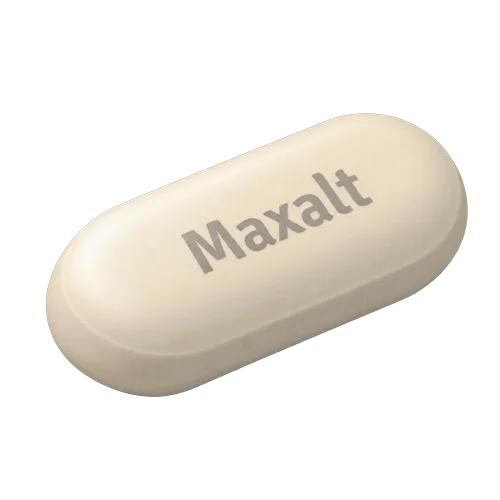
Maxalt
Maxalt can relieve migraine pain with or without aura by narrowing dilated cranial blood vessels and reducing the release of inflammatory neuropeptides. It is taken during an attack, not as a daily preventive treatment.
Overview
Rizatriptan, the active ingredient of Maxalt, is a selective serotonin receptor agonist for the acute treatment of migraine attacks in adults.
Therapeutic indications
Maxalt is an abortive treatment. It is designed to stop or reduce an individual migraine attack after symptoms begin. It does not lower the underlying tendency to develop migraine and does not replace preventive treatment when attacks are frequent.
Rizatriptan may help migraine with aura or migraine without aura. An aura can involve temporary visual changes, tingling, numbness, or speech disturbance before the headache. A new neurological symptom that differs from a person’s usual aura needs urgent medical assessment rather than automatic treatment as migraine.
Maxalt is intended for migraine attacks. It should not be used as a general painkiller for back pain, dental pain, tension headache, or unexplained recurrent headache.
Mechanism of action
Rizatriptan acts mainly on 5-HT1B and 5-HT1D serotonin receptors in cranial blood vessels and nerve endings. This action helps reverse the vascular and nerve changes associated with an acute migraine attack. The pharmacological details are consistent with the FDA prescribing information for rizatriptan [1].
Migraine involves more than head pain. Activation of the trigeminal nerve can promote the release of inflammatory peptides around pain-sensitive cranial structures. Rizatriptan reduces this signalling and causes vasoconstriction, meaning that enlarged blood vessels become narrower.
Reasons not to use it
Maxalt is not for you if you have:
-
Previous myocardial infarction or ischaemic heart disease.
-
Prinzmetal’s angina or coronary artery vasospasm.
-
Peripheral vascular disease.
-
Previous stroke or transient ischaemic attack.
-
Uncontrolled hypertension.
-
Certain significant heart rhythm disorders.
-
An allergy to rizatriptan or an ingredient in the product.
-
Current treatment with an ergotamine medicine or another triptan within the restricted interval.
-
Current or recent treatment with a monoamine oxidase inhibitor, depending on the specific medicine and timing.
-
Monoamine oxidase inhibitors: These can raise rizatriptan exposure and may require a washout period before Maxalt is used.
-
Other triptans: Combining triptans increases the risk of excessive vasoconstriction and is not appropriate within the restricted interval.
-
Ergotamine medicines: These also constrict blood vessels and should not be combined closely with rizatriptan.
-
Propranolol: This can increase rizatriptan levels, so a lower strength and lower daily limit may be required.
When this is not for you
Maxalt is not suitable for everyone. Its vasoconstrictive action means that cardiovascular and cerebrovascular history must be assessed before treatment.
People with several cardiovascular risk factors may need assessment before a triptan is prescribed. These factors include smoking, diabetes, high blood pressure, high cholesterol, obesity, and a strong family history of premature coronary disease. A first migraine-like attack in later life also deserves careful assessment because new headache patterns can have causes other than migraine.
Maxalt should not be used for an undiagnosed headache that resembles a migraine for the first time. It is intended for a recognised migraine pattern after other serious causes have been considered.
Unwanted effects
Rizatriptan is generally tolerated by many adults when used as prescribed, although adverse effects can occur. Common reported reactions include dizziness, drowsiness, fatigue, weakness, nausea, dry mouth, and sensations of pressure or tightness in the chest, throat, neck, or jaw. The FDA product information describes these reactions and provides the basis for the safety profile [2].
Some sensations are brief and mild, especially warmth, flushing, tingling, or pressure. A short-lived feeling of heaviness does not automatically indicate heart disease, yet chest symptoms should never be dismissed when they are severe, persistent, or associated with breathlessness.
Seek urgent medical help for:
- Severe or continuing chest pain.
- Breathlessness, collapse, or fainting.
- Sudden weakness on one side of the body.
- New difficulty speaking or understanding speech.
- Severe abdominal pain or bloody diarrhoea.
- Swelling of the lips, tongue, or throat.
- Widespread rash with breathing difficulty.
- A fast or irregular heartbeat that does not settle.
Rizatriptan can cause sleepiness or dizziness. Driving, cycling in traffic, climbing, and operating machinery are unsuitable until the individual response is clear. Alcohol may worsen drowsiness and can make it harder to recognise whether unusual symptoms are caused by the migraine or the medicine.
One practical detail is easy to miss: a sensation of throat tightness can occur with triptans, but it should not be self-diagnosed as harmless if it is intense, prolonged, or accompanied by breathing difficulty.
- SSRIs and SNRIs: These medicines raise a potential risk of serotonin syndrome when combined with a triptan, although the absolute risk appears low.
Serotonin syndrome can involve agitation, confusion, sweating, tremor, diarrhoea, fever, muscle stiffness, and a rapid heartbeat. Severe symptoms require urgent assessment. The MHRA and other regulators advise that people using serotonergic combinations should understand the symptoms without stopping prescribed antidepressant treatment abruptly [3].

Formulation
Maxalt contains rizatriptan as its active ingredient. Rizatriptan is a selective serotonin receptor agonist used for the acute treatment of migraine attacks in adults.
Directions for use
Maxalt tablets are taken by mouth. The appropriate strength depends on the person’s response, other medicines, cardiovascular risk, and clinical history. Rizatriptan dosing differs between strengths and between users, so there is no single amount that suits everyone.
Typical prescribing information includes the following points:
- Maxalt is available in different strengths.
- The usual adult dose is selected by the prescriber.
- A second dose may be permitted if the migraine returns or the first dose gives incomplete relief.
- Doses must be separated by the minimum interval stated in the prescribing instructions.
- The total daily amount must not exceed the prescribed limit.
- Tablets may be taken with or without food.
- Treatment is intended for acute attacks, not routine daily use.
A higher strength may not be suitable for people taking propranolol. People who use propranolol are commonly prescribed a lower rizatriptan strength, with a reduced daily maximum. This interaction is clinically relevant because propranolol increases rizatriptan exposure.
Maxalt tablets should be swallowed with water. Maxalt orally disintegrating wafers are a separate formulation that dissolves on the tongue and can be useful when nausea makes swallowing difficult. The formulation must match the prescribed product; a standard tablet should not be treated as an orally disintegrating wafer.
If a dose does not relieve the headache, taking repeated doses beyond the permitted limit does not improve safety or reliability.
Comparison
Rizatriptan belongs to the same broad treatment group as other triptans, yet triptans differ in speed, duration, formulation, and tolerability. A faster medicine may suit a rapidly escalating attack, while a longer-acting option may be considered when headaches commonly recur.
| Treatment approach | Main practical feature | Main limitation |
|---|---|---|
| Rizatriptan tablets | Rapid oral triptan treatment for an established migraine attack | Not suitable with certain cardiovascular conditions or interacting medicines |
| Orally disintegrating rizatriptan | Dissolves on the tongue and may help when swallowing is difficult | It still contains a vasoconstrictive triptan and is not a preventive treatment |
| Longer-acting triptan treatment | May be considered when recurrence is a persistent problem | Onset and tolerability differ between medicines |
Clinical comparisons show that oral rizatriptan can provide relatively rapid relief for some patients, though response varies. An orally disintegrating formulation may be absorbed conveniently without water, but it is not automatically stronger than a standard tablet. The Cochrane review of triptans for acute migraine supports selecting treatment according to response, adverse effects, and attack pattern rather than assuming one triptan suits everyone [4].
A useful clinical distinction is the difference between onset and duration. Onset describes how quickly relief begins. Duration describes how long the benefit lasts before pain returns. A medicine that acts quickly may still require a different strategy if recurrence is frequent.
Common mistakes
Several practical errors can reduce benefit or increase risk:
- Taking Maxalt for every headache without confirming that the pattern is migraine.
- Repeating a dose too soon.
- Exceeding the daily maximum.
- Using another triptan or ergotamine medicine during the restricted interval.
- Forgetting to mention propranolol, antidepressants, or monoamine oxidase inhibitors.
- Taking Maxalt on many days each month and overlooking medication-overuse headache.
- Driving after discovering that rizatriptan causes dizziness or drowsiness.
- Treating severe chest pressure as an expected side effect without assessing its severity.
- Continuing self-treatment when the migraine pattern has changed.
- Using a standard tablet as though it were an orally disintegrating formulation.
Another overlooked issue is aura. Temporary visual symptoms can be part of a person’s usual migraine, while new weakness, persistent vision loss, or unusual speech disturbance can signal a neurological emergency. The distinction cannot be made safely from the product name alone.
What doctors say
In clinical practice, prescribers usually focus on three questions before choosing rizatriptan: whether the symptoms fit migraine, whether cardiovascular risk is acceptable, and whether another medicine could interact with treatment. The diagnosis matters because triptans are not appropriate for every severe headache.
Doctors also look at attack timing. Maxalt works best as an acute treatment for a typical migraine rather than as a rescue medicine for an unfamiliar neurological event. A sudden maximal headache, a new headache after head injury, or a headache with fever and neck stiffness needs urgent evaluation.
A common prescribing mistake is judging the treatment after one poorly timed dose. Nausea, delayed dosing, gastric slowing during migraine, or a very severe attack can affect the result. The response should be recorded across typical attacks, with attention to relief, recurrence, adverse effects, and days of use.
The WHO headache classification and NICE migraine guidance both support distinguishing acute treatment from preventive care. Preventive therapy may be discussed when attacks are frequent, prolonged, disabling, or poorly controlled despite suitable acute treatment.
What customers often ask
Can older adults take Maxalt?
Older adults may require a more careful cardiovascular assessment before using rizatriptan. The risk of coronary disease, stroke, hypertension, and drug interactions can increase with age, even when migraine has been present for many years. NICE guidance reviewed in 2025 supports checking the diagnosis, comorbidities, and acute-treatment pattern in older patients before continuing triptan therapy.
Can the Maxalt tablet be split, crushed, or chewed?
A standard Maxalt tablet should be swallowed as directed rather than crushed or chewed. Altering a tablet can make administration difficult and may produce an unpleasant taste without improving absorption. The FDA product information reviewed in 2023 distinguishes standard tablets from orally disintegrating formulations, so the dosage form should match the prescribed instructions.
Which cardiovascular condition rules Maxalt out?
A history of myocardial infarction, ischaemic heart disease, Prinzmetal’s angina, peripheral vascular disease, stroke, transient ischaemic attack, or uncontrolled hypertension rules out routine Maxalt use. These conditions matter because rizatriptan can constrict blood vessels. MHRA safety information current through 2025 describes cardiovascular contraindications as a key part of triptan prescribing.
Can Maxalt be taken with food or on an empty stomach?
Maxalt can generally be taken with or without food. Food may delay the time at which a tablet reaches peak concentration, while migraine-related nausea can make eating difficult. The FDA prescribing information from 2023 allows administration without regard to meals, provided the prescribed dosing interval and daily limit are followed.
What should be discussed with a doctor before starting Maxalt?
Discuss previous heart attack, angina, stroke, transient ischaemic attack, peripheral vascular disease, uncontrolled blood pressure, kidney or liver disease, and all current medicines. Mention propranolol, antidepressants, monoamine oxidase inhibitors, ergotamine products, and other triptans specifically. The FDA prescribing information, reviewed in 2023, places cardiovascular history and interacting medicines at the centre of treatment selection.
What happens when Maxalt is stopped, and does it need tapering?
Rizatriptan is used for individual attacks and does not usually require tapering when it is stopped. The migraine tendency can return because the medicine treats the attack rather than removing the underlying condition. NICE guidance updated in 2025 treats reduced acute-medicine use as part of managing medication-overuse headache, rather than recommending a gradual taper of rizatriptan.
How long does a course of Maxalt last, and is long-term use acceptable?
Maxalt is not normally prescribed as a continuous daily course. It may remain part of a long-term migraine plan when attacks are occasional, the response is useful, and contraindications remain absent. The WHO headache classification and clinical guidance available in 2025 support reviewing frequent use because triptan treatment on ten or more days per month can contribute to medication-overuse headache.
Do you offer anonymous delivery?
Your order will be securely packed and shipped within 24 hours. This is exactly what your package will look like (images of an actual item sent). It has the size and look of a regular private letter (24x11x0.7 cm) and its contents cannot be seen.
How Buyers Rate Maxalt
It did not make enough difference to my migraines. I also felt unusually sleepy after taking it, so I stopped using it and discussed other options with my doctor.
The pain and light sensitivity settled after I took the prescribed tablet. I could return to work instead of spending the whole day in a dark room, which made the treatment worthwhile for me.
It helped one attack, but the relief was slower than I expected and I noticed a passing heavy feeling in my chest. I stopped repeating it until I had spoken with my doctor.
The medicine reduced the headache enough for me to eat and rest normally. I had a clear benefit during the attacks for which it was prescribed.
Sources
- U.S. Food and Drug Administration (2023). MAXALT (rizatriptan benzoate) tablets and MAXALT-MLT orally disintegrating tablets: Prescribing Information.
- U.S. Food and Drug Administration (2023). MAXALT (rizatriptan benzoate) tablets and MAXALT-MLT orally disintegrating tablets: Prescribing Information, Adverse Reactions and Clinical Pharmacology sections.
- Medicines and Healthcare products Regulatory Agency (2025). Serotonin syndrome: medicines that increase serotonergic activity.
- Cochrane (2015). Triptans for acute migraine attacks in adults.