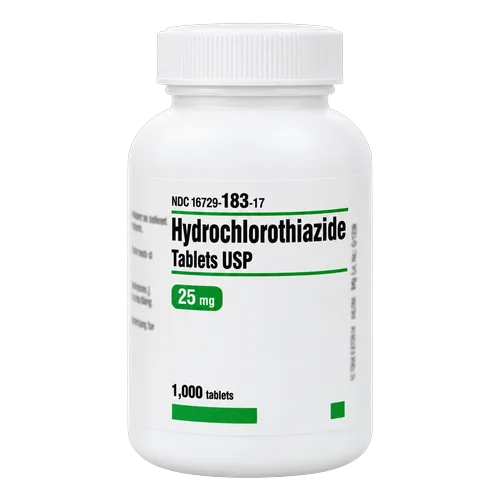
I used the 25 mg tablets as prescribed for my blood pressure. After a few weeks, my home readings were more consistent, and I felt reassured seeing the numbers improve. Taking it in the morning fitted my routine well.
Hydrochlorothiazide
High blood pressure and excess fluid may require treatment that helps the kidneys remove sodium and water. Hydrochlorothiazide is a thiazide diuretic prescribed for hypertension and fluid retention. Its active ingredient acts in the renal tubules to lower circulating fluid volume and support blood-pressure reduction.
Overview
Hydrochlorothiazide belongs to the thiazide diuretic class. It is taken orally as tablets and is used mainly for essential hypertension, where persistently raised blood pressure increases cardiovascular risk. It may also reduce oedema, meaning swelling caused by excess fluid in the body.
Therapeutic indications
Primary clinical indications
Hydrochlorothiazide may be prescribed for:
- Essential hypertension.
- Fluid retention associated with selected cardiac, hepatic, or renal conditions.
- Oedema where a thiazide diuretic is clinically suitable.
- Blood-pressure treatment alongside another antihypertensive class.
The British National Formulary and NICE hypertension guidance place thiazide-like diuretic treatment within established blood-pressure management pathways, with the choice influenced by age, comorbidities, kidney function, and existing medicines [1].
Mechanism of action
Hydrochlorothiazide reaches the kidney through the bloodstream and is secreted into the renal tubule. It inhibits the sodium–chloride symporter in the distal convoluted tubule. This transporter normally moves sodium and chloride from tubular fluid back into the bloodstream.
When the transporter is inhibited, more sodium remains in the urine. Water follows sodium by osmosis, increasing urine production and reducing extracellular fluid volume. The early blood-pressure effect partly reflects lower plasma volume. With continued therapy, vascular resistance also contributes to the sustained reduction in blood pressure.
The distal convoluted tubule handles a smaller proportion of filtered sodium than the nephron sites targeted by loop diuretics. Hydrochlorothiazide therefore has a less forceful diuretic effect than furosemide, though its action can be useful for regular blood-pressure treatment.
Greater sodium delivery to later parts of the nephron can increase potassium excretion. This is one reason potassium levels may fall during treatment. Hydrochlorothiazide can also reduce urinary calcium excretion, a pharmacological feature that distinguishes it from loop diuretics.
Reasons not to use it
Hydrochlorothiazide is not suitable for everyone. This medicine is not for you if you have a known serious allergy to hydrochlorothiazide, another sulfonamide-related medicine, or an excipient in the formulation, unless a prescriber has assessed the risk and selected treatment deliberately.
Specific situations requiring medical review include:
- Inability to pass urine.
- Severe dehydration.
- Markedly reduced kidney function.
- Severe liver disease with a risk of encephalopathy.
- Previous serious electrolyte abnormalities.
- Recurrent gout or high uric acid.
- Diabetes requiring close glucose monitoring.
- Lupus or a history of severe photosensitivity.
- Pregnancy or breastfeeding.
- A history of skin cancer or multiple suspicious skin lesions.
Hydrochlorothiazide may interact with:
- Lithium, by increasing the risk of lithium toxicity.
- Digoxin, especially when low potassium increases cardiac toxicity risk.
- Other blood-pressure medicines, by causing excessive pressure reduction.
- Non-steroidal anti-inflammatory drugs, which may reduce diuretic and antihypertensive effects and affect kidney function.
- Corticosteroids, stimulant laxatives, or other medicines that lower potassium.
- Medicines that prolong the QT interval when electrolyte abnormalities are present.
- Diabetes treatments, because glucose control may change.
- Ciclosporin or tacrolimus, which may increase the risk of kidney problems or raised uric acid.
Laboratory monitoring may include sodium, potassium, creatinine, uric acid, and glucose. The exact schedule depends on the patient’s risk profile and concurrent treatment.
Unwanted effects
Hydrochlorothiazide can increase urinary sodium and water loss. That action explains its benefit, and it also explains many adverse effects.
Common or clinically recognised problems include:
- Increased urination.
- Dizziness, especially after standing.
- Thirst or dry mouth.
- Dehydration.
- Low sodium concentration.
- Low potassium concentration.
- Raised uric acid, which may trigger gout in susceptible people.
- Increased blood glucose in some patients.
- Increased sensitivity to sunlight.
- Mild digestive symptoms.
Electrolyte imbalance may cause muscle cramps, weakness, fatigue, constipation, palpitations, or confusion. Severe dehydration can produce marked dizziness, fainting, rapid heartbeat, or reduced urine output. The FDA prescribing information describes these risks and supports monitoring when treatment is prolonged or when other medicines affect fluid and electrolyte balance [2].
Skin reactions deserve attention. Hydrochlorothiazide can increase photosensitivity, so prolonged unprotected sun exposure may cause an exaggerated sunburn or rash. New blistering, facial swelling, or widespread peeling requires urgent medical assessment.
Long-term exposure to hydrochlorothiazide has also been associated with an increased risk of certain non-melanoma skin cancers in regulatory safety reviews. This does not mean that every patient will develop such a condition, but persistent or changing skin lesions should be assessed promptly.

Formulation
Hydrochlorothiazide is the active ingredient. HCTZ is the commonly used abbreviation for hydrochlorothiazide in clinical records and prescribing discussions.
The medicine is classified as a thiazide diuretic. Its main pharmaceutical action is inhibition of sodium and chloride reabsorption in part of the kidney nephron. This increases the amount of sodium and water passed into urine.
The tablets are intended for oral use. Dosing differs between tablet strengths and between users, so there is no single amount that suits everyone.
Directions for use
The product is supplied as tablets. Dosing differs between tablet strengths and between users, so there is no single amount that suits everyone. Prescribers adjust treatment according to blood pressure, fluid status, kidney function, electrolyte results, age, and other medicines.
- Take the tablet by mouth at the prescribed frequency.
- Morning administration is often preferred because increased urination can be inconvenient during sleep.
- Take it consistently at the same time each day when a regular schedule has been prescribed.
- Swallow the tablet with water unless a prescriber has provided different instructions.
- Do not take extra tablets to compensate for a missed dose.
- If a dose is missed, take it when remembered unless the next scheduled dose is near; taking two doses together can increase the risk of dehydration and electrolyte disturbance.
Patients with reduced kidney function may need a different diuretic strategy because thiazide activity can become less predictable as renal function declines. Blood-pressure readings and laboratory tests help determine whether the regimen remains appropriate.
Comparison
Diuretics differ by their nephron site, strength of fluid removal, duration, and effect on potassium. The choice depends on the clinical purpose rather than on the word “diuretic” alone.
| Diuretic class | Main renal action and common clinical role |
|---|---|
| Hydrochlorothiazide, thiazide | Blocks sodium–chloride reabsorption in the distal convoluted tubule; commonly used for hypertension and mild fluid retention |
| Furosemide or torsemide, loop diuretic | Acts in the thick ascending loop of Henle; used when stronger or faster fluid removal is required |
| Spironolactone, potassium-sparing aldosterone antagonist | Reduces aldosterone-mediated sodium retention; used in selected heart-failure, oedema, and resistant-hypertension settings |
Loop diuretics such as furosemide and torsemide generally produce more powerful fluid removal than hydrochlorothiazide. They are often chosen for marked oedema or significant heart failure, while hydrochlorothiazide is frequently used for blood-pressure control or less severe fluid retention.
Spironolactone works through a different hormonal pathway. It can raise potassium, whereas hydrochlorothiazide can lower potassium. Combining medicines that affect potassium requires a deliberate prescribing decision and laboratory monitoring. NICE guidance describes diuretic selection as part of a broader cardiovascular and renal assessment rather than a one-size-fits-all choice [3].
Common mistakes
Several avoidable habits can make hydrochlorothiazide harder to use safely:
- Taking the tablet late in the evening and then waking repeatedly to urinate.
- Doubling the next dose after a missed tablet.
- Ignoring new cramps, marked weakness, faintness, or confusion.
- Using frequent non-steroidal anti-inflammatory painkillers without discussing kidney and blood-pressure effects.
- Drinking excessive amounts of alcohol during a period of dizziness or dehydration.
- Failing to mention gout, diabetes, lupus, kidney disease, or a history of skin cancer.
- Assuming that a different diuretic can be substituted at the same tablet strength.
- Stopping treatment solely because blood pressure has improved.
Another common mistake is treating thirst with large volumes of fluid while continuing to feel faint or weak. Excessive fluid intake may not correct a sodium imbalance and can complicate assessment. Persistent symptoms need medical review rather than self-directed changes.
What doctors say
In clinical practice, doctors usually judge hydrochlorothiazide by blood-pressure readings, fluid status, kidney function, and laboratory results rather than by how often the patient urinates. Increased urination can occur without producing a useful fall in blood pressure, while some patients feel no obvious change even when the treatment is working.
A prescriber will often ask about dizziness after standing, muscle cramps, gout symptoms, thirst, sun sensitivity, and changes in urine output. These details can reveal dehydration or electrolyte disturbance before a routine appointment.
Consistency matters because blood pressure may remain elevated without symptoms. Hypertension commonly causes no warning sensation, so feeling well does not prove that treatment is unnecessary. WHO hypertension guidance supports regular blood-pressure assessment and adjustment of treatment when targets are not reached.
One practical point is easy to miss: a blood-pressure reading taken soon after strenuous exercise, caffeine, pain, or emotional stress may not represent the usual response. Home readings taken under similar conditions give clinicians more useful information.
What customers often ask
Which symptoms mean I should stop hydrochlorothiazide and seek urgent help?
Severe fainting, confusion, seizure, marked weakness, chest pain, breathing difficulty, facial swelling, or a blistering skin reaction requires urgent medical assessment. Very low urine output, severe vomiting, or a fast irregular heartbeat with weakness can also signal a serious fluid or electrolyte problem. FDA prescribing information reviewed in 2024 identifies electrolyte abnormalities, dehydration, and hypersensitivity reactions among the clinically significant risks. Do not take another dose while awaiting urgent advice if a serious reaction is suspected. The MHRA Yellow Card scheme can also record suspected adverse reactions after clinical assessment.
How long does one dose of hydrochlorothiazide keep working?
The diuretic effect usually begins within a few hours and may continue through much of the day, which is why morning dosing is commonly preferred. The blood-pressure effect develops through regular treatment rather than through a single dramatic dose response. A 2024 FDA prescribing document describes hydrochlorothiazide as an oral diuretic used in scheduled treatment, not as a rescue medicine for sudden blood-pressure changes. The duration can vary with kidney function, fluid status, and other medicines.
How long does treatment last, and is long-term use acceptable?
Treatment may continue for months or years when hydrochlorothiazide remains suitable and monitoring is satisfactory. Long-term use requires attention to blood pressure, kidney function, sodium, potassium, uric acid, glucose, and skin changes. WHO guidance published in 2021 supports ongoing pharmacological treatment for hypertension when cardiovascular risk reduction requires it. The duration should be reviewed when symptoms, laboratory results, kidney function, or other medicines change.
What should I discuss with a doctor before starting hydrochlorothiazide?
Mention kidney disease, liver disease, gout, diabetes, lupus, pregnancy, breastfeeding, previous sulfonamide reactions, skin cancer, and any history of severe dehydration. Provide a complete list of medicines, including lithium, digoxin, anti-inflammatory painkillers, corticosteroids, and other blood-pressure treatments. NICE guidance updated in 2023 supports treatment selection based on comorbidities, renal status, and the wider antihypertensive regimen. Baseline blood tests may be appropriate before treatment or after a dose change.
Can hydrochlorothiazide tablets be split, crushed, or chewed?
Do not split, crush, or chew a tablet unless the prescriber or dispensing pharmacist has confirmed that the specific tablet is suitable for alteration. A scored immediate-release tablet may sometimes be split, but the score alone does not establish that every tablet should be divided. NHS medicines guidance published in 2024 advises checking formulation-specific instructions before altering tablets. Swallowing the tablet whole with water is the appropriate default when no authorised splitting instruction has been provided.
Do you offer anonymous delivery?
Your order will be securely packed and shipped within 24 hours. This is exactly what your package will look like (images of an actual item sent). It has the size and look of a regular private letter (24x11x0.7 cm) and its contents cannot be seen.
How Buyers Rate Hydrochlorothiazide
The 25 mg tablets helped bring my readings down, though I noticed more trips to the bathroom during the first week and occasional light-headedness when standing quickly. The benefit was real, but I had to be more careful about timing and hydration.
I took the 25 mg strength for several weeks and noticed less ankle swelling by the end of the first fortnight. It was easy to take with breakfast, and the regular morning schedule suited my workdays.
The 25 mg tablets helped reduce the fluid retention I had been dealing with. The improvement was gradual rather than dramatic, but walking felt easier after a few weeks of regular treatment.
Sources
- NICE (2023). Hypertension in adults: diagnosis and management.
- FDA (2024). Prescribing information for hydrochlorothiazide tablets.
- WHO (2021). Guideline for the pharmacological treatment of hypertension in adults.