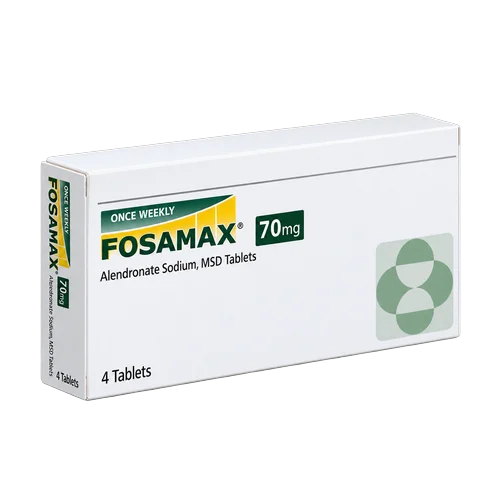
I took the 70 mg tablet once weekly for several months as prescribed and found the routine easy once Saturday morning became my set day. I liked that it fitted around work and did not require a daily tablet.
Fosamax
Fosamax contains alendronate sodium, an amino-bisphosphonate that slows bone breakdown and helps preserve bone strength. It may be prescribed for postmenopausal women and men with osteoporosis or adults with increased fracture risk, with the amount per intake set individually for each person.
Overview
It contains alendronate sodium, which slows bone breakdown and helps preserve bone strength. Alendronate is an amino-bisphosphonate.
Therapeutic indications
Osteoporosis reduces bone mineral density and makes fractures more likely, especially in the spine, hip and wrist. Fosamax works by reducing excessive bone resorption, the process through which specialised cells remove older bone tissue. Treatment aims to slow further bone loss, preserve bone mass and reduce fracture risk.
Indications for postmenopausal women and men
Fosamax may be prescribed for:
- Postmenopausal women with osteoporosis.
- Men with osteoporosis.
- Adults whose fracture risk is increased because of reduced bone mineral density.
- Selected patients with Paget’s disease of bone, when alendronate is clinically appropriate.
Postmenopausal bone loss is closely linked with reduced oestrogen activity. This change can accelerate bone turnover, causing bone removal to outpace bone formation. Men can also develop osteoporosis, especially with advancing age, low testosterone, prolonged corticosteroid treatment, reduced mobility, kidney disease or other medical conditions.
Clinical decisions depend on fracture history, bone-density results, age, kidney function, calcium status and other medicines. NICE guidance places oral bisphosphonates among established options for people whose fracture risk meets treatment thresholds [1].
Application in Paget’s disease of bone
Paget’s disease of bone causes localised areas of unusually rapid bone remodelling. The affected bone may become enlarged or structurally weak, even when the total amount of bone appears increased.
Alendronate can reduce the excessive resorption associated with Paget’s disease. Treatment schedules for Paget’s disease differ from the once-weekly osteoporosis regimen, so the prescribed indication determines the dose and duration.
Mechanism of action
Osteoclasts remove older bone.
Osteoblasts build new bone.
In osteoporosis, bone removal can exceed new bone formation. Alendronate attaches to mineral surfaces within bone, including hydroxyapatite crystals. When osteoclasts reach treated bone, they take up the alendronate. The drug then interferes with osteoclast function and promotes osteoclast inactivation.
This action lowers bone resorption. It does not create bone immediately, and it cannot repair a fracture on its own. The clinical benefit develops through reduced bone loss and gradual stabilisation of bone mineral density.
The United States FDA prescribing information describes alendronate as a potent inhibitor of osteoclast-mediated bone resorption [2].
Reasons not to use it
Fosamax is not suitable for everyone. This medication is not for you if you:
- Cannot remain upright for at least 30 minutes.
- Have an abnormality of the oesophagus that delays emptying.
- Have had a serious allergic reaction to alendronate or one of its ingredients.
- Have low blood calcium that has not been corrected.
- Have severe kidney impairment where alendronate is unsuitable.
Caution is needed with:
- Calcium supplements, antacids, iron, magnesium and multivitamins.
- Non-steroidal anti-inflammatory medicines, which may increase gastrointestinal irritation.
- Corticosteroids, which can raise fracture risk and may contribute to bone complications.
- Medicines or conditions that increase the risk of low calcium.
- Dental disease, planned tooth extraction or other invasive oral procedures.
When this is not for you
This medication is not for you if you:
- Cannot remain upright for at least 30 minutes.
- Have an abnormality of the oesophagus that delays emptying.
- Have had a serious allergic reaction to alendronate or one of its ingredients.
- Have low blood calcium that has not been corrected.
- Have severe kidney impairment where alendronate is unsuitable.
A broken or loose tooth does not automatically mean Fosamax must be stopped. The dental history, reason for treatment and fracture risk should be assessed together. Tell the dentist that alendronate is being used before invasive dental work.
A persistent new ache in the thigh, hip or groin deserves medical assessment. It can occur before an atypical femoral fracture, although ordinary muscle or joint conditions are more common.
Unwanted effects
The most common problems associated with oral alendronate involve the upper digestive tract. Possible effects include abdominal discomfort, indigestion, acid reflux, nausea, constipation, diarrhoea and musculoskeletal pain.
Oesophageal irritation requires prompt attention. Stop taking further doses and seek urgent medical advice if swallowing becomes painful, swallowing becomes difficult, chest pain develops or new or worsening heartburn occurs.
Other clinically significant risks include:
- Low calcium levels, especially when vitamin D deficiency or mineral imbalance is present.
- Musculoskeletal pain, which can occasionally be severe.
- Osteonecrosis of the jaw, mainly reported in people with cancer treatment, intravenous bisphosphonate exposure, dental infection or invasive dental procedures.
- Atypical femoral fractures after prolonged bisphosphonate exposure, sometimes preceded by aching in the thigh or groin.
- Allergic reactions, including swelling, rash, wheezing or breathing difficulty.
Formulation
The active ingredient in Fosamax is alendronate sodium, also described pharmacologically as alendronic acid supplied as the sodium salt. Alendronate is an amino-bisphosphonate.
Directions for use
The amount taken at each intake is determined individually for each person rather than being one fixed amount. A weekly schedule does not mean the tablet can be taken on any convenient day without planning. Each dose should be taken on the same chosen weekday, following the prescribed instructions.
Different alendronate regimens exist for different indications. Daily and weekly schedules are not interchangeable, and a tablet intended for osteoporosis should not be repurposed for another condition without a specific prescription.
The recommended weekly administration involves a strict sequence:
- Take one tablet after getting up for the day.
- Swallow it with a full glass of plain water.
- Take it before food, drink or other oral medicines.
- Remain sitting or standing for at least 30 minutes.
- Avoid lying down, eating or taking other oral medicines during that initial period.
- Eat breakfast only after the 30-minute interval has passed.
The tablet should be swallowed whole. Crushing, chewing or sucking it can increase contact with the mouth, throat and oesophagus. That may worsen irritation and does not provide the intended administration method.
If a weekly dose is missed, the usual instruction is to take one tablet on the morning after it is remembered. Two tablets should not be taken on the same day. The next dose is then taken on the originally selected weekday.
The 30-minute upright period is clinically meaningful. Alendronate can irritate the oesophagus, especially when it remains in contact with the lining or when a person lies down soon after swallowing it.
Calcium supplements and vitamin D products can interfere with alendronate absorption when taken too close together. They are generally scheduled later in the day, according to the individual treatment plan.
Comparison
Fosamax belongs to the oral bisphosphonate group. Other osteoporosis treatments differ in their active ingredient, route, dosing interval and suitability for a particular fracture pattern.
| Treatment category | Administration and clinical profile |
|---|---|
| Alendronate | Oral tablet; reduces osteoclast-mediated bone resorption; requires fasting administration and an upright period |
| Other bisphosphonates | May be given orally or by infusion; choice depends on fracture risk, gastrointestinal tolerance, kidney function and adherence |
| Non-bisphosphonate agents | May include injections or bone-forming therapies; selected when fracture risk, treatment history or contraindications favour another mechanism |
Risedronate is another oral bisphosphonate with similar administration concerns. Ibandronate is also a bisphosphonate, though its approved fracture-prevention profile differs by skeletal site. Zoledronic acid is administered by infusion, which avoids weekly tablet administration but requires assessment of kidney function and infusion suitability.
Denosumab is a monoclonal antibody that suppresses osteoclast development through a different pathway. It is administered by injection and must be continued or followed by an appropriate antiresorptive plan when treatment ends. Teriparatide and abaloparatide stimulate bone formation and are reserved for selected people with very high fracture risk. Raloxifene has selective oestrogen-receptor activity and is used in specific postmenopausal contexts. Treatment selection should account for fracture risk, contraindications and monitoring requirements.
The best option depends on more than convenience. Previous fractures, spine versus hip risk, oesophageal disease, renal function, calcium status and the person’s ability to follow administration instructions all influence selection.
Generic alendronate sodium contains the same active pharmaceutical ingredient as Fosamax. Approved generic products must meet regulatory requirements for pharmaceutical quality and bioequivalence.
Differences may occur in inactive ingredients, tablet appearance, packaging and manufacturing details. These differences can matter to someone with an intolerance or allergy to a particular excipient, even though the active ingredient is the same.
The administration rules remain essential with any oral alendronate product. Switching between products should not alter the weekly schedule unless the prescriber changes the regimen. A generic tablet should not be taken more frequently because it appears different or comes in a different pack.
Common mistakes
Several practical errors can reduce the benefit of Fosamax or increase irritation:
- Taking the tablet with coffee, juice, milk or mineral water.
- Eating breakfast immediately after swallowing it.
- Taking calcium, iron or antacids during the same morning.
- Lying down before the 30-minute upright period ends.
- Crushing or chewing the tablet.
- Taking two weekly tablets together after a missed dose.
- Using a daily schedule for a weekly tablet.
- Stopping calcium or vitamin D without discussing the reason.
- Continuing treatment despite painful swallowing or new severe heartburn.
- Forgetting to mention alendronate before invasive dental treatment.
One overlooked issue is the weekly calendar. If two dose days are accidentally selected, the person may take tablets too close together. Marking one recurring weekday in a medication diary can prevent this error.
What doctors say
In clinical practice, doctors often focus first on whether the patient can follow the administration routine correctly. A tablet taken with coffee or breakfast may provide much less alendronate than intended, while lying down can increase oesophageal exposure.
Prescribers also assess the reason for bone loss. A low DEXA result may coexist with corticosteroid use, thyroid disease, low vitamin D, early menopause, low body weight or a previous fragility fracture. Addressing those factors supports the treatment plan.
A clinician will usually explain that fracture prevention is the primary goal. The person may not feel a change after taking a dose because the medicine works on bone remodelling rather than producing an immediate sensation.
The MHRA provides patient-safety information for medicines that can cause oesophageal irritation and serious musculoskeletal complications [4]. This is why new swallowing pain, persistent heartburn, thigh pain or jaw symptoms should be reported promptly.
What customers often ask
Can Fosamax be split, crushed or chewed?
Fosamax tablets should be swallowed whole with plain water. Crushing, splitting or chewing can increase contact with the mouth and oesophagus and may worsen irritation. The 2024 FDA prescribing information specifies whole-tablet administration for oral alendronate products. The tablet should not be sucked or held in the mouth.
How long does a Fosamax course last, and is long-term use acceptable?
Treatment duration is individualised according to fracture risk, age, DEXA results, previous fractures and response to therapy. Some people receive a planned review after several years, while those with persistent high fracture risk may require longer treatment. Long-term use is not automatically unsuitable, but the balance of fracture protection and rare complications must be reassessed. NICE guidance from 2022 supports periodic review rather than an identical duration for every patient.
Can Fosamax be used during pregnancy or breastfeeding?
Fosamax is not routinely used during pregnancy or breastfeeding. Alendronate can remain in bone for prolonged periods, so pregnancy planning should be discussed before treatment begins. Anyone who becomes pregnant while using it should stop further doses and contact the prescribing clinician promptly. The EMA product information from 2011 advises against routine use in pregnancy and lactation.
What should be discussed with a doctor before starting Fosamax?
Discuss swallowing problems, oesophageal disease, inability to remain upright, kidney disease, low calcium, vitamin D deficiency and previous reactions to bisphosphonates. Provide a complete list of medicines and supplements, including calcium, iron, antacids and corticosteroids. Tell the clinician about planned dental extractions or significant dental disease. The MHRA guidance from 2014 highlights the value of reporting new oesophageal, jaw or thigh symptoms during treatment.
Can Fosamax be taken with calcium, iron, magnesium or antacids?
These products should not be taken at the same time as Fosamax. Calcium, iron, magnesium and antacid ingredients can bind alendronate in the digestive tract and reduce absorption. They are usually taken later, with timing selected around the individual regimen. The WHO’s 2020 essential-medicines information supports careful separation of medicines that interfere with oral absorption.
How long does one Fosamax dose keep working?
A weekly dose is designed to provide sustained suppression of bone resorption across the dosing interval. Alendronate binds to bone mineral and remains associated with bone tissue for a prolonged period, so its biological effect is not limited to the morning it is swallowed. This does not make missed doses irrelevant, because regular administration maintains the intended treatment pattern. The 2024 FDA prescribing information explains the prolonged skeletal retention of alendronate.
Do you offer anonymous delivery?
Your order will be securely packed and shipped within 24 hours. This is exactly what your package will look like (images of an actual item sent). It has the size and look of a regular private letter (24x11x0.7 cm) and its contents cannot be seen.
Bone mineral density is commonly assessed with dual-energy X-ray absorptiometry, known as a DEXA or DXA scan. The scan usually evaluates the hip and lumbar spine.
A T-score compares bone density with the average peak bone density of a healthy young adult population:
- A T-score of −1.0 or above is generally considered within the normal range.
- A T-score between −1.0 and −2.5 is consistent with low bone density.
- A T-score of −2.5 or below is consistent with osteoporosis.
Treatment response is not judged from a single number alone. Clinicians consider fracture history, changes in bone mineral density, age, falls, adherence, calcium and vitamin D status, and other causes of bone loss.
Bone density can fluctuate slightly between scans because of measurement variation. A stable result may represent a useful treatment response when untreated bone density would otherwise continue to decline. The WHO describes osteoporosis through bone-density and fracture-risk concepts that support this wider clinical assessment [3].
Long-term bisphosphonate treatment may be reviewed periodically. A treatment pause can be considered for some people after an individual risk assessment, while those at high fracture risk may need continued treatment. Stopping or restarting should be based on fracture risk rather than a fixed timetable.
How Buyers Rate Fosamax
I took the 70 mg tablet once weekly for several months, and the written instructions were straightforward for me. I took it with water before breakfast and waited before having coffee, and the weekly schedule was easier to remember than something I had to take every day.
I took the 70 mg tablet once weekly for several months, and Fosamax became part of my Sunday morning routine. I kept the tablet away from breakfast items and felt reassured that my bone treatment had a clear schedule.
I took the 70 mg tablet once weekly for several weeks, but I struggled with heartburn and the treatment did not feel comfortable. I stopped taking further doses and spoke with my doctor, who reviewed whether an alternative approach suited me better.
Sources
- NICE (2022). Osteoporosis: assessing the risk of fragility fracture.
- U.S. Food and Drug Administration (2024). Fosamax (alendronate sodium) tablets: prescribing information.
- World Health Organization (2020). Assessment of fracture risk and its application to screening for postmenopausal osteoporosis.
- MHRA (2014). Bisphosphonates: osteonecrosis of the jaw, atypical femoral fractures and oesophageal cancer.