I used the cream regularly and noticed less dryness after a few weeks. Walking and sitting at work became more comfortable, and intimacy was no longer something I avoided. The applicator was straightforward once I had used it twice.
Estriol
Estriol supports oestrogen-sensitive tissues in the vagina and lower urinary tract. Estriol cream is intended for adults with menopausal genitourinary symptoms such as dryness, irritation and tissue thinning. Local application helps restore mucosal comfort with less systemic exposure than oral oestrogen therapy.
Overview
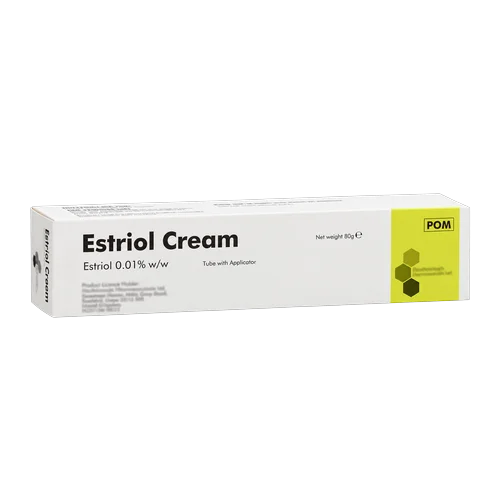
Estriol is a naturally occurring oestrogen and the active substance in Estriol cream. The product contains estriol 0.01% w/w in a topical cream supplied with an applicator. It is used as a local form of Hormone Replacement Therapy for oestrogen-deficiency symptoms affecting vaginal and vulval tissues.
Estriol compared with Estradiol and Estrone
Estradiol is the most potent naturally occurring oestrogen during the reproductive years. Estrone becomes more prominent after menopause, while estriol is associated with pregnancy and has weaker oestrogenic activity in many tissues.
The weaker receptor activity of estriol is one reason it is used for local treatment. Estriol cream aims to expose vaginal tissues to oestrogen without producing the same systemic hormone pattern as oral therapy. The distinction matters because local treatment and systemic HRT have different indications, absorption profiles and monitoring considerations.
Estriol does not treat every menopausal symptom. It is aimed at genitourinary symptoms, while hot flushes, night sweats and wider menopausal symptoms may require a different treatment strategy.
Therapeutic indications
Estriol Cream is used for genitourinary syndrome of menopause, previously called vaginal atrophy. This condition can involve dryness, burning, soreness, itching, reduced lubrication and pain during sexual activity. Some people also develop urinary urgency, recurrent dysuria or repeated lower urinary tract symptoms.
Treatment supports the vaginal epithelium and helps rebuild a more resilient mucosal surface. It may improve comfort during intercourse and reduce irritation caused by friction. The urinary benefits relate to the surrounding oestrogen-sensitive tissues rather than direct antibacterial action.
Estriol cream does not cure an active urinary tract infection. Fever, flank pain, visible blood in the urine or feeling acutely unwell requires prompt medical assessment because these symptoms may indicate a more serious infection.
In clinical practice, symptoms often return after local oestrogen is stopped because the underlying postmenopausal hormone deficiency remains. Some patients need maintenance treatment after an initial course. The amount per application is set individually rather than being one fixed dose for every person.
Mechanism of action
After menopause, falling oestrogen levels can make vaginal tissue thinner, less elastic and more vulnerable to irritation. The vaginal lining may produce less natural moisture, while the normal acidic environment can change. These changes may cause burning, discomfort during intercourse, urinary urgency or repeated lower urinary tract symptoms.
Estriol binds to oestrogen receptors in affected tissues. This encourages maturation of the vaginal epithelium, improves tissue lubrication and supports the local environment. Absorption into the bloodstream is lower than with oral oestrogen, although it is not necessarily zero.
Reasons not to use it
- current or previous breast cancer, or another oestrogen-sensitive cancer;
- unexplained vaginal bleeding;
- untreated endometrial hyperplasia;
- current or previous venous thrombosis or pulmonary embolism;
- active or recent arterial clotting disease;
- severe liver disease with abnormal liver function;
- porphyria triggered by oestrogen exposure;
- a serious allergy to estriol or an excipient in the cream.
Medicines that can affect hormone metabolism include some enzyme-inducing epilepsy treatments, rifampicin-type antibiotics and certain medicines used for HIV or hepatitis C. St John’s wort can also alter the metabolism of hormonal medicines. Vaginal oestrogen may interact with other hormone treatments, including systemic HRT, so combined use needs a clear treatment plan.
When this is not for you
Estriol is not suitable for everyone. This treatment is not for you if you have current or previous breast cancer, another oestrogen-sensitive cancer, unexplained vaginal bleeding, a history of blood clots, severe liver disease, or a serious allergy to estriol or an ingredient in the cream.
Tell the prescriber about migraine with neurological symptoms, gallbladder disease, diabetes, hypertension, endometriosis, fibroids, epilepsy and previous hormone-related conditions. The product is not intended to prevent pregnancy. Contraception may still be needed before menopause has fully ended.
Unwanted effects
Local effects are the most relevant early problems. Some people experience temporary burning, itching, irritation, soreness or increased discharge after application. These symptoms may settle, but persistent or worsening irritation needs assessment.
Other possible effects of vaginal oestrogen include breast tenderness, headache, nausea, fluid retention or mood changes. These effects are less common with local treatment than with systemic oestrogen, yet systemic absorption can occur, especially during initial treatment or when larger amounts are used.
Seek urgent medical attention for:
- sudden chest pain, breathlessness or coughing blood;
- one-sided leg swelling or severe calf pain;
- sudden weakness, facial drooping or difficulty speaking;
- severe headache with visual or neurological changes;
- heavy or unexplained vaginal bleeding;
- a serious allergic reaction with facial swelling or breathing difficulty.
Formulation
The product is a white vaginal cream containing estriol 0.01% w/w, supplied in an 80 g tube with an applicator.
Directions for use
The quantity per application is individualised. Estriol cream is applied vaginally using the supplied applicator, with the frequency and duration determined by the prescriber.
- Apply the prescribed amount intravaginally at the prescribed frequency.
- Use the applicator as directed for administration into the vagina.
- Follow the prescribed induction and maintenance schedule.
- If a dose is missed, apply it when remembered unless the next scheduled dose is close.
- Do not apply a double amount to compensate for a missed dose.
- Wash the applicator according to the product instructions and allow it to dry properly.
- Do not use the cream in the eyes, mouth or on unrelated areas of skin.
Estriol cream is generally used regularly during the initial treatment period, followed by less frequent maintenance when clinically appropriate. The exact schedule varies because symptom severity, age, recurrence and previous hormone exposure differ between patients.
Comparison
Several treatment categories can address vaginal dryness and menopausal genitourinary symptoms. The best choice depends on symptom location, previous treatment, cancer history, bleeding history, urinary symptoms and personal preference.
Hormonal alternatives include vaginal tablets, pessaries and gels containing an oestrogen or another locally active hormone. Non-hormonal moisturisers and lubricants can support comfort without adding oestrogen. They may be useful for people who cannot use hormonal treatment or who need additional lubrication during sexual activity.
| Approach | Hormonal status | Main role |
|---|---|---|
| Estriol cream | Local oestrogen | Restores oestrogen-sensitive vaginal tissue |
| Vaginal pessary, tablet or gel | Depends on active ingredient | Local hormonal treatment in another formulation |
| Moisturiser or lubricant | Non-hormonal | Moisture, reduced friction and symptom support |
Professional guidance from the National Institute for Health and Care Excellence (NICE) supports offering local vaginal oestrogen for menopausal genitourinary symptoms when appropriate. Non-hormonal options remain relevant when oestrogen is unsuitable, declined or insufficient for a specific symptom [1].
Common mistakes
Several habits can reduce the benefit of vaginal estriol treatment:
- using an amount chosen by guesswork rather than the prescribed individual amount;
- applying extra cream because symptoms have not improved after only a few days;
- stopping immediately when symptoms settle, despite an agreed maintenance plan;
- using the cream for an active urinary infection instead of obtaining appropriate infection treatment;
- applying it to the eyes, mouth or irritated external skin without specific instructions;
- overlooking new bleeding because dryness was the original problem;
- using several oestrogen-containing products without telling the prescriber;
- treating severe burning as a sign to increase the dose.
Applicator hygiene also matters. Residue left in the applicator can make the next measured amount less reliable. The applicator should be handled in the way specified for the product rather than shared with another person.
What doctors say
A clinician usually assesses the symptom pattern before choosing local oestrogen. Dryness, burning and pain with intercourse fit a different treatment pathway from unexplained bleeding, severe pelvic pain or suspected infection.
Doctors often explain that local therapy is a tissue-restoring treatment rather than an instant lubricant. Lubricants can reduce friction during intercourse, while regular estriol therapy addresses oestrogen-responsive tissue changes over time. Using both may be appropriate when symptoms include daily dryness and activity-related discomfort.
The European Medicines Agency (EMA) recognises that local hormone preparations have different exposure profiles from systemic HRT, but low exposure does not eliminate the need to review bleeding and hormone-sensitive conditions [2]. A prescriber may reassess the treatment if symptoms fail to improve, recur quickly after stopping or change in character.
One practical issue is adherence. Patients may stop when symptoms improve, only to experience recurrence later. A maintenance schedule can help some people, provided it remains clinically appropriate.
What customers often ask
Which diet, exercise or habits can help or hinder the result?
Regular physical activity supports general cardiovascular, pelvic-floor and musculoskeletal health, but it does not replace local oestrogen for vaginal tissue changes. Adequate hydration may help urinary comfort, while smoking can worsen vascular and mucosal health. Fragranced washes, vaginal douches and irritating bath products can aggravate dryness and burning. NICE guidance published in 2024 supports lifestyle measures alongside symptom-directed treatment, not as a substitute for appropriate therapy.
Do you offer anonymous delivery?
Your order will be securely packed and shipped within 24 hours. This is exactly what your package will look like (images of an actual item sent). It has the size and look of a regular private letter (24x11x0.7 cm) and its contents cannot be seen.
How Buyers Rate Estriol
The irritation and dryness improved, but the change was slower than I expected. I had a little extra discharge at first, which was inconvenient, although it settled. The treatment helped enough for me to continue with the schedule I was given.
After several weeks, the soreness had reduced and I felt more comfortable during the day. I also found intercourse less painful. The improvement was gradual rather than sudden, but it made a clear difference.
I had been dealing with dryness for months and the cream gave noticeable relief after consistent use. I kept it by my evening toiletries so I did not forget it. The tube and applicator were easy to manage.
Sources
- NICE (2024). Menopause: diagnosis and management.
- European Medicines Agency (2023). Summary of Product Characteristics (SmPC) — estriol-containing medicinal product.