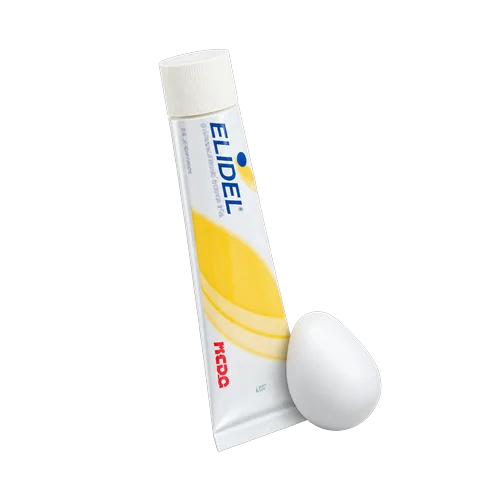
I used Elidel on recurring eczema around my neck and cheeks. The itching settled within the first week, and the patches looked much calmer after a few weeks. The tube was easy to use because I only needed a small amount.
Elidel
Eczema and atopic dermatitis can cause persistent itching, redness and inflamed patches, especially on the face and neck. Elidel contains 1% pimecrolimus, a topical calcineurin inhibitor for mild to moderate atopic dermatitis. Its steroid-free action reduces inflammatory signalling in affected skin.
Overview
Elidel cream is a prescription dermatological treatment for mild to moderate atopic dermatitis, a form of eczema involving recurring inflammation, itching, dryness and irritation. The active substance is pimecrolimus at a concentration of 1%. It is applied directly to affected skin rather than taken by mouth.
Therapeutic indications
Elidel is used when an anti-inflammatory treatment is needed on areas where repeated corticosteroid use may be unsuitable, such as the face, neck, eyelids or skin folds. The European Medicines Agency describes pimecrolimus as a topical treatment for atopic dermatitis in appropriate patients, including children from the relevant approved age group and adults [1].
Targeted Skin Conditions
Atopic dermatitis often follows a relapsing pattern. Skin may appear dry between flares, then become red, itchy, rough or inflamed. Scratching can damage the skin barrier and increase discomfort.
Elidel may be prescribed for:
- Mild to moderate atopic dermatitis.
- Eczema affecting sensitive areas of the body.
- Localised facial or neck dermatitis.
- Recurrent inflammatory patches requiring intermittent treatment.
- Situations where reducing exposure to topical corticosteroids is clinically useful.
Elidel is not intended for every rash. Fungal infections, bacterial infections, viral lesions, psoriasis and contact dermatitis can require different treatment. A correct diagnosis matters because suppressing inflammation in an infected area may allow the infection to worsen.
Mechanism of action
Pimecrolimus belongs to the topical calcineurin inhibitor class. It acts mainly within the skin, where it reduces activation of immune cells involved in eczema inflammation. This lowers the release of inflammatory cytokines, which are signalling proteins that help sustain redness, itching and swelling.
The medicine does not work by moisturising the skin. Emollients repair and support the skin barrier, while pimecrolimus targets inflammatory immune activity. Both approaches may be used in an eczema management plan when clinically appropriate.
Mechanism of Calcineurin Inhibition
T-cells are immune cells that can contribute to the inflammatory response in atopic dermatitis. Calcineurin is an enzyme involved in switching on immune-cell genes responsible for cytokine production. Pimecrolimus inhibits this pathway, reducing the synthesis and release of several inflammatory mediators.
This mechanism differs from that of topical corticosteroids. Corticosteroids act through glucocorticoid receptors and can reduce inflammation across several pathways, while pimecrolimus is a more targeted immune-modulating treatment. The MHRA recognises topical calcineurin inhibitors as a distinct treatment class for inflammatory skin disease management [2].
The cream does not permanently alter the immune system. Its action is local, though some absorption can occur, especially when large areas, damaged skin or occlusive coverings are involved.
Reasons not to use it
Elidel is not suitable for everyone. It should not be used by someone with a known allergy to pimecrolimus or any component of the cream. Treatment should also be avoided on active untreated skin infections.
- You have had a hypersensitivity reaction to pimecrolimus.
- The affected area has untreated bacterial, viral or fungal infection.
- You have an active herpes simplex lesion, such as a cold sore, on the treatment area.
- You have a suspected malignant or pre-malignant skin lesion.
- You have a serious immune-system disorder, unless a specialist has specifically directed treatment.
When this is not for you
This treatment is not for you if:
- You are applying it to a child below the approved age for the local product.
- You have a rash that has not been assessed and may not be atopic dermatitis.
Tell the prescriber about immune-suppressing medicines, recurrent infections, swollen lymph nodes, previous skin cancer and any unusual persistent skin lesion. Elidel should not be used continuously without review when the diagnosis is uncertain or the skin does not improve.
Pregnancy and breastfeeding require an individual treatment decision. Avoid applying the cream to the breast immediately before breastfeeding, because an infant should not ingest treated cream. The product should also be kept away from the infant’s mouth.
Unwanted effects
The most common early reaction is a feeling of warmth, burning or stinging where Elidel is applied. This usually starts soon after application and often becomes less troublesome as the flare improves. Redness, irritation, itching, folliculitis and skin infection can also occur.
Possible local effects include:
- Burning or warmth.
- Stinging.
- Redness or irritation.
- Itching.
- Dryness.
- Folliculitis.
- Cold sores or other local viral infections.
- Impetigo or another bacterial skin infection.
Less common problems include swelling, hives, worsening dermatitis or allergic contact reactions. Stop applying the cream and seek urgent medical help for facial swelling, difficulty breathing, widespread hives, faintness or rapidly developing blistering.
Pimecrolimus has limited systemic exposure when used correctly on small areas of intact skin. Absorption can increase when the skin is severely damaged, when large body areas are treated, or when the cream is covered. The World Health Organization’s pharmacovigilance principles support prompt reporting and assessment of suspected serious adverse reactions [3].
One practical detail is easy to miss: warmth from the cream can be more noticeable after a hot shower, exercise or time in a heated room. Applying it to cool, dry skin may make the first few minutes more comfortable.

Formulation
The concentration means that pimecrolimus makes up 1% of the cream formulation. The product should not be used inside the mouth, nose, eyes or vagina. It is designed for external skin application.
Directions for use
The amount and frequency depend on the purpose of treatment and are agreed with a doctor or pharmacist. General application principles are:
- Apply a thin layer to affected eczema areas.
- Use Elidel at the first signs of a flare, such as itching, redness or roughness.
- Rub the cream in gently until it is absorbed.
- Wash hands before application and after application, unless the hands are being treated.
- Avoid applying it to mucous membranes, inside the eyes or to clearly infected skin.
- Do not cover treated areas with airtight dressings unless specifically instructed.
- Continue treatment for the duration agreed with the prescriber.
- Use an emollient separately if advised, allowing time between products where needed.
The cream is not a body lotion. Applying a thick layer does not make it work faster and may increase local irritation. Treat only the affected areas rather than coating unaffected skin.
If an application is missed, apply the cream when remembered if it is not close to the next planned application. Do not apply extra cream to compensate. When a flare repeatedly returns after stopping, the treatment plan may need review.
Sun exposure deserves attention. Treated skin should be protected from excessive sunlight, tanning equipment and sunburn. Use ordinary protective measures, such as clothing and shade, and follow the prescriber’s advice about sunscreen on treated areas.
Comparison
Elidel occupies a different place in eczema care from moisturisers and topical corticosteroids. The comparison depends on the severity, location and pattern of the dermatitis.
| Approach | Main role |
|---|---|
| Elidel 1% cream | Reduces immune-driven inflammation in mild to moderate atopic dermatitis without corticosteroids |
| Emollient or barrier cream | Reduces dryness and supports the skin barrier; does not directly suppress the immune flare |
| Topical corticosteroid | Reduces inflammation during a flare; strength and duration require careful selection |
Emollients remain useful because dry skin can trigger itching and cracking even when inflammation is controlled. They may be used between flares and alongside prescribed treatment. Their limitation is that they cannot replace an anti-inflammatory medicine when active redness and itching are driving the problem.
Topical corticosteroids can work rapidly and are often selected for stronger flares or thicker areas of skin. Their limitations increase with potency, duration and repeated use, especially on thin skin. Elidel may be selected when steroid exposure needs to be reduced, though it can cause more initial application-site burning than a bland moisturiser.
Psoriasis is managed differently from atopic dermatitis. A persistent scaly plaque, scalp involvement or nail change should not automatically be treated as eczema.
Common mistakes
Several practical errors can reduce the benefit of Elidel:
- Applying it to a rash that is actually infected.
- Using a thick layer in the belief that it will work faster.
- Covering the area with plastic or an airtight dressing.
- Applying it immediately after a hot bath when the skin is already flushed.
- Forgetting the hands after treating them, then touching the eyes.
- Using fragranced products that irritate the same area.
- Stopping all moisturiser once the redness improves.
- Continuing treatment on a lesion that is changing, bleeding or failing to heal.
- Treating large areas without discussing the plan with the prescriber.
- Sharing the tube with another person who has a different rash.
A tube can also become contaminated when its tip touches weeping skin. Keep the nozzle clean and avoid pressing it directly against an open lesion.
What doctors say
In clinical practice, doctors usually assess three details before prescribing pimecrolimus: the diagnosis, the affected body site and the severity of inflammation. Facial eczema may need a different long-term strategy from thickened eczema on the hands or limbs.
A doctor would also consider whether the patient can recognise an early flare. Elidel is often more useful when treatment begins promptly, before scratching and barrier damage become extensive. A delayed application may leave the person needing a longer recovery period.
Consistency matters, but more cream is not better. The prescriber’s plan may include regular emollient use, short treatment periods during flares or a preventive schedule for recurrent areas. The correct plan varies with age, body site and recurrence pattern.
Patients sometimes stop as soon as redness fades, then restart only after severe itching returns. A clinician may instead recommend a structured approach that treats early symptoms and maintains the barrier with moisturiser.
What customers often ask
Which symptoms mean stopping Elidel and seeking urgent medical help?
Stop using Elidel and seek urgent help for facial or throat swelling, breathing difficulty, widespread hives, faintness or rapidly spreading blistering. Urgent assessment is also needed for severe pain, rapidly increasing redness, fever or pus, because these can indicate infection. The MHRA’s 2024 adverse-reaction guidance supports prompt assessment of serious or rapidly developing reactions [4]. A mild brief warming sensation is different from a severe allergic or infectious reaction. The EMA product information dated 2018 also describes urgent review for serious reactions.
What should be discussed with a doctor before starting Elidel?
Discuss previous allergies to pimecrolimus or cream ingredients, recurrent cold sores, immune-system problems, skin infections and any persistent or unusual lesion. Mention pregnancy, breastfeeding, immune-suppressing treatment and any history of skin cancer. The diagnosis should be confirmed because eczema, psoriasis, contact dermatitis and infection can appear similar. These precautions remain relevant in 2026, and the EMA product information supports individual assessment because the treatment decision depends on the skin condition rather than the product name alone.
Can Elidel affect driving, concentration or work with machinery?
Elidel is applied to the skin and is not expected to impair concentration or reaction time in the way sedating medicines can. Driving and machinery work are usually compatible with treatment when the cream is used correctly. Burning or itching may still distract someone if a large area is inflamed, so work may need to pause if symptoms become severe. The EMA product information dated 2018 supports topical use without a routine warning that patients must avoid driving.
How does Elidel differ from the closest alternative by mechanism?
Elidel contains pimecrolimus, which inhibits calcineurin-dependent inflammatory signalling in T-cells. Topical corticosteroids use glucocorticoid-receptor pathways and are selected according to potency, body site and treatment duration. Emollients have a barrier-supporting role and do not directly suppress the immune response. The WHO’s 2020 pharmacological approach distinguishes anti-inflammatory treatment from supportive skin-barrier care.
How should Elidel be applied, including the amount, handwashing and covering?
Apply a thin layer to the affected eczema areas at the frequency agreed with the doctor or pharmacist. Wash hands before use and afterwards, unless the hands themselves are being treated. Avoid the eyes, mouth, mucous membranes and airtight coverings unless a clinician has specifically instructed otherwise. The MHRA’s 2024 guidance advises patients to follow the prescribed topical regimen and to seek assessment when application causes a severe reaction.
How should Elidel be stored at home and while travelling?
Keep the tube closed and store it according to the storage conditions supplied with the product. Avoid excessive heat, freezing conditions and prolonged direct sunlight, especially in a car or travel bag left in the sun. Do not transfer the cream into an unlabelled container, since this can cause confusion with other topical products. The EMA product information dated 2018 provides the formal storage requirements for pimecrolimus cream.
Which diet, exercise or habits can help or hinder the result?
Regular moisturising, gentle cleansing and avoiding known irritants can support eczema control. Fragranced washes, harsh detergents, wool against inflamed skin, overheating and heavy sweating may aggravate symptoms in some people. Diet changes should not be used to treat eczema unless a genuine allergy or intolerance has been assessed; unnecessary restriction can create nutritional problems. The WHO’s 2020 clinical approach supports attention to skin care, triggers and individual patient factors rather than unsupported elimination diets.
Do you offer anonymous delivery?
Your order will be securely packed and shipped within 24 hours. This is exactly what your package will look like (images of an actual item sent). It has the size and look of a regular private letter (24x11x0.7 cm) and its contents cannot be seen.
How Buyers Rate Elidel
My facial eczema had been coming back in the same places. Elidel helped control the flare without making the skin feel thin or fragile. I was pleased that the roughness reduced and makeup no longer caught on the dry patches.
I applied a thin layer to the itchy areas on my hands as directed. The improvement was gradual, but the cracking and redness became much less noticeable. It fitted better into my routine than constantly changing products.
The cream caused a strong burning sensation each time I applied it, and my eczema did not settle after the treatment period. I stopped using it and discussed the reaction with my doctor, who reviewed whether the diagnosis and treatment were right for me.
Sources
- European Medicines Agency (2018). Summary of Product Characteristics — Elidel (pimecrolimus).
- Medicines and Healthcare products Regulatory Agency (2014). Drug Safety Update: topical tacrolimus and pimecrolimus for atopic eczema.
- World Health Organization (2002). The importance of pharmacovigilance: safety monitoring of medicinal products.
- Medicines and Healthcare products Regulatory Agency (2024). Yellow Card scheme: report suspected adverse drug reactions.