Skip to content
24/7 Support
Save up to 80%
Fast & Discreet Delivery
Diarex

Diarex

Quality products
24/7 Support
Fast delivery
Delivery from 4 days
Active ingredient Diarex

Free delivery on orders from £ 172.00, free express delivery from £ 258.00

Diarex is a plant-based antidiarrhoeal product for adults and older teenagers. It supports bowel regulation and gastrointestinal comfort while fluid and electrolyte replacement remains central during diarrhoea.

Overview

Diarex belongs to the plant-based antidiarrhoeal category. The product is intended for adults and older teenagers when its use is appropriate.

The World Health Organization identifies dehydration as the main danger of acute diarrhoeal disease [1].

Therapeutic indications

Diarex is presented for acute and chronic diarrhoea, diarrhoea and dysentery, and digestive discomfort. It may also be used as an adjunct in irritable bowel syndrome when a clinician considers a bowel-regulating herbal product suitable.

These conditions are not interchangeable. Acute diarrhoea often develops over hours or days and may follow infection, contaminated food, medication, or another short-lived trigger. Chronic diarrhoea persists or recurs and can reflect inflammatory bowel disease, malabsorption, coeliac disease, medication effects, endocrine disease, or infection requiring investigation. Warning signs increase the need for timely medical review. The duration and pattern of symptoms should guide the next clinical step.

Situation Role of Diarex Priority
Short-lived loose stools without warning signs Supportive bowel regulation may be considered Fluids and electrolyte replacement
Persistent or recurrent diarrhoea Requires assessment of the cause Medical review and targeted investigation
IBS-related bowel disturbance Possible adjunct when clinically suitable Individual symptom management

Acute and chronic infectious episodes

Acute infectious diarrhoea can be caused by viruses, bacteria, or parasites. Treatment depends on severity, duration, travel exposure, immune status, age, and accompanying symptoms. A herbal antidiarrhoeal may support symptoms, but it cannot be assumed to replace treatment for confirmed dysentery or amoebiasis.

Chronic diarrhoea needs a different approach. Repeated self-treatment may delay investigation of weight loss, nocturnal symptoms, anaemia, inflammatory disease, or malabsorption. In clinical practice, the duration of symptoms often matters as much as stool frequency.

Irritable bowel syndrome support

IBS is a functional gastrointestinal disorder involving abdominal pain and altered bowel habit. Diarrhoea-predominant IBS is diagnosed after considering the symptom pattern and excluding warning signs.

Diarex may be considered an adjunct for bowel discomfort, but it should not be used to label unexplained persistent diarrhoea as IBS. New symptoms after the age of 50, unintentional weight loss, rectal bleeding, or a family history of bowel cancer need proper assessment.

Mechanism of action

Diarex is intended to support several gastrointestinal processes rather than act through one named synthetic drug target. The proposed herbal profile includes antimicrobial, astringent, anti-inflammatory, demulcent, and antispasmodic properties, although the clinical contribution of each action depends on the final formulation and the cause of diarrhoea.

The term astringent describes an action that may reduce tissue secretion and help tighten irritated mucosal surfaces. Demulcent refers to a soothing effect on irritated tissue. Antispasmodic means reducing smooth-muscle cramping, which may ease abdominal colic.

These properties may help with symptoms such as loose stools, intestinal irritation, and cramping. They do not prove broad-spectrum pathogen clearance, and they should not be used to claim that Diarex eradicates every bacterial, viral, or parasitic cause of diarrhoea.

Antimicrobial and pathogen-related effects

Laboratory antimicrobial activity and clinical treatment of infection are different concepts. A plant extract can inhibit microorganisms in laboratory conditions without replacing targeted treatment in a person with dysentery, amoebiasis, cholera, or another significant infection.

The NHS advises urgent assessment for bloody diarrhoea, severe dehydration, or symptoms that do not settle. Those situations require attention to the cause, hydration status, kidney function, and possible testing rather than relying only on a bowel-regulating product [2].

Mucosal comfort and antispasmodic relief

Abdominal colic occurs when intestinal smooth muscle contracts painfully. A preparation with soothing or antispasmodic properties may reduce the sensation of cramping while the bowel recovers.

Do not use reduced stool frequency as the only sign of recovery. Urine output, alertness, thirst, dizziness, and the ability to drink are also useful indicators of hydration.

A practical limitation is easy to miss: suppressing a symptom can make an illness feel quieter while the underlying cause continues. Fever, blood, worsening pain, or marked weakness should change the plan.

Reasons not to use it

  • Blood, black stool, or visible mucus with significant illness.
  • Severe abdominal pain, abdominal swelling, or suspected bowel obstruction.
  • Persistent vomiting that prevents fluid intake.
  • Marked dehydration, fainting, confusion, or very low urine output.
  • A known allergy to any ingredient in the formulation.
  • Severe or recurrent diarrhoea without an established explanation.
  • Recent antibiotic treatment followed by frequent watery stools.
  • Significant liver, kidney, or immune-system disease without individual medical advice.
  • Pregnancy or breastfeeding without a clinician confirming suitability.
  • Use by a young child when an age-appropriate treatment has not been confirmed.

Drug interactions cannot be assessed reliably from a product name alone when the full botanical composition and quantities are not available. A doctor should review Diarex before use by anyone taking regular medicines with a narrow therapeutic range, medicines affecting kidney function, diuretics, anticoagulants, or treatment for inflammatory bowel disease.

The MHRA provides UK medicines-safety information, while the EMA evaluates medicines and herbal substances within the European regulatory framework [3]. Their general safety principles support a simple clinical rule: persistent symptoms, unusual severity, and high-risk medical conditions require individual assessment.

When this is not for you

Diarex is not for you if you have blood or black stool, severe abdominal pain, persistent vomiting, marked dehydration, or confusion. Do not rely on it without medical advice if you are pregnant or breastfeeding, have kidney, liver, or immune-system disease, take regular medicines, or have recurrent diarrhoea. It is also not suitable for a young child unless an age-appropriate treatment has been confirmed.

Unwanted effects

Diarex may be tolerated by many people when used as directed, but herbal products can still cause unwanted effects. Possible problems include nausea, abdominal discomfort, constipation after stool frequency falls, or an allergic reaction to a plant constituent.

Skin rash, facial swelling, wheezing, or difficulty breathing require urgent medical attention. Stop further doses if an allergic reaction is suspected.

Severe or persistent diarrhoea can cause dehydration, low blood pressure, kidney stress, and electrolyte imbalance. The risk is higher in older adults, people with kidney disease, people taking diuretics, and those who cannot keep fluids down.

One practical detail is easy to overlook: dark urine, reduced urination, dry mouth, dizziness when standing, and unusual tiredness can appear before someone describes themselves as severely dehydrated.

Avoid alcohol during active diarrhoea. It can aggravate stomach irritation and makes it harder to replace lost fluid reliably.

Diarex should not be used to delay care when symptoms suggest invasive infection. Bloody stools, severe cramps, a high temperature, confusion, or rapidly worsening weakness are reasons for prompt medical evaluation.

Formulation

This distinction matters. Herbal products can contain multiple plant constituents, and their actions depend on the botanical species, plant part, extraction method, and amount per tablet. Clinical expectations should therefore remain tied to the product’s intended gastrointestinal use rather than to an assumed ingredient profile.

Bael and Coneru

Astringent plant constituents may reduce excessive intestinal secretion or support firmer stool consistency. Soothing constituents may lessen irritation. These descriptions explain the intended therapeutic direction; they do not confirm treatment of a specific pathogen.

Directions for use

Diarex is taken orally as tablets. The amount per intake is set individually for each person rather than being one fixed number.

  • Take the prescribed or recommended amount with water.
  • Use the product for the intended digestive episode, unless a clinician gives a different duration.
  • Swallow tablets whole unless specific product instructions state otherwise.
  • Do not take extra tablets to compensate for slow improvement.
  • If a dose is missed, take the next planned dose when it is due; do not double the amount.
  • Continue drinking suitable fluids while diarrhoea is present.
  • Stop self-treatment and seek medical assessment if symptoms worsen or warning signs appear.

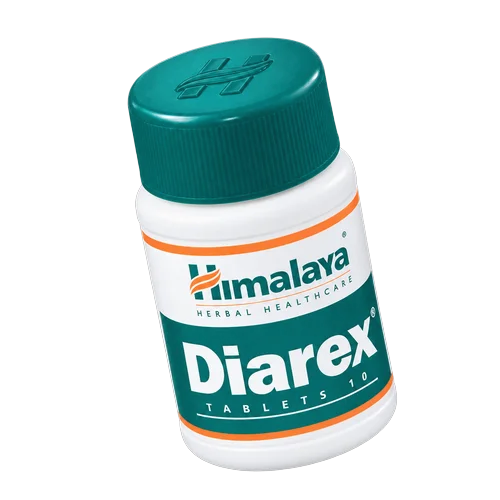
The bottle presentation contains 30 tablets. This describes the pack size, not an automatic course length. A 30-tablet bottle does not mean that every person should use all tablets.

Record the time of each dose during an acute episode. It prevents accidental double dosing when several people are helping an unwell family member.

Food may be tolerated differently during diarrhoea. Plain foods in small portions can be easier to manage than rich, greasy meals, while alcohol can worsen fluid loss and stomach irritation.

Comparison

Diarex belongs to a different category from oral rehydration solution and prescription treatment directed at a confirmed infection. The options can sometimes be used in the same episode, but they serve different purposes.

Approach Main purpose Main limitation
Diarex herbal tablets Support bowel regulation and gastrointestinal comfort Does not identify or treat every underlying cause
Oral rehydration solution Replaces water and electrolytes lost in stools Does not directly stop the cause of diarrhoea
Cause-specific medical treatment Targets a diagnosed infection or disease Requires assessment and may not be suitable for every episode

Oral rehydration has the clearest role when fluid loss is the immediate risk. Diarex may address bowel symptoms, while cause-specific treatment is selected when examination or testing identifies a condition requiring it.

No single approach suits every episode. A person with mild loose stools and preserved fluid intake has different needs from someone with fever, blood in the stool, kidney disease, or repeated watery stools.

Common mistakes

  • Using Diarex without replacing fluid and electrolytes.
  • Taking extra tablets because the first dose did not give immediate relief.
  • Treating chronic or recurrent diarrhoea as repeated isolated episodes.
  • Continuing self-treatment despite blood, fever, severe pain, or dehydration.
  • Assuming that a herbal product cannot cause allergy or interact with medicines.
  • Giving an adult gastrointestinal product to a child without age-specific advice.
  • Taking alcohol during active diarrhoea and then mistaking worsening dehydration for a side effect.
  • Stopping all food for too long, which can worsen weakness and delay recovery.
  • Failing to mention recent antibiotics, travel, hospital admission, or immune suppression.
  • Using leftover treatment for a new episode with a different symptom pattern.

What doctors say

Doctors generally separate symptom relief from disease treatment. A bowel-regulating product may make an episode more manageable, yet the patient still needs enough fluid, rest, and monitoring for deterioration.

A clinician would also ask how long the diarrhoea has lasted, how often stools occur, whether blood or fever is present, what medicines are being taken, and whether there has been recent travel or antibiotic exposure. Those details can alter the recommended treatment.

For older adults, the threshold for review is lower because dehydration can develop quickly and may worsen kidney function or blood pressure control. NICE guidance on acute diarrhoea and vomiting supports assessing hydration and clinical risk instead of relying on stool frequency alone [4].

Before starting Diarex, write down the number of loose stools in the previous 24 hours, fluid intake, urine frequency, fever, and any blood or mucus. This gives a doctor useful information quickly.

A realistic expectation is gradual improvement rather than an instant change after one tablet. If the expected result does not appear, increasing the amount without advice is a poor response because the cause may need reassessment.

What customers often ask

Can older adults use Diarex?

Older adults may use Diarex only when the formulation is suitable for their medical history and current medicines. Dehydration can develop quickly in later life, especially with kidney disease, diuretic treatment, reduced thirst, or limited mobility. NHS advice available in 2026 continues to place emphasis on fluid replacement and warning signs rather than relying only on symptom suppression. A doctor should review persistent diarrhoea, dizziness, reduced urination, or confusion.

Can alcohol be used while taking Diarex?

Alcohol is best avoided during diarrhoea and while using Diarex for an active gastrointestinal episode. Alcohol can irritate the digestive tract and make fluid replacement more difficult. The WHO guidance on diarrhoeal disease, published in 2017, identifies hydration as a central part of management. Alcohol should also be avoided if it worsens vomiting, dizziness, abdominal pain, or weakness.

Which condition rules out self-treatment with Diarex?

Bloody diarrhoea is a clear reason to avoid relying on self-treatment alone. Blood may indicate invasive infection, inflammatory bowel disease, or another condition requiring assessment. The MHRA’s 2023 UK safety framework supports prompt evaluation when symptoms are severe, unusual, or associated with systemic illness. Severe abdominal pain, confusion, fainting, and inability to drink are additional reasons for urgent medical attention.

How does Diarex differ from oral rehydration treatment?

Diarex is a herbal bowel-regulating tablet, while oral rehydration solution replaces water and electrolytes lost through diarrhoea. They address different treatment needs and are not interchangeable. The EMA’s herbal-medicine framework, referenced in 2020 regulatory material, distinguishes traditional herbal use from evidence for a specific diagnosis or pathogen. Fluid replacement remains central when dehydration is possible.

What should be done if the expected result does not come?

Do not increase the amount of Diarex without advice if symptoms continue. Reassess the duration, stool frequency, fluid intake, fever, pain, blood, recent antibiotics, and travel history. NHS clinical information reviewed for 2026 advises medical assessment when diarrhoea persists, becomes severe, or occurs with dehydration or blood. Continuing symptoms may indicate a cause that needs testing or a different treatment approach.

What should be discussed with a doctor before starting Diarex?

Discuss pregnancy or breastfeeding, allergies, kidney or liver disease, immune suppression, recurrent diarrhoea, recent antibiotics, and all regular medicines. Mention anticoagulants, diuretics, medicines affecting kidney function, and treatment for inflammatory bowel disease. NICE guidance published in 2024 stresses clinical assessment of dehydration risk and associated symptoms in gastrointestinal illness. A doctor can decide whether Diarex is suitable and whether another evaluation is needed first.

Do you offer anonymous delivery?

Your order will be securely packed and shipped within 24 hours. This is exactly what your package will look like (images of an actual item sent). It has the size and look of a regular private letter (24x11x0.7 cm) and its contents cannot be seen.

How Buyers Rate Diarex

4
Based on 4 reviews
Darren Z., 51
Oxford
The following couple of days
Verified
Rating: 5 out of 5

Darren Z., 51 - Oxford, used the recommended dose of Diarex tablets for a short bout of loose stools and felt that his bowel settled over the following couple of days. He was pleased that the tablets were simple to take and kept the bottle in his home medicine cupboard afterwards.

27 Oct 2026
Megan, 28
Sheffield
By the third day
Verified
Rating: 4 out of 5

Megan, 28 - Sheffield, used the recommended dose of Diarex during a period of digestive upset after changing her usual diet. The improvement was gradual rather than immediate, but by the third day she felt comfortable enough to return to normal meals and work.

5 Nov 2026
Hannah, 69
Aberdeen
Several days
Verified
Rating: 5 out of 5

Hannah, 69 - Aberdeen, used the recommended dose of Diarex for a recurring pattern of loose stools and abdominal discomfort. She used it for several days alongside regular fluids and lighter meals, and felt that the episode was easier to manage than previous ones.

10 Oct 2026
Nicola T., 67
Edinburgh
Several days
Verified
Rating: 2 out of 5

Nicola T., 67 - Edinburgh, used the recommended dose of Diarex for several days but did not feel that it changed her symptoms. She stopped using it when the diarrhoea continued and arranged a medical review because the problem was becoming recurrent.

17 Oct 2026

Sources

  1. World Health Organization (2017). Diarrhoeal disease
  2. NHS (2024). Diarrhoea and vomiting
  3. Medicines and Healthcare products Regulatory Agency (2023). MHRA guidance on reporting suspected adverse drug reactions
  4. National Institute for Health and Care Excellence (2024). Diarrhoea and vomiting caused by gastroenteritis in under 5s: diagnosis and management
Get our free app Shop faster and track your orders 4.0 · 224 reviews Install