Skip to content
24/7 Support
Save up to 80%
Fast & Discreet Delivery
Cytomel

Cytomel

Quality products
24/7 Support
Fast delivery
Delivery from 4 days
Active ingredient Liothyronine

Free delivery on orders from £ 172.00, free express delivery from £ 258.00

Cytomel tablets provide liothyronine, the synthetic form of the thyroid hormone T3, which acts directly on tissues that regulate energy use and metabolism. They are prescribed for selected cases of hypothyroidism when thyroid-hormone replacement is clinically appropriate.

Overview

Cytomel contains liothyronine sodium, the sodium salt of synthetic triiodothyronine, commonly called T3. T3 is a thyroid hormone that enters cells and binds to nuclear thyroid receptors. These receptors influence gene activity involved in oxygen consumption, heat production, carbohydrate handling, lipid metabolism and protein turnover.[1]

Therapeutic indications

Cytomel is used in thyroid-hormone replacement under medical supervision.

For hypothyroidism, the clinical goal is to restore thyroid-hormone activity and relieve symptoms caused by hormone deficiency. Symptoms may include tiredness, cold intolerance, slowed thinking, constipation and dry skin, although these symptoms can also have other causes.

Mechanism of action

The body normally produces most circulating thyroid hormone as thyroxine, or T4. Tissues then convert part of T4 into T3. Liothyronine supplies T3 directly, so it does not depend on conversion from T4 before exerting its main hormonal effect. This direct action also explains why liothyronine has a faster onset and a shorter duration than levothyroxine.

Liothyronine binds thyroid receptors inside the cell nucleus. The receptor complex then modifies the transcription of genes that control mitochondrial activity, oxygen use and energy turnover. It also influences the cardiovascular system by increasing heart-rate responsiveness to catecholamines, the body’s natural stress hormones.

T3 increases the activity of metabolic pathways in many tissues. It can raise resting energy expenditure, increase heat generation and alter the way the body uses fats, glucose and proteins. The same action that improves symptoms of hormone deficiency can cause palpitations, sweating, tremor, anxiety or insomnia when exposure becomes excessive.

Thyroid hormone increases the activity of mitochondria, the structures that produce cellular energy. More energy turnover can produce more heat, a process called thermogenesis. It can also increase the rate at which the heart beats and the body responds to adrenaline.

Reasons not to use it

Cytomel may be unsuitable or require specialist management in people with:

  • untreated thyrotoxicosis or uncontrolled hyperthyroidism;
  • a recent heart attack or significant coronary artery disease;
  • untreated adrenal insufficiency;
  • serious rhythm disorders;
  • severe osteoporosis;
  • known allergy to liothyronine or an excipient;
  • pregnancy requiring a carefully monitored thyroid-replacement plan.

Thyroid hormone can interact with several medicine groups. Warfarin and related anticoagulants may require closer monitoring because thyroid status can alter anticoagulant response. Insulin and other diabetes treatments may need adjustment as thyroid function changes. Digoxin, tricyclic antidepressants, sympathomimetic medicines and some seizure treatments also warrant careful review.

Iron, calcium and some antacid products can reduce the absorption of oral thyroid hormones. The timing of these products should be arranged with a pharmacist or prescriber rather than guessed. Biotin supplements can interfere with some laboratory thyroid tests and may create misleading results.

When this is not for you

Cytomel is not appropriate for everyone. It should not be used as a weight-loss treatment in people with normal thyroid function. NOT for you if you have untreated hyperthyroidism, significant heart disease or another contraindication unless a specialist has advised treatment.

Unwanted effects

Side effects usually reflect excessive thyroid-hormone activity. They can develop after a dose increase, after combining thyroid products, or when a person uses T3 without a confirmed need.

Common or clinically recognised reactions include:

  • palpitations or a fast pulse;
  • tremor;
  • sweating and heat intolerance;
  • nervousness or irritability;
  • insomnia;
  • headache;
  • diarrhoea;
  • muscle weakness;
  • increased appetite with weight loss;
  • menstrual changes.

A rapid or irregular heartbeat can signal a more serious reaction. Chest pain, fainting, severe breathlessness or sustained palpitations require urgent medical attention. Older adults and people with coronary artery disease may develop cardiac symptoms at lower thyroid-hormone exposures than younger adults.

Long-term excessive thyroid activity can increase the risk of atrial fibrillation and bone loss. Post-menopausal women may be more vulnerable to reduced bone mineral density. High exposure can also worsen angina, trigger rhythm problems or produce marked anxiety.

Do not treat a racing pulse with extra medicines without a clinician’s advice. The cause may be excessive thyroid hormone, an arrhythmia or another condition that requires examination and an ECG.

Muscle loss deserves attention during dieting. A lower number on the scales does not prove that the reduction came from body fat. Weakness, reduced exercise tolerance and persistent cramps can indicate an excessive metabolic effect.

Formulation

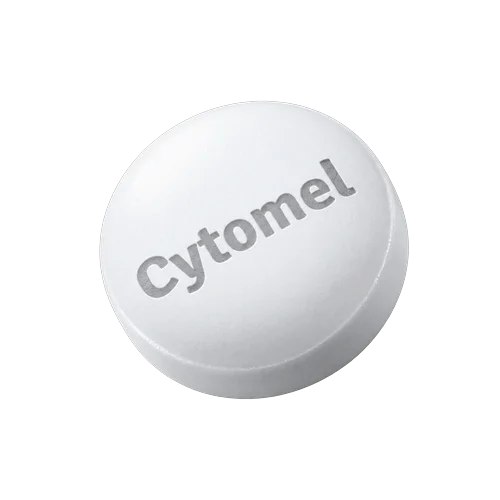
Cytomel is supplied as tablets. Liothyronine sodium is the active substance associated with the Cytomel name. The strength selected for an individual patient depends on the treatment purpose, thyroid function results, age, cardiac status and response during follow-up.

The available product page should be used for the specific tablet presentation offered. A strength such as 50 micrograms should not be assumed unless it is explicitly displayed for the selected product option. The same principle applies to tablet counts and any presentation details.

The dosage is not interchangeable with levothyroxine on a microgram-for-microgram basis. Liothyronine is more potent over a shorter period, so a small numerical change can produce a meaningful physiological effect.

Directions for use

The amount of Cytomel used and the frequency of administration depend on the purpose of treatment and are agreed with a doctor or pharmacist. Tablets are taken by mouth. Do not create a personal titration schedule from bodybuilding advice or from another person’s prescription.

Treatment planning normally considers:

  • thyroid-stimulating hormone and thyroid-hormone results;
  • age and body size;
  • coronary artery disease, rhythm disorders or hypertension;
  • pregnancy status;
  • other thyroid medicines;
  • symptoms after each dose adjustment;
  • the timing of blood tests in relation to treatment.

A clinician may adjust the dose gradually because the heart and nervous system can respond before the patient notices a change in thyroid blood results. The aim is to restore an appropriate hormonal level, not to produce a noticeable stimulant effect.

Do not double the next dose after a missed tablet unless a prescriber has given that specific instruction. If a missed dose is remembered close to the next scheduled dose, the usual approach is to take the next planned dose rather than taking two together. A pharmacist or prescriber can provide the correct missed-dose plan for the individual prescription.

Stopping also requires a planned approach. Some patients can discontinue liothyronine under medical direction, while others need a change to a different thyroid-hormone regimen. The correct plan depends on why Cytomel was prescribed and on the person’s own thyroid function.

Keep a record of the time you take Cytomel and the date of each blood test. Taking the tablet shortly before testing can affect the interpretation of some thyroid-hormone results, so the testing plan should be agreed in advance.

Comparison

Treatment approach Main feature Main limitation
Liothyronine, T3 Directly supplies active T3 with a faster onset Shorter action and greater risk of hormone peaks
Levothyroxine, T4 Provides T4, which the body converts to T3 Symptom improvement can take longer
Combined T4 and T3 therapy Uses both thyroid-hormone forms in selected cases More complex monitoring and dose adjustment

Levothyroxine remains the usual first-line replacement option for many adults with primary hypothyroidism because its longer action produces steadier hormone exposure. Liothyronine may be considered in selected clinical circumstances, but routine combination treatment is not appropriate for everyone.

A person who remains symptomatic despite apparently normal thyroid tests needs assessment for other causes, such as anaemia, sleep disorders, depression, medication effects or autoimmune disease. Increasing T3 without identifying the cause can expose the heart and bones to unnecessary risk.

Common mistakes

Several avoidable errors make Cytomel harder to use safely:

  • changing the dose because weight loss has slowed;
  • taking a second tablet after a missed dose;
  • combining Cytomel with levothyroxine without a prescribed plan;
  • taking calcium or iron at the same time;
  • using pre-workout stimulants while experiencing palpitations;
  • arranging thyroid blood tests without reporting the time of the last tablet;
  • assuming that a higher dose will produce better concentration;
  • continuing strenuous exercise despite chest pain, faintness or a persistently rapid pulse.

Do not self-adjust. A seemingly small change can alter heart rate, sleep and anxiety within a short period.

Tell the clinician about biotin, iron, calcium, antacids, weight-loss products and stimulant supplements before thyroid blood testing. These products can affect either absorption, symptoms or laboratory interpretation.

What doctors say

In clinical practice, doctors generally judge Cytomel by laboratory results, pulse, symptoms and the reason for treatment rather than by energy or weight changes alone. A patient who feels stimulated after starting T3 may be experiencing excessive thyroid activity, not an ideal therapeutic response.

Special caution is used in older adults and patients with cardiovascular disease. The MHRA and national prescribing references emphasise gradual adjustment and monitoring because thyroid hormones influence cardiac rhythm, blood pressure and oxygen demand.

One practical issue is symptom overlap. Anxiety, poor sleep and palpitations may be attributed to stress when they are actually related to thyroid-hormone excess. A pulse diary and a clear record of dose timing can help the clinician identify the pattern.

T3 treatment also requires realistic expectations. Hair texture, energy, bowel function and mood may not improve at the same rate. Increasing the dose to accelerate one symptom can create problems elsewhere.

What customers often ask

Can Cytomel be taken with food or on an empty stomach?

Thyroid-hormone absorption can vary with food, calcium, iron and antacid products. NICE guidance from 2019 supports consistent administration routines for thyroid replacement so that changes in thyroid tests can be interpreted correctly.[2] Take Cytomel at the time and in the manner agreed with the prescriber, then keep that routine stable. Separate interacting supplements when instructed rather than taking them together.

What happens when Cytomel is stopped, and does it need tapering?

Stopping Cytomel can allow symptoms of thyroid-hormone deficiency to return if the body is not producing enough hormone independently. WHO guidance on iodine deficiency describes the role of adequate iodine in thyroid-hormone production.[3] Whether tapering is needed depends on the treatment indication, duration and any replacement medicine being started. Do not stop suddenly or create a taper without a clinician’s plan.

Can Cytomel be combined with medicines or supplements?

Cytomel requires a review of anticoagulants, diabetes medicines, heart medicines, antidepressants, iron, calcium, antacids and biotin supplements. MHRA safety information from 2022 highlights the need to consider interactions and thyroid-status changes when medicines are adjusted. Some combinations alter absorption, while others increase the risk of palpitations, blood-glucose changes or excessive anticoagulation. Provide a complete list of medicines and supplements before starting or changing treatment.

Does Cytomel affect driving, concentration or work with machinery?

Cytomel is not intended to act as a stimulant for work or study. FDA prescribing information from 2023 warns that excessive thyroid-hormone exposure can produce tremor, anxiety, insomnia and palpitations, all of which may reduce concentration or safe reaction time. Avoid driving or operating machinery if these symptoms are pronounced. Stable replacement treatment does not usually impair alertness, but a new dose or dose change can affect how a person feels.

Which condition rules out Cytomel?

Untreated thyrotoxicosis is a clear reason not to use Cytomel because additional thyroid hormone can intensify the condition. FDA information from 2023 also warns against using thyroid hormones for routine weight reduction in people with normal thyroid function. Previous heart disease, arrhythmia or adrenal insufficiency may require a different plan or specialist supervision. The reason for treatment must be established before therapy begins.

Can Cytomel cause a fast heartbeat?

A fast or irregular heartbeat is a recognised sign of excessive thyroid-hormone activity. NICE guidance from 2019 treats palpitations, tremor, sweating and unexplained weight loss as symptoms that warrant assessment when thyroid treatment is being used. Persistent palpitations, chest pain, fainting or breathlessness require urgent medical attention. Do not respond by changing the Cytomel dose yourself.

Do you offer anonymous delivery?

Your order will be securely packed and shipped within 24 hours. This is exactly what your package will look like (images of an actual item sent). It has the size and look of a regular private letter (24x11x0.7 cm) and its contents cannot be seen.

How Buyers Rate Cytomel

4.5
Based on 4 reviews
Richard, 32
London
For several weeks
Verified
Rating: 3.5 out of 5

I used Cytomel tablets as part of a thyroid treatment plan. My energy and concentration improved over several weeks, although the first adjustment made me feel slightly restless. The benefit was noticeable, but I needed regular checks rather than judging it by how stimulated I felt.

11 Oct 2026
John, 69
York
For several weeks
Verified
Rating: 4.5 out of 5

Cytomel helped with the sluggishness and cold feeling I had been dealing with. I took it consistently in the morning and found that everyday tasks became easier after the treatment settled. I was pleased with the improvement.

19 Oct 2026
Oliver, 32
Southampton
For several weeks
Verified
Rating: 5 out of 5

My energy was more stable after starting Cytomel. I noticed the difference during long workdays, especially with concentration and morning fatigue. It became part of a routine that was easy to maintain.

28 Oct 2026
Gary, 29
Wolverhampton
For several weeks
Verified
Rating: 5 out of 5

Cytomel helped me feel less slowed down and more productive during the day. The change was gradual rather than dramatic, but it was clear enough to notice in training and normal daily activities.

6 Nov 2026

Sources

  1. U.S. Food and Drug Administration (2023). Cytomel (liothyronine sodium) tablets prescribing information.
  2. National Institute for Health and Care Excellence (2019). Thyroid disease: assessment and management, NICE guideline NG145.
  3. World Health Organization (2014). Guideline: fortification of food-grade salt with iodine for the prevention and control of iodine deficiency disorders.
Get our free app Shop faster and track your orders 4.0 · 224 reviews Install