Skip to content
24/7 Support
Save up to 80%
Fast & Discreet Delivery
Chlorhexidine

Chlorhexidine

Quality products
24/7 Support
Fast delivery
Delivery from 4 days
Active ingredient Chlorhexidine

Free delivery on orders from £ 172.00, free express delivery from £ 258.00

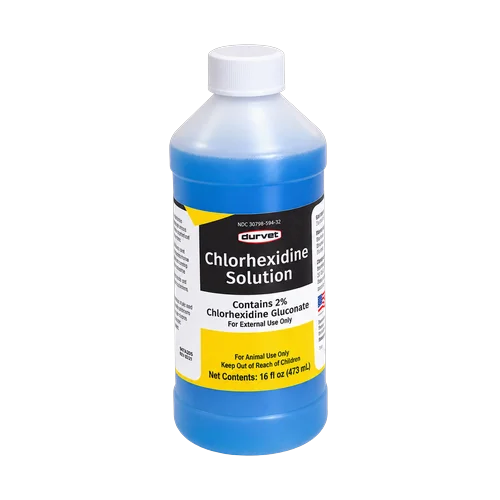
Patients needing an external antiseptic for skin cleansing or microbial reduction may use Chlorhexidine when a clinician or pharmacist selects it for the intended purpose. Chlorhexidine contains 2% chlorhexidine gluconate in a liquid bottle and acts locally against many bacteria. It is for external use only.

Overview

Chlorhexidine is a bisbiguanide antiseptic. This product contains chlorhexidine gluconate at a 2% concentration in a liquid solution supplied in a bottle. The stated net contents are 16 fluid ounces, equivalent to 473 mL.

Therapeutic indications

Patients needing an external antiseptic for skin cleansing or microbial reduction may use Chlorhexidine when a clinician or pharmacist selects it for the intended purpose.

Chlorhexidine mouthwash is a different pharmaceutical presentation from a 2% external solution. Dental preparations are commonly used for short-term plaque control and gingivitis management under dental guidance.

Gingivitis and plaque control

Gingivitis involves inflammation of the gum margin, often associated with plaque accumulation. Dental treatment normally centres on mechanical plaque removal, including brushing and interdental cleaning. Chlorhexidine mouthwash may be added for selected short-term situations, such as when brushing is temporarily difficult.

Mechanism of action

Chlorhexidine gluconate has activity against many Gram-positive and Gram-negative bacteria. Its action begins at the cell envelope, where electrostatic binding disrupts membrane integrity. Gram-positive organisms are often more susceptible than some Gram-negative organisms because the outer membrane can limit penetration.

Chlorhexidine gluconate can damage organisms such as Escherichia coli and Salmonella when the concentration and exposure conditions are adequate. It is not a universal antimicrobial. Activity against spores, some non-enveloped viruses, and certain fungi is limited or variable.

Reasons not to use it

Chlorhexidine is not suitable for you if you have had a known allergy to chlorhexidine or a previous severe reaction to a chlorhexidine-containing product.

Use requires specific clinical direction when:

  • the intended site is near the eye or ear;
  • the skin is extensively broken, burned, or deeply wounded;
  • the product may contact a joint, body cavity, or surgical space;
  • the person is an infant or young child;
  • pregnancy or breastfeeding applies;
  • another antiseptic, dressing, or topical medicine is already being used;
  • there is a history of severe allergic reaction.

When this is not for you

Do not apply it to the mouth or swallow it. Do not use it with contact lenses in place, and do not allow it to remain in the eye.

A pharmacist or doctor should agree the amount and frequency because use depends on the purpose. This is not a product for self-directed repeated application to large wounds, burns, mucosal surfaces, or surgical sites.

Unwanted effects

Most unwanted effects from topical chlorhexidine are local. Possible reactions include dryness, burning, redness, itching, irritation, and allergic contact dermatitis.

Serious hypersensitivity is uncommon but medically urgent. Anaphylactic reactions may begin with widespread itching, hives, facial or throat swelling, wheezing, dizziness, vomiting, or collapse. Stop exposure and seek emergency help immediately if breathing difficulty, throat tightness, or faintness occurs.

Chlorhexidine can cause severe eye injury. Accidental eye exposure requires prompt, prolonged rinsing with clean water and urgent medical advice, especially if pain, light sensitivity, blurred vision, or persistent redness develops. Contact with the middle ear can also cause harm if the eardrum is perforated.

Chondrolysis has been associated with certain surgical exposures to antiseptic solutions, especially when a solution enters a joint space. This risk does not make ordinary external skin use equivalent to intra-articular exposure, but it explains why chlorhexidine must never be injected or introduced into a joint.

Common safety points include:

  • Do not swallow the solution.
  • Do not use it in the eyes or ears.
  • Do not inject it.
  • Do not mix it with other antiseptics unless specifically instructed.
  • Stop if a rash or intense burning develops.
  • Seek urgent help for breathing difficulty or facial swelling.

Some preparations may damage fabrics or surfaces. Wash treated areas only as directed for the intended use, and avoid covering a large area with an occlusive dressing unless instructed.

Formulation

Chlorhexidine is a bisbiguanide antiseptic. This product contains chlorhexidine gluconate at a 2% concentration in a liquid solution supplied in a bottle. The stated net contents are 16 fluid ounces, equivalent to 473 mL.

The gluconate salt keeps chlorhexidine in a water-compatible form suitable for topical preparations. Chlorhexidine binds to negatively charged surfaces, including bacterial cell membranes and skin proteins. This local binding helps give it residual antimicrobial activity after application.

Chlorhexidine acetate is another salt used in some pharmaceutical formulations. Its practical use depends on the preparation, concentration, intended body site, and regulatory authorisation. Chlorhexidine diphosphanilate is not relevant to this external 2% gluconate solution and should not be treated as an interchangeable form.

The product’s relevant pharmaceutical facts are:

  • Active antiseptic: chlorhexidine gluconate
  • Strength: 2%
  • Form: external liquid solution
  • Container: bottle
  • Route: topical external use
  • Restriction: for external use only

A stronger concentration does not automatically make a preparation suitable for every body site. The formulation, contact time, dilution instructions, and intended indication all matter.

Keep chlorhexidine away from the eyes, inner ear, mouth, and other sensitive mucosal surfaces unless a specific healthcare product has been designed and authorised for that site.

Pharmacological profile of chlorhexidine salts

Chlorhexidine gluconate is positively charged. Bacterial cell surfaces are usually negatively charged, so the antiseptic attaches to the membrane and changes its permeability. At higher local exposure, this can cause leakage of cellular contents and microbial death.

Chlorhexidine acetate follows the same basic antiseptic principle, but its solubility and formulation behaviour differ. A salt selected for a mouth rinse, skin preparation, or medical device coating cannot automatically be substituted for the salt in this product.

The Medicines and Healthcare products Regulatory Agency, or MHRA, treats topical antiseptics as products requiring careful attention to route, concentration, and exposure site. Product-specific directions therefore matter more than the general reputation of chlorhexidine as an antiseptic [1].

Directions for use

  • Route: topical, external use only; apply the 2% chlorhexidine gluconate liquid solution to the intended external skin site.
  • Amount: the exact volume in mL is not specified and should be agreed with a doctor or pharmacist for the intended purpose.
  • Frequency: the number of applications per day is not specified and should be agreed with a doctor or pharmacist.
  • Timing: application before or after meals and time of day do not apply to this external solution.
  • Duration: the treatment duration and contact time are not specified and should be agreed with a doctor or pharmacist.
  • Do not use this 2% external solution orally. Chlorhexidine mouthwash is a different pharmaceutical presentation.

Comparison

Chlorhexidine differs from other antiseptic agents in chemical class, persistence, tissue compatibility, and spectrum. The appropriate option depends on the body site and clinical objective.

Agent or approach Main characteristic Main limitation
Chlorhexidine gluconate Bisbiguanide antiseptic with local binding and residual activity Irritation, allergy, and serious eye or ear injury if misapplied
Povidone-iodine Iodophor with broad antimicrobial activity Reduced activity in some organic environments and possible thyroid-related considerations
Polyhexamethylene biguanide Polymer-based antiseptic used in selected topical preparations Product-specific evidence and tissue indications vary

Povidone-iodine may be preferred in some settings because its antimicrobial range differs from chlorhexidine. Chlorhexidine may be selected where residual skin activity is valued. Neither option is suitable for every wound, mucosal surface, or surgical site.

Clinical outcomes are influenced by preparation technique, microbial burden, tissue condition, contact time, and local resistance patterns. A general claim that one antiseptic always produces superior outcomes is not clinically sound.

Common mistakes

Several errors can reduce benefit or increase harm:

  • Using the external solution as mouthwash.
  • Applying it inside the eye or ear.
  • Pouring it into a deep wound.
  • Repeating applications because the skin still looks wet or shiny.
  • Mixing it with soap or another antiseptic without checking compatibility.
  • Covering a treated area before the solution has been used as intended.
  • Ignoring early itching because the reaction appears mild.
  • Assuming antimicrobial activity means the solution treats every infection.
  • Applying it to a large area without professional direction.
  • Continuing use after facial swelling, wheezing, or widespread hives.

One detail patients often miss is that a serious allergy can occur after previous uneventful exposure. Prior tolerance does not guarantee future tolerance.

What doctors say

In clinical practice, doctors usually choose chlorhexidine by matching the formulation to the body site. A 2% external solution may be useful for selected skin antisepsis, yet the same concentration is inappropriate for casual oral rinsing or application inside a wound.

A clinician will also consider the reason for use. Antisepsis before a procedure differs from cleansing a minor skin area, and neither is the same as treating an established infection. Chlorhexidine reduces surface microbial contamination; it does not replace antibiotics, drainage, wound repair, or dental treatment when those are required.

Consistency does not mean repeated application without a plan. Excessive use can increase irritation without adding useful antimicrobial benefit.

Tell the healthcare professional about previous reactions to chlorhexidine, antiseptic dressings, catheter coatings, surgical preparations, or dental products. A past reaction may be relevant even if the earlier product had a different brand name.

The MHRA, EMA, and FDA all place emphasis on route-specific use and recognition of hypersensitivity with antiseptic products. The EMA’s safety information for chlorhexidine-containing medicines describes the need for careful application around the eyes, ears, and mucous membranes [2].

What customers often ask

Can Chlorhexidine be combined with other medicines or supplements?

Chlorhexidine should not be mixed in the same container or application area with another antiseptic, topical medicine, or supplement unless a healthcare professional has confirmed compatibility. The main concern is local irritation, chemical incompatibility, or an unintended increase in tissue exposure rather than a typical tablet-style drug interaction. EMA product information from 2017 stresses route-specific handling for chlorhexidine products. Oral supplements do not make an external antiseptic more effective.

Can alcohol be used while using Chlorhexidine?

Alcoholic drinks do not create the same interaction as they would with some oral medicines, because this product is used externally and is not intended to be swallowed. Alcohol-containing skin products may increase burning or dryness when applied to the same area. WHO hand-hygiene guidance published in 2009 distinguishes alcohol-based formulations from drinking alcohol and focuses on correct topical exposure. Do not ingest Chlorhexidine or use alcohol to dilute it.

What happens after stopping Chlorhexidine, and is tapering needed?

Chlorhexidine does not require tapering because it is a local antiseptic rather than a medicine that produces withdrawal after regular use. After stopping, its residual surface activity gradually declines and the underlying skin issue may return if its cause remains. The MHRA’s 2014 safety update supports stopping promptly when a hypersensitivity reaction develops. Persistent redness, discharge, pain, or swelling after stopping needs clinical assessment.

Which habits help or hinder the result?

Clean technique, appropriate contact with the intended surface, and using the agreed frequency support the expected antiseptic effect. Dirt, blood, organic material, premature rinsing, and incomplete coverage can reduce contact with microbes. WHO surgical-site-infection guidance from 2016 emphasises preparation technique and adequate surface coverage for topical antisepsis. Repeated extra applications do not necessarily improve results and may increase irritation.

Can Chlorhexidine be used during pregnancy or breastfeeding?

Pregnancy and breastfeeding require a site-specific decision, especially when large areas, damaged skin, or repeated use are involved. External use may be considered in some circumstances, while oral ingestion and application to the breast immediately before feeding should be avoided. EMA product information from 2017 support limiting exposure to the smallest area and duration that meets the clinical purpose. Any residue on the nipple or areola should be removed before breastfeeding.

How long does one application keep working?

The duration of residual activity depends on the preparation, skin condition, washing, sweating, contact time, and the reason for use. Chlorhexidine can bind to skin and provide continuing local antimicrobial activity, but one application does not guarantee protection for a fixed number of hours. The MHRA’s 2014 safety update supports following the agreed application schedule rather than reapplying whenever the skin feels dry. Do not increase frequency without professional direction.

Do you offer anonymous delivery?

Your order will be securely packed and shipped within 24 hours. This is exactly what your package will look like (images of an actual item sent). It has the size and look of a regular private letter (24x11x0.7 cm) and its contents cannot be seen.

How Buyers Rate Chlorhexidine

3.5
Based on 4 reviews
Richard, 40
Ipswich
A short external skin-care course
Verified
Rating: 4 out of 5

The area looked calmer after a few applications and the liquid was easy to use. I found the bottle practical and had no trouble fitting it into my evening routine.

8 Nov 2026
Amy, 50
Swansea
Several days
Verified
Rating: 1.5 out of 5

It did not make much difference for me after several days. I also noticed stinging after application, so I stopped using it and discussed another option with a pharmacist.

10 Oct 2026
Sophie, 45
Norwich
The end of the course
Verified
Rating: 4.5 out of 5

The skin settled gradually rather than immediately, but the improvement was clear by the end of the course. I liked that only a small amount was needed for the area.

24 Oct 2026
Natalie, 65
Liverpool
A short period
Verified
Rating: 4 out of 5

The treatment fitted easily around washing and dressing changes. The redness reduced over the following days, and I was satisfied with the result.

18 Oct 2026

Sources

  1. MHRA (2014). Chlorhexidine: reminder of potential for serious allergic reactions.
  2. European Medicines Agency (2017). Summary of Product Characteristics (SmPC) — chlorhexidine.
Get our free app Shop faster and track your orders 4.0 · 224 reviews Install